
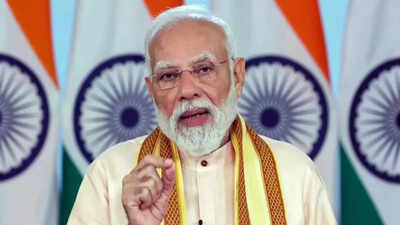
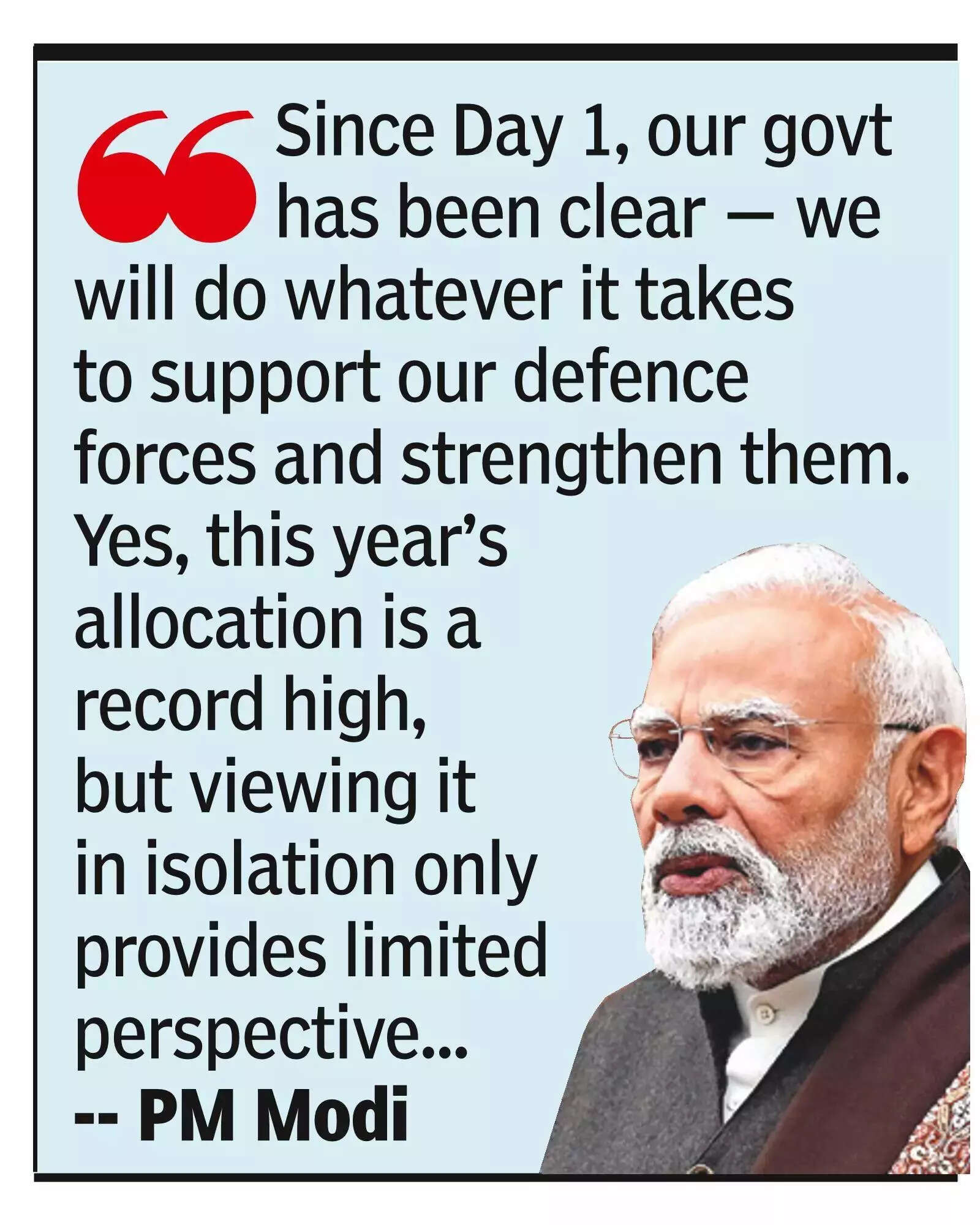
NEW DELHI: Prime Minister Narendra Modi on Sunday cited the global context to argue in favour of modernising India’s defence sector, while calling upon the private sector to step up its act and share the gains with workers and shareholders.“Since Day 1, our govt has been clear we will do whatever it takes to support our defence forces and strengthen them. Yes, this year’s allocation is a record high, but viewing it in isolation only provides a limited perspective…As technology reshapes the world, our armed forces must be equipped with the best of Indian innovation and industry. As a nation that is playing an increasingly important role in the world, we have a duty to modernise our defence sector in line with current realities,” PM Modi told PTI in an interview.The comments come in the backdrop of an increasingly-fragile world, which is undergoing a shift in the power equations with the US and China seeking to stamp their expansionist policies, while conflicts in Ukraine and West Asia have been going on with no immediate resolution in sight. India has to contend with hostilities in the neighbourhood with cyber technology adding to challenges.The PM referred to Operation Sindoor, which showed India’s familiarisation with the tech warfare.
Trade deals part of global integration: PMThe entire nation is proud of the courage shown by our armed forces during Operation Sindoor. During the operation, one could see the benefits of the reforms we have undertaken in the last decade. Therefore, defence budgets, modernisation, etc, all these are parts of our continuous effort and need not be linked to any particular issue. Yes, the reality is that our nation has to be strong and be prepared at all times, and that is what we are doing,” PM Modi said.Asked about the recent trade agreements, the PM said that they have been part of India’s global integration with the world, which has picked pace in recent times. Asserting that the recent deals — from the UK to the EU — have been in the pipeline for years and will help Indian producers diversify their markets besides opening opportunities for service professionals.“These trade agreements are significant not merely because of tariff reductions but because of supply-chain integration and market access in advanced economies. They gradually liberalise manufacturing tariffs, deepen services integration and create new avenues for labour-intensive exports such as textiles, footwear, electronics and engineering goods. In that sense, they support structural transformation rather than simply boosting headline trade numbers. These FTAs also anchor domestic reform to external commitments. They widen export opportunities, reduce tariff disadvantages relative to competitors, and integrate Indian firms more deeply into global value chains,” the PM said. PM Modi also called on the private sector for a “decisive response” to the govt’s reforms, for which he redoubled his vow.
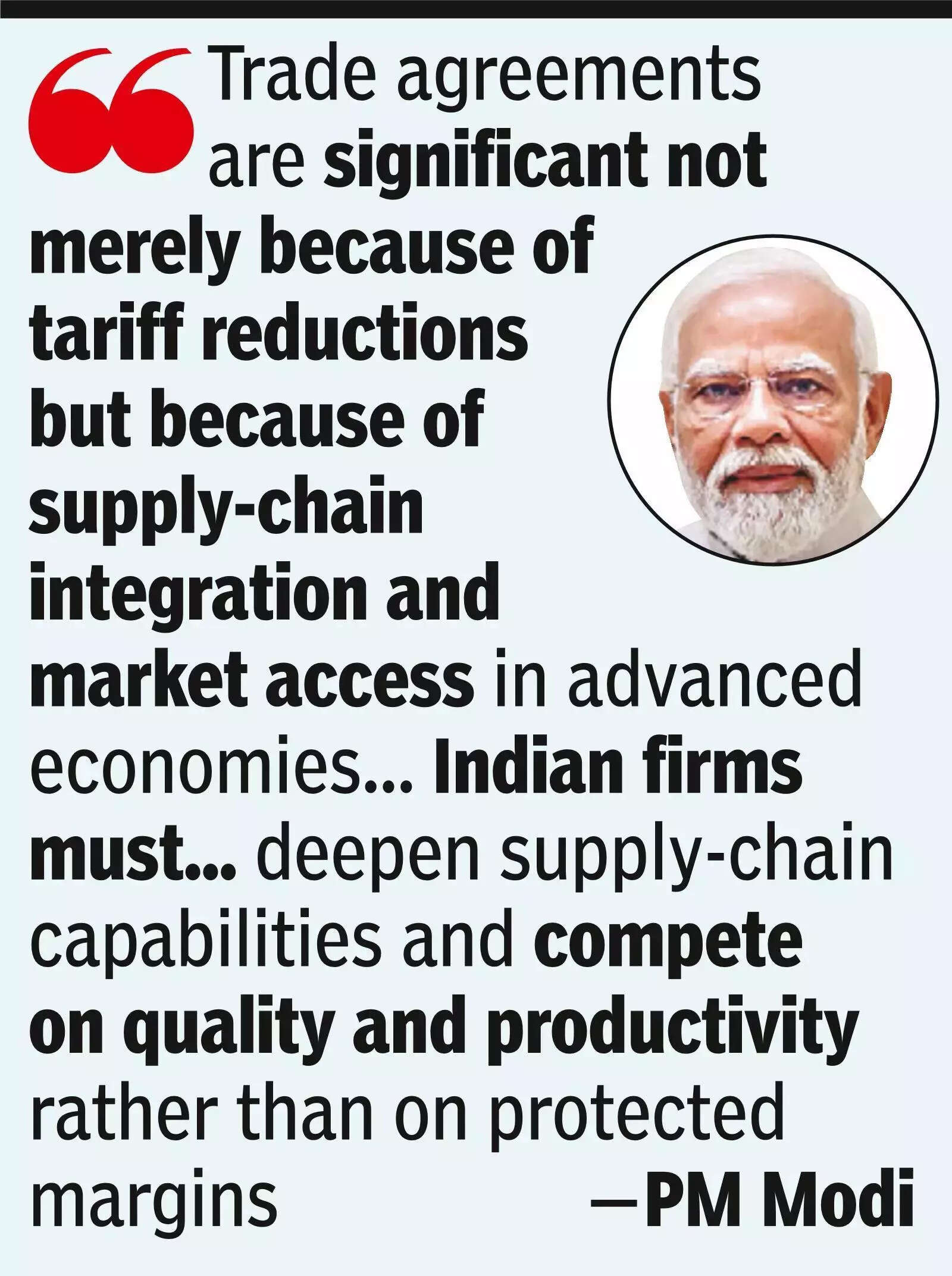
“Indian firms must invest more aggressively in research and development, adopt frontier technologies, deepen supply-chain capabilities and compete on quality and productivity rather than on protected margins. Incentives and tariff preferences can catalyse growth, but durable competitiveness must rest on innovation, efficiency and scale. Equally, as productivity rises, the gains must be shared fairly between workers, shareholders and owner-managers. Sustainable growth requires social legitimacy. Rising real wages, skill upgrading, and stable employment reinforce domestic demand and social cohesion, which, in turn, support long-term investment,” he said.Asked about the Budget’s emphasis on women, PM said welfare of women guided every govt decision. “…it is a matter of national pride that our finance minister, Nirmala Ji has presented the Budget nine consecutive times, which is a record and a matter of pride in itself. Several women across India feel inspired by this,” he said.While listing out several initiatives in the Budget, the PM made special reference to the announcement related to hostels. “Many girls drop out not because of a lack of talent, but because commuting long distances to labs and late study hours are difficult. This intervention directly addresses that constraint.”Further, PM Modi said the steps related to training of Allied Health Professionals, which will benefit women. “Women have always been at the centre of caregiving, but this is largely in the informal sector. By training 1.5 lakh caregivers next year and expanding institutions for Allied Health Professionals, with a target of 1 lakh trained over 5 years, we are embarking on a large-scale effort to formalise care work. This does two things: it creates dignified, certified employment for women and simultaneously strengthens India’s healthcare capacity.”




Leave a Reply