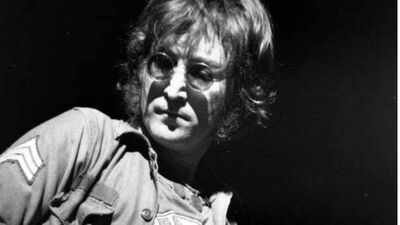
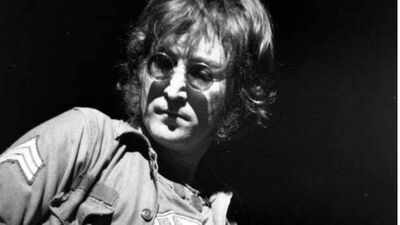
It is easy to say that everyone wants peace. The harder question is what people are willing to do for it. More than five decades ago, John Lennon put that idea in surprisingly simple terms, comparing the desire for peace with the desire to buy another television set.Lennon’s point was rooted in the world around him. War was dominating the news, while he and Yoko Ono were using their fame to talk about peace in a very public way. Their 1969 Bed-Ins were part protest, part performance and part conversation, giving Lennon a platform to ask people to think about what they really wanted from the future.The quote still stands out because of how ordinary the comparison sounds. A television is something you can buy for yourself. Peace is something that demands a much bigger effort from everyone.Today’s quote of the day by John Lennon reads: “If everyone demanded peace instead of another television set, then there’d be peace.”
What does the quote by John Lennon mean?
The remark came during John Lennon and Yoko Ono’s second Bed-In for Peace in Montreal in 1969. The official John Lennon website records the event as taking place at the Queen Elizabeth Hotel, where the couple spent seven days speaking with reporters and discussing their ideas about peace.Lennon was not presenting a political plan that could magically end war. In fact, he later explained that the message behind the Bed-In was not about offering a particular political system or a ready-made solution. It was simply about asking people to consider the possibility of living without war.That makes the television reference easier to understand. Lennon was using something familiar from everyday life to make a much larger point: people have the power to decide what matters to them, but they have to be willing to put that priority ahead of some of the distractions and comforts of ordinary life.
How is the quote by John Lennon relevant today?
The world has obviously changed since Lennon commented, but the basic question has not disappeared. People still have plenty of reasons to focus on their own lives, whether it is buying something new, chasing a career goal or simply getting through a busy week.That does not mean enjoying material things is wrong. Lennon’s quote is more interesting when read as a question about attention. What do people spend their energy asking for? What issues matter enough for them to actually speak about?His words also show why social change can be difficult. Personal comfort is immediate. Bigger changes take time and usually require many people to care about the same issue at once.Lennon and Ono tried to make peace part of popular conversation rather than keeping it inside political speeches. Their Montreal Bed-In eventually produced ‘Give Peace A Chance’, recorded on June 1, 1969. The official John Lennon website says the song was released in July that year and became closely associated with anti-war demonstrations.
Early life of John Lennon
John Winston Lennon was born on October 9, 1940, in Liverpool, England. Music became a major part of his life while he was young, and he formed the skiffle group the Quarrymen before meeting Paul McCartney in 1957.McCartney later introduced George Harrison to the group, and the three musicians eventually became part of the Beatles. What started with performances in Liverpool and Hamburg would soon turn into one of the biggest music careers in the world.Lennon was not only known for his music. As the 1960s progressed, he became increasingly outspoken about subjects outside the recording studio, particularly war, peace and politics.
How did John Lennon rise to fame?
John Lennon’s rise to fame was closely tied to the Beatles. Alongside Paul McCartney, he became one of the band’s principal songwriters, helping create songs that changed as the group’s music developed.The Beatles became an international phenomenon during the 1960s, with albums and songs including ‘A Hard Day’s Night’, ‘Help!’, ‘Strawberry Fields Forever’ and ‘Come Together’. Lennon also became increasingly comfortable using his enormous public profile to talk about subjects he cared about.After the Beatles split in 1970, Lennon continued making music as a solo artist. His albums included ‘John Lennon/Plastic Ono Band’ and ‘Imagine’, with the latter’s title track becoming strongly associated with his ideas about peace.His activism had already been developing before the Beatles’ breakup. In 1969, Lennon and Ono held their Bed-Ins in Amsterdam and Montreal. During the Montreal event, they recorded ‘Give Peace A Chance’ with musicians and other people who had gathered around them. The official John Lennon site describes the recording as taking place in room 1742 of the Queen Elizabeth Hotel.The television quote came from that same period and captures something central to Lennon’s approach: peace was not supposed to be just a nice idea. He wanted people to talk about it, demand it and, above all, believe that ordinary people had a part to play in asking for a different future.





Leave a Reply