Pennsylvania’s youth business fair has grown from 60 booths in 2022 to 100 in 2026, turning a small community gathering into one of Central PA’s most visible celebrations of kid-led enterprise. Children aged 5 to 16 run their own stalls, handling products, pricing, marketing and sales with no adults behind the tables, while parents and volunteers stay in the background as shoppers and supporters. The event, known as the Kidpreneurs Fair PA and hosted in Mechanicsburg, is part of the wider Acton Children’s Business Fair network and is organised by local parents Ashruta Shettar and Pradeep Patil, who say the goal is to let kids learn entrepreneurship by doing rather than by watching, according to the fair’s official site and the Children’s Business Fair listing.
A kitchen-table idea becomes a regional tradition
The Kidpreneurs Fair PA began around a family kitchen table in 2022. Ashruta Shettar and Pradeep Patil, IT professionals and small-business owners, were watching their twin daughters dream up products and realised that their children would learn more by actually selling something than by talking about business in the abstract. They set up the first fair with 60 young entrepreneurs, offering each child a simple booth, a table and a chance to test their ideas with real customers.From that first event, the fair quickly became a local tradition. In 2024, participation grew to more than 85 kidpreneurs, with families turning out in large numbers to support everything from handmade crafts to original recipes. By 2025, nearly 160 children filled the marketplace, and some participants began converting their fair-day experiments into ongoing micro-businesses that operated beyond the single event. The 2026 edition capped booths at 100 and added a special touch, with personalised letters from the Governor of Pennsylvania for every participant, signalling how far the fair had come in just a few years.
The rule that makes it real: no adults behind the table
The most distinctive feature of the fair is its core rule. Parents may help with the application and with transport, but on fair day, children must run their own booths. They set up their displays, greet customers, explain their products, handle money and make change. Adults are welcome as shoppers and cheerleaders, but they are not allowed to sell or promote a child’s product. If a parent is found doing so, the child’s business can be disqualified from the competition.This rule is designed to give children an authentic experience of entrepreneurship. It means that a 6-year-old selling friendship bracelets must decide how much to charge, how to arrange the table and how to talk to strangers about their work. A 14-year-old offering custom keychains or baked goods must think about costs, profit margins and how to stand out in a busy marketplace. The fair becomes a safe space to make mistakes, learn from them and try again next year with a better plan.
How kids prepare their businesses
The application process itself is part of the learning. Children are asked to describe their product or service, set a price, estimate costs and explain how they will cover startup expenses. They must outline how they will advertise before the fair and how they will judge success at the end. Parents can assist with writing and calculations, but the expectation is that children do as much as possible on their own, appropriate to their age.Businesses are judged in six age categories, from 5 to 6 years old up to 15 to 16. Mixed-age groups are judged in the category of the oldest participant, and up to three children can share a single booth. The application fee is $35 per booth, fully refundable if the business is not accepted or if the family cancels at least a week before the event. Accepted applicants are notified on a rolling basis until the 100-booth cap is reached, creating a sense of urgency and planning for young founders.
A marketplace of ideas and products
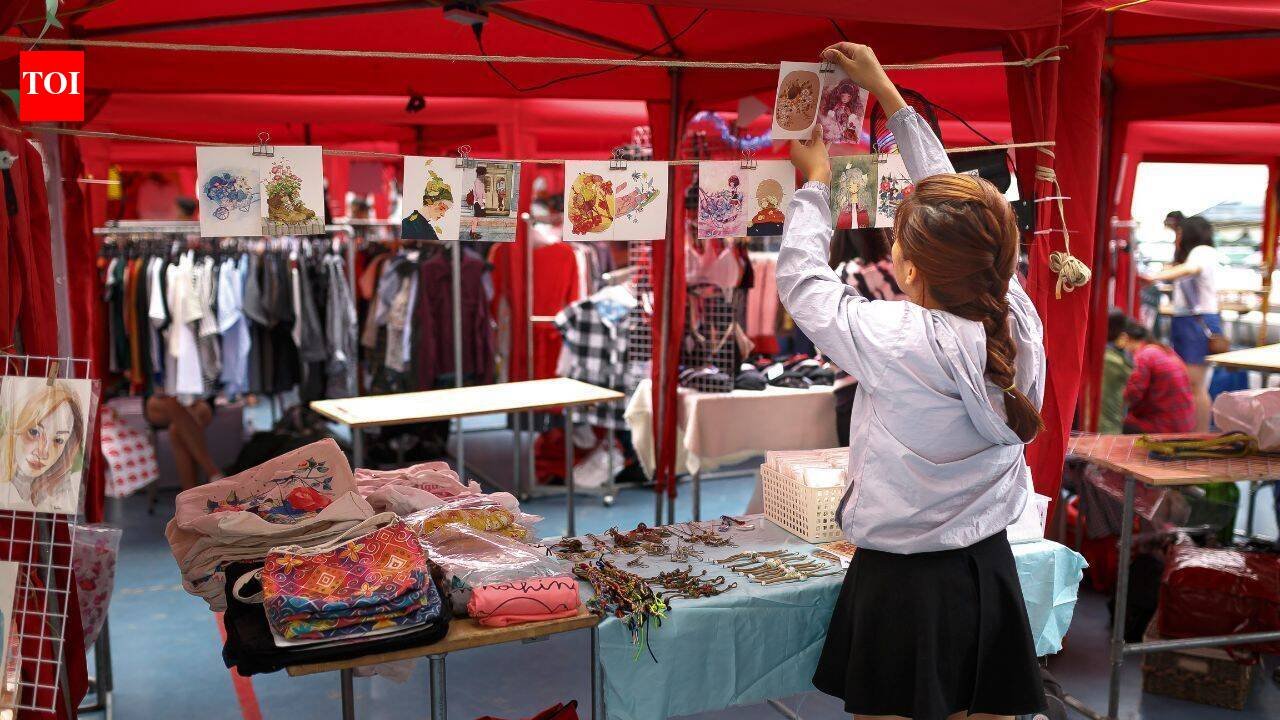
Walking through the fair feels like visiting a miniature version of a farmers market or craft fair, except every vendor is under 17. Booths feature handmade jewellery, slime and sensory toys, custom T-shirts, baked goods, art prints, pet treats, bath bombs and small services such as lawn care or tech help for neighbours. Some children build on hobbies, turning a love of drawing or baking into a branded product line. Others experiment with entirely new ideas, testing whether there is demand for a concept they have never tried before.Each business is given an 8-foot table, shared with one other vendor, under a tented outdoor setup at Messiah University’s Eisenhower Campus Center in Mechanicsburg. Tablecloths are not provided, and electricity is not available, so children must design displays that work with simple materials. This constraint encourages creativity. A well-arranged table with clear pricing, attractive samples and a friendly pitch can make a big difference in how many customers stop and buy.
Judges, awards and encouragement
A panel of local business leaders, educators and community figures serves as judges for the fair. Past and current judges have included school heads, CEOs of regional organisations, commissioners from state advisory bodies, owners of small businesses and representatives from major employers such as The Hershey Company and IKEA. They evaluate each business on creativity, presentation and entrepreneurial spirit, offering feedback that is meant to encourage young founders long after the fair ends.While prizes and recognition matter, the organisers stress that the real reward is the experience. Children leave with a clearer sense of what it takes to run a business, from costing and pricing to customer service and marketing. Some go on to expand their fair-day ventures into regular income streams, selling online or at local markets. Others simply gain confidence, realising that they can create something, put it in front of strangers and handle the entire transaction themselves.
Part of a larger movement
The Kidpreneurs Fair PA is part of the Acton Children’s Business Fair network, which began in Austin, Texas, in 2007. That first event had just seven young entrepreneurs and about 25 attendees. Today, the Austin fair hosts more than 115 kidpreneurs and draws around 1,500 visitors, and similar fairs run in cities and towns across North America. The model is intentionally simple and replicable, relying on local hosts, volunteers and small sponsors to bring the experience to their own communities.In Pennsylvania, the fair is proudly sponsored by Sugaring NYC and supported by local donors and volunteers. The organisers say they believe principled entrepreneurs are heroes and role models for the next generation, whether they become famous business leaders or remain unsung owners of small neighbourhood enterprises. By giving children a structured, supportive environment to try entrepreneurship early, they hope to nurture a generation that sees business as a way to solve problems, serve others and build independence.
Why this matters for families and schools
For parents and educators, the fair offers a practical complement to classroom learning. Children apply maths when they calculate costs and profits, use language arts when they write product descriptions and signage, and practise social skills when they interact with customers. They also learn resilience. Not every product sells out, not every display attracts a crowd, and not every idea works the first time. Those lessons, experienced in a low-stakes setting, can shape how children approach challenges in school and later in work.As the Kidpreneurs Fair PA continues to grow, its organisers face choices about how big to go, how to maintain quality and how to keep the focus on learning rather than competition. For now, the trajectory from 60 booths in 2022 to 100 in 2026 suggests strong demand from families who want their children to have this kind of hands-on experience. In a region known for its small businesses and community spirit, the fair has become a place where the next generation can practise being founders, one table at a time.






Leave a Reply