
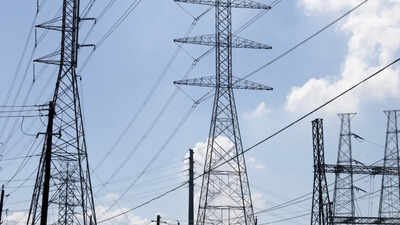
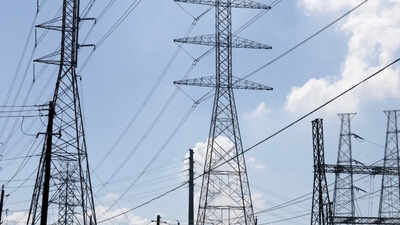
NEW DELHI: Union power ministry has finalised the draft National Electricity Policy (NEP) and moved the Cabinet note for inter-ministerial consultation.Released in Jan this year, the draft National Electricity Policy has proposed index-linked automatic annual tariff revision, sought to limit cross-subsidies for the manufacturing sector and railways, increase nuclear capacity, repurpose older thermal units for grid support, and take measures to reduce transmission and distribution losses.Union power secretary Pankaj Agarwal said the ministry received a number of comments and suggestions from stakeholders, which were subsequently examined and accommodated in the draft policy.“We have aggregated all the stakeholders’ comments. We have already moved the Cabinet note for inter-ministerial consultation and I think it shouldn’t be taking very long,” Agarwal told reporters on the sidelines of the 2nd Indian Power Sector Conference organised by Ficci.The last NEP was notified in 2005, when the sector was facing challenges such as demand-supply gaps, limited electricity access and inadequate infrastructure.“Today we are at a very different level…we are already at 300 gigawatt of non-fossil and now going forward, the challenges are entirely different like grid management and building transmission systems,” he said.
Share your thoughts in the comments
Be respectful · TOI community guidelines
With the rise in renewable energy, grid stability has emerged as a major challenge, along with under-utilisation of transmission lines during non-solar hours. Agarwal said grid utilisation was also a dimension of NEP 2026. “You can’t expect it to be utilised 24×7 at a particular level. There will be more fluctuations. If we can really use 60% of grid capacity, I think that’s a fairly good thing,” he said.The power secretary also said steps were being taken to indigenously design and produce chips for smart meters and the ministry had mandated requirements for their manufacturing, along with timelines. He added that some of the designs had to be tested and validated before commercial production began.







Leave a Reply