

The Senate passed a sweeping bipartisan bill Monday that would overhaul the multibillion-dollar college sports industry — a major legislative victory shared by members of both parties and President Donald Trump, who wants to sign the package as soon as possible.
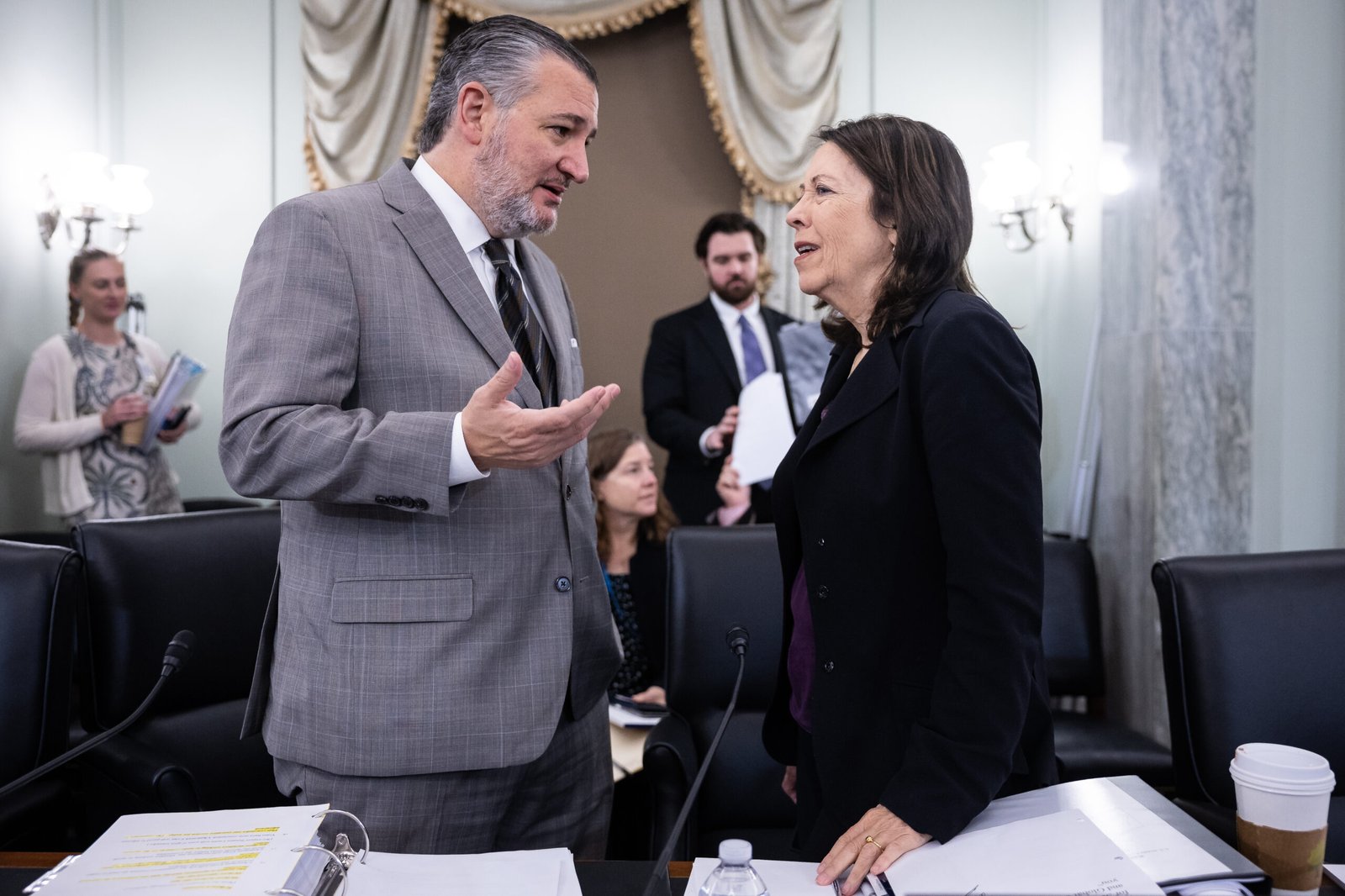
A high priority for Senate Commerce Chair Ted Cruz of Texas and the panel’s top Democrat, Maria Cantwell of Washington, the Protect College Sports Act would replace a patchwork of state laws governing student athlete compensation, transfers and eligibility with one overarching federal rulebook.
“Today the Senate has the opportunity to protect the half million college athletes and the millions more who follow in their footsteps,” said Cruz in a floor speech Monday. “Students are transferring three or four times. Pros are trying to play ball against college kids. Conflicting court decisions have created a fragmented system — one that no one intended. And young men and women are losing opportunities to compete and receive an education.”
But while the 77-22 vote would ordinarily present itself as a welcome glimpse of cross-party unity, it is now being overshadowed by a murky outlook in the House, where Republicans oppose multiple provisions of the Senate package.
Democrats, meanwhile, are smarting from a highly-charged debate over whether the legislation would exploit college athletes of color — and some are questioning why their colleagues would split from the AFL-CIO and the NAACP, two organizations core to the party’s base that oppose the legislation.
That the vote was one of the last actions senators will take before leaving Washington to campaign for the midterms also has also presented unsavory optics for many Republicans, who are desperate to show they are serious about alleviating concerns around rising gas prices and interest rates.
“Is this really what we should be spending our time on?” Sen. Cory Booker (D-N.J.), one of the most vocal opponents of the legislation, asked Monday night on the Senate floor. “Our country faces real challenges. Gas is at $5. Diesel costs are a record high. We’re at war abroad. Health care expenses are skyrocketing.”
“And,” Booker continued, “the United States Senate is spending precious time rewriting the rules of college sports while athletes’ groups, survivors of sexual assault, labor, civil rights leaders are all begging Congress to slow down and listen to their voices. What does this say about our priorities?”
In one apparent acknowledgement of the dynamics at play, Sen. John Kennedy (R-La.) offered an amendment that would have put limits on how much schools and conferences can increase the price of tickets for games — arguing it would help keep costs stable for fans amid a nationwide affordability crisis. Cruz objected to the proposal, arguing it would “harm schools from being able to respond when market factors change.”
Kennedy’s amendment was ultimately rejected, while senators adopted a change to the bill sought by Sen. Tim Scott (R-S.C.) to require the disclosure of foreign financing of intercollegiate athletics.
Cruz in a Senate floor speech Monday presented the Protect College Sports Act as a binary choice for his colleagues: Stand by, or turn their backs, on student athletes who are currently being undercut by bidding wars that force schools to scrap programs because they don’t make headlines or big time television contracts.
Cantwell, meanwhile, has insisted the “historic bill” is a victory for the half-million college athletes across the country — particularly women and participants in Olympic sports programs — who are losing out on money and resources as big-ticket departments like football spend big money to attract top talent.
“We need to stop stealing money out of college [and] university institutions for education, for tuition, for professors, and putting it into an arms race on sports,” she said.
These arguments are lost on members of the Congressional Black Caucus, of which Booker is a part — with its chair, Rep. Yvette Clarke (D-N.Y.), saying in an interview last week the bill fails to “center the lives of the athletes.”
“There’s so much that this bill neglects,” she said, pointing specifically to health care provisions.
The all-Democratic CBC has been unanimously opposed to moving forward on any college sports bill since May, following the late April Supreme Court decision that allowed Republican-led states to eliminate majority-minority districts across the South.
In a statement at the time, the CBC said it would not support legislation “benefiting major athletic institutions that continue to remain silent while Black voting rights and Black political power are being systematically dismantled.”
Some Democrats in the Senate also lamented that the bill would set student athletes back after many have benefited from various federal court rulings entitling them to compensation for their name, image and likeness.
“This bill…only caps the money going to the players — does nothing to cap the money going to the coaches,” Sen. Chris Murphy (D-Conn.) said on the floor Monday.
On the Republican side of the aisle, House Majority Leader Steve Scalise — who was heavily involved in working on a House version of a college sports overhaul bill that has repeatedly fallen short of support — has consistently raised concerns that the Senate measure would leave the door open to possible unionization efforts by players.
House conservatives are also expected to oppose provisions in the Senate bill that would provide $1 billion for competitive grants to Historically Black Colleges and Universities without offsets; could increase litigation related to student unionization efforts; provide no cap on granting international student scholarships; and generally insert Congress into the business of college sports.
GOP Rep. Michael Baumgartner of Washington, who introduced an earlier House version of the bill, posted on social media Monday that the bill will “have a better than 50% chance in the House.” He also said that even with the president’s blessing, the legislation will need Democratic votes, pointing out the “Dem CBC will be a factor.”
But Republicans may ultimately face pressure to fall in line: Trump promoted the Senate bill as recently as this weekend in an interview with Clay Travis, founder of the digital sports column Sport & State.
Trump also suggested Speaker Mike Johnson might bring the House back before the midterms to clear the measure for his signature.
“We have to get it voted on,” he told Travis, “and we’re counting on the House — and I think the House will come through, too.”
Riley Rogerson contributed to this report.







Leave a Reply