
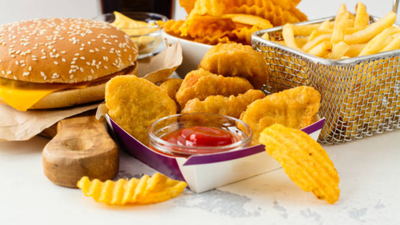
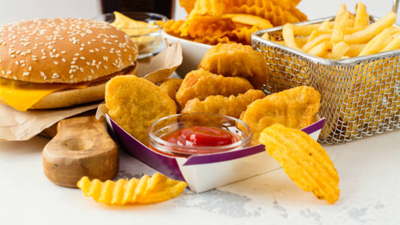
NEW DELHI: A bowl of millet porridge may not sound as tempting as a burger, but put it through a social-media makeover and teenagers may look at it differently. An Indian Council of Medical Research-National Institute of Nutrition (ICMR-NIN) study involving 203 adolescents found that the visual appeal of food images was significantly associated with their willingness to consume the food.Researchers showed adolescents attractive “foodporn” images of healthy foods on Instagram for 15 days and compared them with regular images. The strongest differences were seen for millet porridge and boiled chana salad, whose attractive images generated about 50% and 10% more positive responses, respectively, than their regular counterparts. The difference was statistically significant for the millet and pulse categories.The study used 15 food images divided into three categories: unhealthy foods presented as “foodporn”, healthy foods presented in an attractive “foodporn” format, and healthy foods shown as regular pictures. The researchers also conducted in-depth interviews with 19 adolescents to understand what made food images appealing.Researchers found that the intervention showed a broader positive trend, with adolescents reporting more favourable attitudes towards healthy foods, greater consumption and stronger intentions to eat them, although not all changes were statistically significant. Intentions to consume millet porridge and chana salad were 9% and 15% higher, respectively, for attractive images than regular ones, but neither difference was statistically significant.Visual appeal appeared important, with adolescents citing colour, presentation, ingredients, angle, texture, glossiness, balance and symmetry as factors that made food images more appealing. Even before the intervention, 60% said they were willing to try foods seen on social media, while 56% said attractive food images made them crave them.
Share your thoughts in the comments
Be respectful · TOI community guidelines
Adding nutritional information did not significantly alter responses, suggesting that adolescents paid more attention to the visual presentation than accompanying text.The findings suggest that making healthy foods visually appealing could help counter the dominance of attractive unhealthy-food content online, with potential applications in school canteens, restaurants and cafes. However, the study did not establish that attractive food images change actual eating behaviour. The intervention was short, relied partly on self-reported responses, and could not establish causality.







Leave a Reply