
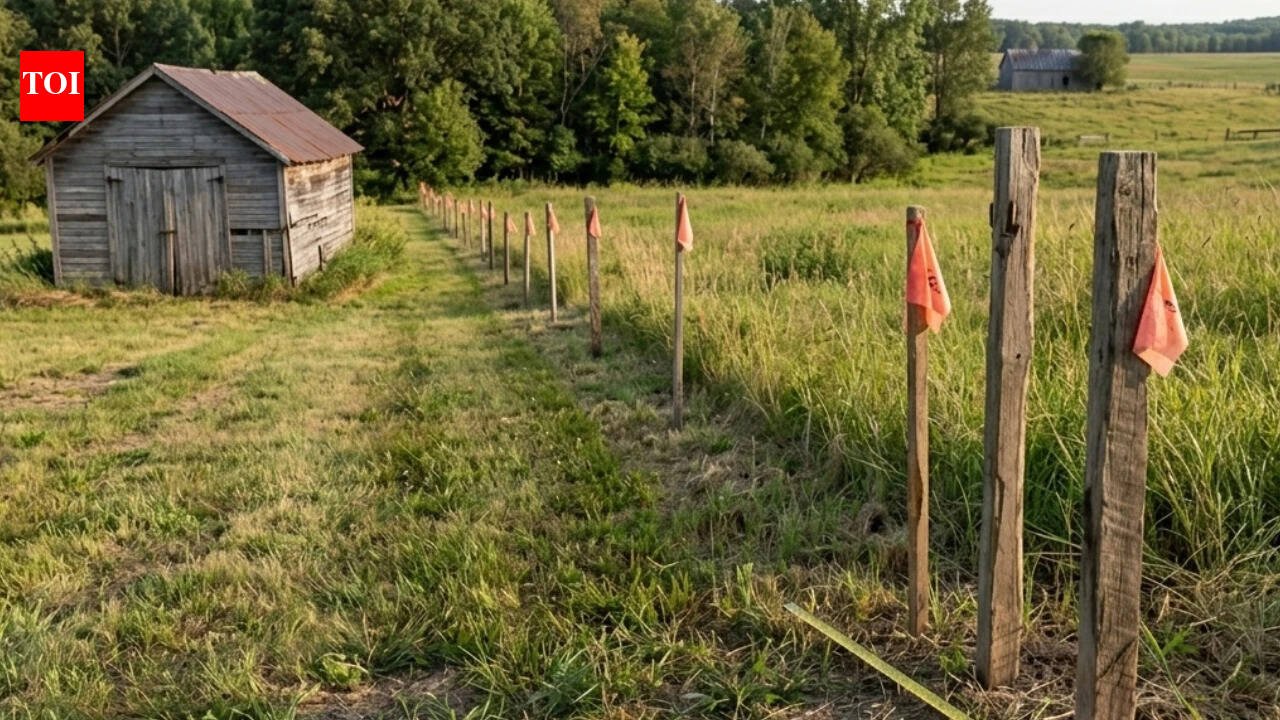
A couple in Michigan, United States, has lost a legal battle over a 50-foot-wide strip of land that they claimed belonged to their property because of an error in a deed dating back to 1965. Max W. Firman III and Dawn M. Kasner, who purchased their land at a tax sale in 2015, argued that the disputed strip had been used by previous owners of their property for decades. However, the Michigan Court of Appeals ruled against them on Friday, finding that they had not provided enough evidence to establish ownership.According to court documents, the dispute involved neighbouring properties in Rose Township, Ogemaw County. Firman and Kasner bought their parcel in 2015, while their neighbour, Antonio Santos, purchased the surrounding property in 2021. The disagreement began when Santos challenged the couple’s claim over the strip of land, which also contained a structure.The couple believed that a mistake made in a 1965 tax sale deed had changed the description of their property’s boundary. They relied on an earlier deed from 1955, which referred to a boundary measurement of 400 feet. However, the 1965 deed used 450 feet, and that description continued to appear in subsequent property records.The difference of 50 feet became the centre of the dispute. Although the couple claimed that the land and the structure on it had been used by previous owners of their property, two surveys commissioned by Santos placed the disputed area within his property. The disagreement eventually reached the courts, where the couple sought legal recognition of their ownership.
How a 1965 deed became the centre of the dispute
The couple argued that the change in the property description in 1965 was an error that had remained uncorrected for decades. They maintained that the disputed strip should have been included with the land they purchased in 2015.They also claimed that previous owners had built, maintained and used the structure located on the disputed land. According to their case, they continued using the area after purchasing the property and believed that taxes had been paid on it by them and earlier owners.Santos disputed these claims. After buying the surrounding property in 2021, he commissioned two surveys, both of which showed that the 50-foot strip belonged to his property.He also submitted a photograph of the structure taken before the 2015 tax sale. A sign on the building read “NOT IN TAX SALE”. Santos said his immediate predecessor had placed the sign there because photographs used in the tax sale listing had created the impression that the disputed area was included in the property being sold.
Disagreement escalated after locks were changed
The dispute became more serious after Santos purchased his property. Both sides accused each other of entering the disputed area without permission.In 2023, the local sheriff was contacted after Santos allegedly changed the locks on the structure and demolished some interior walls. The sheriff told the couple that the ownership dispute would have to be settled in court.Firman and Kasner filed a lawsuit in February 2024, seeking to establish ownership of the disputed land and raising a trespass claim. Santos responded with counterclaims, including trespass and nuisance.The trial court subsequently ruled in Santos’s favour, finding that the couple’s original claim was barred by Michigan’s 15-year limitation period. The couple then amended their complaint, arguing that they and previous owners had acquired ownership through adverse possession or acquiescence.
What evidence did the couple present?
To support their case, the couple submitted a 1982 deed and a 2013 affidavit concerning earlier owners of their property.The 1982 deed referred to land possessed by the previous owners for more than 15 years “in this vicinity”. The couple argued that this showed the earlier owners had already acquired rights over the disputed area.The 2013 affidavit also referred to an adverse possession claim by a previous owner, Vianne Samuels, concerning property interests not clearly established in the recorded ownership documents.Adverse possession is a legal principle under which someone may acquire ownership of land through possession that meets specific legal requirements over a prescribed period. In Michigan, the relevant period is 15 years.However, the appeals court found that neither document identified the disputed 50-foot strip. Both also continued to use the same property description found in the 1965 deed.The couple relied on tax records and the existence of the structure as further evidence. But the court found that these records did not establish who had built or used the structure, when it was built, or whether the disputed land had been openly and continuously possessed for the required period.
Michigan appeals court ruled against the couple
The appeals court also considered the couple’s argument of acquiescence, under which neighbouring owners may establish a property boundary by treating it as the accepted boundary for 15 years.The judges found insufficient evidence that previous owners of the neighbouring properties had accepted the boundary claimed by the couple. The sign stating “NOT IN TAX SALE” also indicated that Santos’s immediate predecessor had not accepted their claimed boundary.In its October 9 ruling, the Michigan Court of Appeals upheld the trial court’s decision dismissing the couple’s amended complaint.However, the case has not ended entirely. The appeals court sent it back to the trial court for further proceedings concerning Santos’s outstanding counterclaims, which were not decided in the appeal.






![Drishyam 3 Full Movie Collection: ‘Drishyam 3 The Conclusion’ box office collection Day 11 [LIVE]: Ajay Devgn starrer thriller crosses Rs 310 crore India net milestone on second Monday | Hindi Movie News](https://onlinechhattisgarh.com/wp-content/uploads/2026/10/drishyam-3-the-conclusion-day-11-box-office-collection-image-credits-imdb.jpg)
Leave a Reply