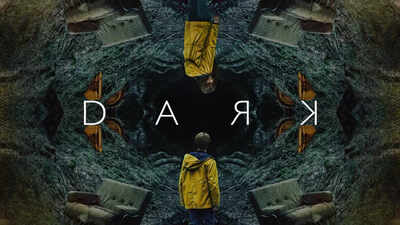
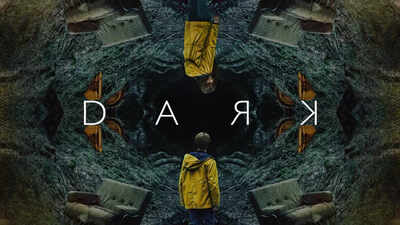
If you thought that ‘Dark’ was just another sci-fi series that wrapped up all its tricks when it ended, you might want to think again. It’s one of those rare shows that grabs you from the start and refuses to let go, twisting your brain into knots with every episode. When it first dropped in 2017, ‘Dark’ pulled viewers into the eerie little town of Winden, a place buzzing with secrets, time travel, and more paradoxes than you can count. By the time Season 3 wrapped up in 2020, the show didn’t just stick the landing. It threw out a wild ending that got fans arguing online for years. Did the time loop really break, or is it still running quietly in the background? People are still going back and forth on that.
‘Dark’: What’s the story all about
At its heart, ‘Dark’ is a story about time — how it doesn’t move in a straight line, and how fate, love, and sacrifice aren’t just plot devices, but threads tangled together in a knot that’s impossible to pull apart. For the unversed, it’s a German sci-fi mystery with three seasons that aired from 2017 to 2020. The story follows four families in the fictional German town of Winden. Their lives are tangled up thanks to decades-spanning time travel, and, eventually, entire alternate universes.It all kicks off with a missing kid in 2019, but things quickly spiral into a dizzying puzzle of past, present, and future. At the core, ‘Dark’ digs into the big stuff: free will, destiny, family curses, and what time even means.Characters bounce between different eras—1953, 1986, 2019, and later, parallel worlds—hunting for answers about a mysterious time portal and a cycle that seems stuck on repeat. The show is packed with paradoxes: people end up being their own ancestors, timelines loop in on themselves, and you’re left wondering what came first.Baran bo Odar and Jantje Friese, the creators, built a world that jumps across three decades (and, eventually, a third, hidden universe). Every choice, every secret, every heartbreak — somehow, they’re all connected in ways that mess with your head and challenge what you think you know about free will. Even nearly six years after the finale, fans are still poring over every frame, convinced there’s more to the story.
‘Dark’ ending: Explained
In the last few episodes, ‘Dark’ drops its biggest twist: most of the show actually takes place across two alternate worlds, both created by a time machine built by H.G. Tannhaus, a clockmaker living in a third, original world. Tannhaus tried to save his family after a car accident by inventing the machine. Instead, he accidentally split reality, creating two parallel Windens and trapping everyone in endless loops.Claudia, who’s been piecing things together from the sidelines, figures out the only way to stop everything isn’t to outsmart the loop, but to prevent the accident that started it all. Jonas and Martha—each from one of the alternate worlds—team up, jump into the origin world, and stop the car crash that killed Tannhaus’s family. That one choice wipes the time machine from existence, erases the alternate worlds, and Jonas and Martha themselves disappear because they only existed thanks to the loop.The show ends on a quieter note: in the origin world, the surviving characters live ordinary lives, untouched by time travel. Someone at a dinner party gets a weird sense of déjà vu and mentions naming her baby “Jonas.” It’s a small moment, but it lingers, like maybe some echoes of the past are still hanging around, even if the loop is gone.
‘Dark’ conspiracy theories about the ending
Even with that big, dramatic, keeping-you-at-the-edge-of-your-seat finish, ‘Dark’ leaves enough loose ends to keep fans arguing. Here’s why people can’t let it go:First, there are so many paradoxes that refuse to die. The whole show is built on things like the bootstrap paradox, where something exists because it creates itself. People create their own ancestors; objects show up with no real origin. Some fans think this means the loop isn’t really gone. Maybe it just changed shape.Then there’s that last scene: at the dinner in the “real” world, the characters seem free from all the time mess. But then there’s the mention of Jonas and that déjà vu feeling. Is it just a nod, or is the loop still lurking somewhere, just out of sight?The two big theories also point to something substantial.One, Jonas and Martha broke the loop for good. The cycles are finished, and everyone gets their lives back.Two, the loop isn’t truly broken. Maybe those alternate realities still exist, or maybe the show’s ending is just another kind of loop. Fans point to the show’s paradoxical logic and argue that we never really see everything. Maybe there’s another layer we missed.And finally, the big philosophical questions that pop up. Because ‘Dark’ isn’t just about plot twists. It’s obsessed with fate, free will, and whether we’re trapped in cycles we can’t escape. The show wants you to keep questioning, even after the credits roll.So, did the loop actually end? It depends on who you ask. And how they choose to interpret the ending of a highly engaging show. And honestly, that’s part of what makes ‘Dark’ stick with you. It doesn’t give you all the answers — rather, it just dares you to keep exploring the possibilities, looking for more.



Leave a Reply