

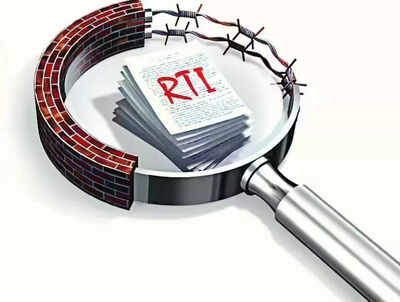
NEW DELHI: Supreme Court on Monday agreed to adjudicate three petitions which allege that amendment to Right to Information (RTI) Act through the Digital Personal Data Protection (DPDP) Act has rendered the former legislation toothless by providing a handle to authorities to deny information on the ground that it is “personal”, but turned down the plea for staying the provision in DPDP Act that puts the right to privacy above the right to information.Senior advocates A M Singhvi, Vrinda Grover and counsel Prashant Bhushan, appearing for three PIL petitioners, told a bench of CJI Surya Kant and Justices Joymalya Bagchi and Vipul M Pancholi that while the RTI Act had originally exempted personal information which did not have any correlation with the person’s public activity, the present amendment to RTI Act through DPDP Act bars all “information which relates to personal matters”.The bench said it would examine the concern of petitioners while keeping in mind the need to balance the right to privacy with the right to information.“To some extent, it is a complex, sensitive yet interesting issue which needs balancing,” the bench said while firmly rejecting Bhushan’s plea for a stay on the amended Section 8(1)(j) of RTI Act.“The unamended Section 8(1)(j) was not a mere statutory exception; it embodied a legislatively mandated proportionality mechanism. It exempted personal information only where disclosure bore no relationship to any public activity or interest or would cause unwarranted invasion of privacy, and even then required disclosure where the larger public interest justified it,” said an NGO petitioner.







Leave a Reply