
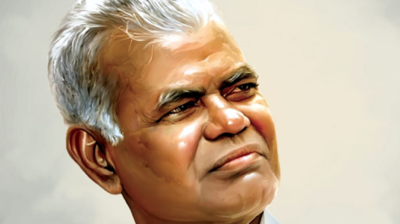
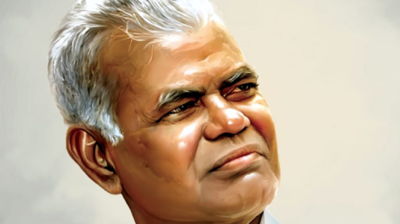
CHENNAI: In Tamil Nadu’s personality driven politics where optics and rhetoric matter a lot, there are few politicians who are remembered for their ideological resolve. Thozhar RNK is one. R Nallakannu, who died in Chennai on Wednesday at the age of 101, represented a generation of leaders shaped by the freedom struggle and guided by ideological discipline rather than personal ambition. A true Communist, Nallakannu’s personal stature often transcended the strength of his party in a state dominated by Dravidian majors. Born in 1925, the same year CPI was founded, at Srivaikundam in Tuticorin district, Nallakannu was drawn to the freedom struggle as a teenager. The ideals of social justice and equality soon pulled him towards the Communist movement. By the 1940s, he had become an active organiser for the Communist Party of India (CPI), working among agricultural labourers in the delta districts. His early political life was marked by arrests and imprisonment for organising protests. Like fellow comrade Sankaraiah, Nallakannu was one among a few who were arrested by the British rulers before 1947 as well as by Indian authorities after independence. The political folklore says that the most brutal torture he suffered was during his arrest in 1949, a year after CPI was banned in India. “A police officer burnt the mustache of Nallakannu using a cigarette,’’ CPI’s state secretary M Veerapandian said once. Nallakannu eventually gave up sporting a mustache. In the years that came by, Nallakannu was arrested on multiple occasions by various govts. His associates recall his discipline in jails — rising early, reading extensively and conducting political discussions even inside prison walls. Over the decades, Nallakannu became the towering leader of CPI in Tamil Nadu and a prominent Left voice in other states too. Even after his marriage to Ranjitham Ammal in 1958, daughter of a local Communist functionary, he continued with his party work. Ranjitham Ammal died in 2016. The couple are survived by two daughters. He served as the state secretary of the party for several years, building its grassroots presence at a time when Dravidian parties dominated electoral politics. While the CPI remained a minor electoral force, Nallakannu’s stature was often larger than the party’s strength. People’s problems became his own. Not just labour woes, he fought for farmers’ issues, river water disputes and environmental causes. His campaign for protecting the Thamirabarani river from illegal sand mining earned him respect even from political opponents. Growing along the banks of Thamirabarani, the river was close to his heart. He waged yet another legal battle to stop a soft drinks manufacturing unit from drawing water from the river. During the course of his public life, frugality became his identity. Nallakannu continued to live modestly, maintaining minimal personal possessions. A dhoti, half sleeved white shirt with a pen tucked in the pocket and a broad smile on the face became his identity. Long time associates recount that he was meticulous with party funds, maintaining accounts down to the last rupee. Late DMK patriarch M Karunanidhi once described him at a public function as “a man whose life itself is a lesson in simplicity and commitment.” J Jayalalithaa, despite fierce ideological differences with the Left, was always warm towards Nallakannu. She once said “leaders of conviction enrich public life” while greeting Nallakannu. Chief minister M K Stalin has referred to Nallakannu as “a guiding light of principled politics.” Even as age advanced, Nallakannu remained active in public discourse. Well into his 90s, he continued to attend protests, address gatherings and issue statements on agrarian distress and federal rights. “He would not mind even if it was sunny. He would participate in protests along with younger cadres,’’ said former CPI state secretary R Mutharasan. In a state defined by powerful personalities and charisma, Nallakannu’s life represents a story of ideology, discipline and moral integrity.





Leave a Reply