
Democrats eyeing White House runs in 2028 are preemptively breaking up with AIPAC.
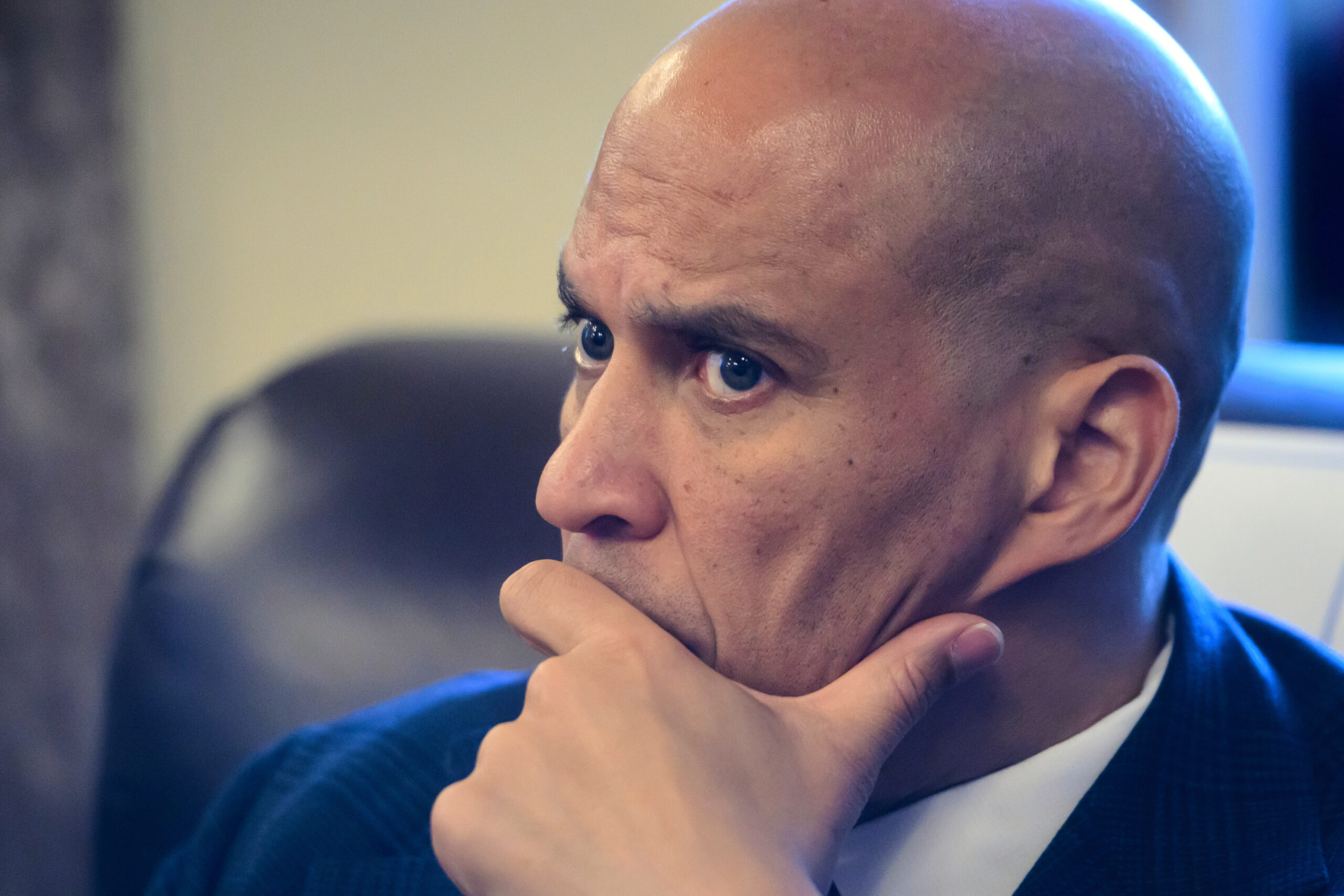
Sen. Cory Booker, who received donations bundled by the American Israel Public Affairs Committee as late as December, told POLITICO that he’s sworn off the group’s funds (and other PAC money). California Gov. Gavin Newsom said he never has and “never will” take donations from the group. Sen. Ruben Gallego (D-Ariz.) vowed last week that he “wouldn’t take AIPAC money” anymore. A spokesperson for Pennsylvania Gov. Josh Shapiro said he has “never taken money or solicited support from AIPAC,” while a spokesperson for Kentucky Gov. Andy Beshear said “AIPAC has never contributed to Gov. Beshear and they’re never going to. Ever.”
Their retreat underscores how rapidly AIPAC has become a bogeyman for Democrats seeking to criticize the Israeli government, particularly with the Netanyahu administration’s involvement with President Donald Trump’s operation in Iran. Many former AIPAC-friendly Democrats see the historically bipartisan group as becoming more and more aligned with Netanyahu’s right-wing government in recent years. Its emergence as an early touchstone in the shadow 2028 presidential primary reflects a calculation among leading Democrats that liberal voters’ hard shift away from the longtime U.S. ally will stick.
“This is going to be a huge flashpoint in the primary throughout 2027 and into 2028,” said veteran Democratic strategist Mark Longabaugh, who advised Sen. Bernie Sanders’ 2016 presidential bid. “The constitution of the party just in the makeup of the voters has changed dramatically. The politics of Israel has changed dramatically.”
Recent AIPAC critics also include some Jewish Democrats who had previously supported the organization or received its backing.
After AIPAC poured $22 million into Illinois primaries last week to mixed results, Gov. JB Pritzker, a billionaire who does not accept outside funds, accused the group of becoming pro-Trump and said he wants no part of the group he once donated to. A spokesperson for Sen. Elissa Slotkin (D-Mich.) pointed to a podcast in which she said she swore off AIPAC’s support in 2022.
Former Chicago Mayor Rahm Emanuel — a supporter of Israel whose father is Israeli and who previously held dual citizenship with the country, but who has also been a longtime critic of Israeli Prime Minister Benjamin Netanyahu — told POLITICO he “need not worry about AIPAC’s support. It will not be forthcoming.”
Democrats cited a variety of reasons for rejecting AIPAC’s cash. Booker said it was part of a broader pledge he made at the start of the year to swear off all PAC money going forward. “I don’t believe we should be accepting any PAC money at all from anybody,” he told POLITICO on Friday.
Gallego likened taking the group’s backing to “endorsing what’s happening right now” in Iran and Gaza while appearing on POLITICO’s “The Conversation.”
And progressives like Reps. Ro Khanna (D-Calif.) and Alexandria Ocasio-Cortez (D-N.Y.), who have been highly critical of the Israeli government and have repeatedly sparred with AIPAC, have accused the group of targeting their campaigns and long rejected its financial aid. Sen. Chris Murphy (D-Conn.) bluntly told POLITICO: “I don’t take their money, they’re running ads against me.”
Other potential White House aspirants attempted to dodge the question. Sen. Raphael Warnock (D-Ga.), for instance, said he has “individuals who support me” when asked if he would reject AIPAC’s backing. Several more did not respond when reached through spokespeople, including former Vice President Kamala Harris, former Transportation Secretary Pete Buttigieg, Sens. Mark Kelly (D-Ariz.) and Jon Ossoff (D-Ga.), and Govs. Wes Moore of Maryland and Gretchen Whitmer of Michigan.
That so many Democrats declined to comment on the organization suggests that AIPAC still has some influence in Democratic politics. And the big-spending group can still help its preferred candidates to victory even as its name has become mud in Democratic primaries, as evidenced by its wins last week in two of the four Illinois House races where it spent big. But it’s also telling that no potential 2028 candidate openly embraced the group.
AIPAC and its allies hit back, accusing Democrats who are giving the group the cold shoulder of trying to silence pro-Israel voices within the party. They vowed to continue intervening in Democratic primaries to promote their interests. Deryn Sousa, a spokesperson for AIPAC, said “efforts to push pro-Israel Democrats out of the political process are alarming and fundamentally undemocratic.”
Patrick Dorton, a spokesperson for AIPAC’s super PAC, United Democracy Project, acknowledged the “difficult environment” the lobby is navigating after Gaza and with the war in Iran. But, he said, “we aren’t going to be deterred in ensuring that pro-Israel voices are heard in federal elections.”
“We are going to work with mainstream Democrats across the party to strengthen the U.S.-Israel relationship, and that includes presidential contenders,” Dorton said. “We’re going to remind everybody about the millions of pro-Israel Democratic voters who are part of the political process in federal elections.”
Top Democrats’ rush to rebuff AIPAC comes amid a party-wide grappling over how to handle Israel, after the Biden administration’s approach to the war in Gaza was found to have cost Harris votes in 2024 and as polls show Democratic voters continuing to sour on Israel as it aids the U.S. intervention in Iran. An NBC News poll this month showed 57 percent of Democrats view Israel negatively, a dramatic shift from when just 35 percent held a negative view of the country after Hamas attacked it on Oct. 7, 2023. A Quinnipiac University survey earlier this month showed 62 percent of Democrats felt America is too supportive of Israel.
Democrats eyeing 2028 have been publicly repositioning on Israel for months as Gaza reemerges as a flashpoint in midterm primaries. And their criticisms of Israel and its allies in the U.S. are growing sharper as the war in Iran escalates with no clear off-ramp from Trump.
Newsom earlier this month likened Israel to an “apartheid state” and said the U.S. should reconsider military support for Israel. Pritzker has long been a supporter of Israel and has advocated for a two-state solution, but recently told the New York Times that he’s “challenged” by current geopolitics because the U.S. is supporting Israeli policies “that I don’t think the majority of Americans believe in and I don’t think a majority even of Israelis believe in.”
Shapiro, who’s similarly been a longtime supporter of Israel and a two-state solution, has also criticized Netanyahu and Trump’s enabling of his agenda in recent podcast appearances. But he cautioned that denying Israel’s right to exist could lead to “permanent war.” A spokesperson for Shapiro said the Pennsylvania governor “has been clear that Donald Trump is failing to hold Netanyahu accountable” while also positing that “Israel has a right to exist in security as a Jewish state, and we must find a path to peace in the Middle East that includes a safe homeland for the Palestinian people.”
Leading progressives, including Ocasio-Cortez and Khanna, have gone further — accusing the Netanyahu administration of perpetuating genocide in Gaza and pushing to stop U.S. arms sales to the country.
But Democrats on both ends of the ideological spectrum have argued there are bigger issues around Israel than AIPAC. Shapiro, on a podcast last year, said putting Democrats on record over AIPAC was a “shortcut” for asking their views on Israel and a two-state solution. “Demanding answers on those questions is more important than ‘hey, what about this lobbying group or that lobbying group,’” he said.
Khanna, in a message to POLITICO on Monday, said, “What matters more is the clarity of calling what happened a genocide and stopping military sales to Israel used to kill civilians in Gaza and Lebanon.”
Still, progressive groups such as MoveOn and Justice Democrats are plotting how to make taking AIPAC money a red line for those vying to be the party’s next standard bearer.
“We’re going to be demanding that anyone who deserves to get the Democratic nomination not only doesn’t take AIPAC support or donations, but actively speaks out against this lobby,” said Justice Democrats spokesperson Usamah Andrabi.
In a sign of the volatile and complex politics surrounding Israel, some Democrats who are shutting the door to AIPAC donations are declining to call on their would-be rivals to do the same.
Pritzker, asked by POLITICO last week whether Democratic presidential candidates should accept AIPAC funding, criticized the flood of special-interest money in campaigns in general but cast taking PAC cash as “a matter of values” for each candidate. Murphy said “everybody will make their own decision about it.”
And Booker went so far as to call the AIPAC pile-on “problematic.”
“There are Iranian Americans that bundle money. There are Turkish Americans that bundle money. There are a lot of ethnic groups that bundle money, and often for things that I don’t agree with. But somehow AIPAC seems to be drawing a lot of attention, and that’s problematic to me,” Booker said. “[AIPAC] is not the problem in America. The problem in America is money in politics.”







Leave a Reply