

Donald Trump is setting up his latest loyalty test on Capitol Hill — and it’s not about the war in Iran, Cabinet nominees or his White House ballroom.
Instead, the president is lobbying GOP lawmakers on a plan to make daylight saving time permanent, meaning more daylight in the evening hours and an end to the twice-yearly clock-resetting ritual observed in most states.
Trump has fixated on this issue, believing it resonates with voters who are burdened by “all of the work and money” associated with changing the clocks every six months. He scored an initial victory last month when members of the House Energy and Commerce Committee voted 48-1 to insert an amendment into their portion of a surface transportation reauthorization bill that would codify daylight saving time across the country.
His personal touch, coupled with engagement from the White House Office of Legislative Affairs, helped land the provision in the House transportation bill, according to a senior White House official granted anonymity to share private legislative strategy.
“The president has been actively engaged in this,” the senior official said in an interview. “It’s a big priority for him.”
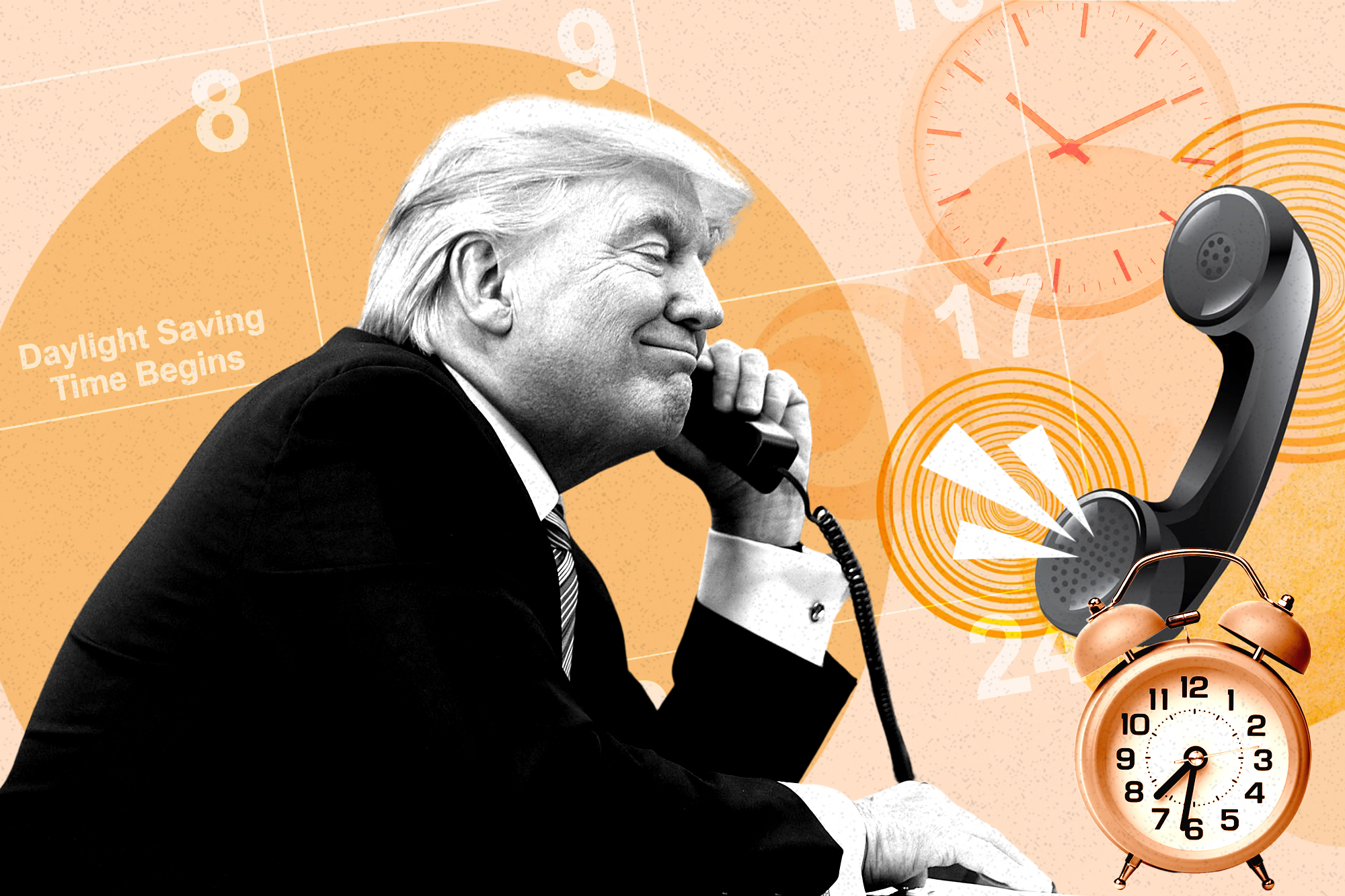
Trump also made personal phone calls to Republicans on the matter.
“He’s a big fan of it,” said Sen. Josh Hawley (R-Mo.) of a call he received from Trump about making daylight saving time permanent. “He said, ‘Do you still think this is a good idea?’ I said, ‘Yeah, I do, I think it’s a great idea.’”
The president took a victory lap on social media following the committee vote, saying enactment of the so-called Sunshine Protection Act — the text of which was included in the broader measure — would be a “very nice WIN for the Republican Party.”
It remains to be seen, however, whether Trump will be able to parlay support within his party at the committee level to the House and Senate floors, where many members could then be less enthusiastic about voting on a policy change that would have far-reaching consequences.
There have been bipartisan efforts for years to make daylight saving time the norm and none have been successful. Lawmakers have been torn between advocacy from the golf and retail industries eager for more daylight to boost their businesses, and sleep experts who warn of the adverse health effects of darker morning hours — and some Jewish constituents whose daily morning prayers are required to happen in daylight.
Republicans are operating with fragile majorities and rebellions from even one lawmaker can tank an entire bill. In the Senate, Sen. Tom Cotton (R-Ark.) blocked an attempt last October to pass a version of the Sunshine Protection Act on the Senate floor, arguing that farmers in his state “might go three, four, even five hours in the morning without seeing the sun.”
Cotton declined to comment on the latest Trump push to pass the bill. But he’s not alone, said Sen. Shelley Moore Capito of West Virginia, who chairs the Environment and Public Works panel with jurisdiction over the highway funding portion of the surface transportation bill.
“I’ve already heard from people over here who don’t like it,” she said in a recent interview.
The five-year measure is also a must-pass bill that will require bipartisan support, and even Democrats who supported the daylight saving time amendment in committee said in later interviews they don’t think the provision should necessarily carry over to the president’s desk.
“I know that it comes up from time to time, but when I’m at home, people are not talking to me about this whatsoever,” said Rep. Kathy Castor (D-Fla.), a member of the Energy and Commerce Committee. “They’re talking about the high-income cost of gas, high cost of groceries, the fact that health care has been ripped away from them.”
She said the daylight saving time amendment “probably should have [been] debated in the light of day.”
Trump has talked about the economic argument for ending the twice-a-year clock adjustments, recently writing on Truth Socialthat “it’s time that people can stop worrying about the ‘Clock,’ not to mention all of the work and money that is spent on this ridiculous, twice yearly production.”
Ending daylight saving time, he added, “gives you a longer, brighter Day — And who can be against that — This is an easy one!”
Other than that, it’s less clear why Trump has seized on this issue specifically given the various other urgent matters affecting the nation. But according to the senior White House official, the administration’s case is grounded in personal health and the economy — and that every parent of a small child would agree it’s a drag on sleep schedules.
“The overall thrust of the policy is just to stop dealing with the health issues and the various pieces of economic dislocation that occur when we have to change our clocks. And if you’re a parent, the absolute holy hell of having to adjust your children’s internal clocks with the changing of the time, so we think it’s a win-win-win,” the official said.
“Win for the president, win for the American people, and a win for everybody who has to go through this really inconvenient process. We’re going to keep working the bill hard.”
Ending the practice of changing the clocks could be a legacy item for the president, fulfilling something he has been wanting to do since he first publicly endorsed making daylight saving time permanent in 2019.
It’s also a priority for the state of Florida and the golf industry — making it even more personal for the president, a resident of the Sunshine State and an avid golfer. When asked if professional golfers, many of whom are friendly with Trump, could come in to help lobby on the issue, the senior official said only that there’s a “great coalition behind the bill.”
On Capitol Hill, Florida Republicans are leading the fight, with Sen. Rick Scott taking up the mantle after his former colleague Marco Rubio decamped from the Senate to become Secretary of State.
“I passed legislation as governor” of Florida, Scott said in an interview. “The moment it passes, we protect our sunlight … I’m going to make sure it gets passed this year.”
Rep. Vern Buchanan (R-Fla.), a champion of the Sunshine Protection Act in the House, said he was aware the president was making calls on the bill’s behalf.
“Everybody feels basically the same way,” he said in an interview. “I say everybody — most people … want to see that extra hour in the evening.”
As Cotton, Castor and Capito indicated, that may not be the case. The lone opponent against the measure in committee, Rep. Nanette Barragán (D-Calif.), acknowledged the annoyance of the twice-annual time change but raised health and safety concerns that morning darkness would impact Americans’ sleep hygiene.
Yet this might be the first time a president has shown a willingness to expend so much political capital on the issue. And, to Castor’s point about people having bigger things to worry about, industry groups may not be paying close enough attention to try and derail it.
In a statement, a spokesperson for the National Family Farm Coalition said that given other pressing challenges facing farmers — “the continually delayed farm bill, corporate controlled trade policy, rising input costs paired with volatile price markets, USDA restructuring” — the potential end to daylight saving time is “much lower on the priority list.”
The surface transportation bill could run into other problems, including a fight over a bipartisan rail safety bill pushed by Vice President JD Vance that is largely opposed by the powerful freight rail lobby. House GOP leaders are not optimistic a package could land on the floor this month — and, in fact the entire issue might need to be punted to after the November election. It’s also not clear what other legislative vehicle might exist for the Sunshine Protection Act to hitch a ride, Trump’s advocacy notwithstanding.
Rep. Rick Larsen of Washington, the top Democrat on the House Transportation and Infrastructure Committee, called the issue “one of the least important issues that this Congress can deal with,” but welcomed any help from the White House to pass a larger surface transportation package.
“I’m encouraged that they think this is a bill that’s going to move, but I will say this: if they want this … then I hope in the end they help the bill pass,” he said.
Buchanan acknowledged it’s been a long fight already.
“I’ve been working on this thing for eight years, 10 years,” he added. “That’s how long it takes.”
Meredith Lee Hill contributed to this report.







Leave a Reply