
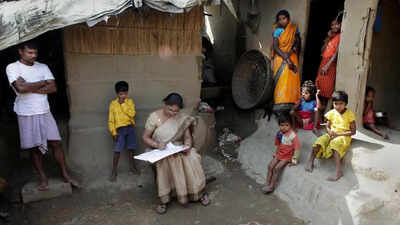
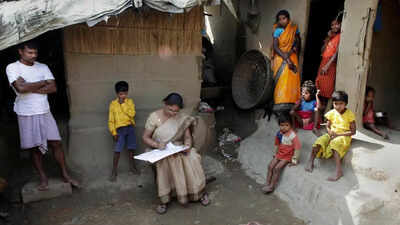
NEW DELHI: While 82% of the census houselisting work is already complete in the national Capital, the enumerators are dealing with a different challenge: reluctance on part of certain sections — migrants, occupants of “unauthorised” settlements and owners of residential buildings with multiple rented units — to enumerate due to preconceived notions and misplaced fears about the individual census data being used to penalise them.As per the Census Act 1948, individual data collected during the census is kept strictly confidential and only the aggregated data at various administrative levels is made public. This allows people to record their housing and individual data freely and correctly, reassured that it will not be shared with any law enforcement agency or regulatory body. The accurate datasets serve as the foundation for evidence-based planning, policy formulation and targeted welfare interventions.Officials involved in enumeration for the houselisting phase, which ends in Delhi (MCD area) on June 14, told TOI that the refusal of certain sections to be enumerated cuts all districts/areas including East Delhi, Northwest Delhi, Northeast Delhi, Southwest Delhi, Outer Delhi etc. A senior census functionary said this is “due to half-baked understanding of census rules and procedures, which we are trying to correct through awareness activities like nukkad natak (skits) and dialogue with involvement of the district administration and community leaders”.The official said some migrants are unwilling to be enumerated in the aftermath of special intensive revision (SIR) that saw nearly 5.2 crore deletions in Phase 2. Since many retain aadhaar and name in the electoral roll in their native place or may have settled in Delhi’s authorised colonies, they are reluctant to enumerate, fearing they will lose their documentation from their home state and also face action for squatting. “Fear of being penalised by tax or civic authorities sits in the minds of owners of private houses in unauthorised colonies and in coaching havens like Mukherjee Nagar where a large number of students live on rent in poor living conditions,” said the officer.Another challenge for enumerators is entering large residential complexes where the owner resides with scores of tenants occupying other rooms. “Fearing scrutiny, the owner insists on the entire building being recorded as a single household comprising only his immediate family. Enumerators are not given access to other rented rooms in the complex, and sometimes threatened,” an officer said and added that the census staff are talking to the owners to convince them. “In some cases, we have had the district administration deploy civil defence volunteers to accompany the enumerator for safety,” said the officer.With 10 days to go before the houselisting phase ends in Delhi, census authorities have asked enumerators to go back to the reluctant sections to reassure them about privacy of individual data and emphasise how 100% coverage of Delhi’s over 46,000 enumeration blocks is essential to future policy interventions. “They have been able to convince some, though others are more stubborn,” said an official.The officer said similar challenges would have been faced in earlier census exercises as well. “The percentage of persons unwilling to participate in the census is not significant, but then the effort is always to cover 100% households and record data with least errors,” the officer told TOI.







Leave a Reply