
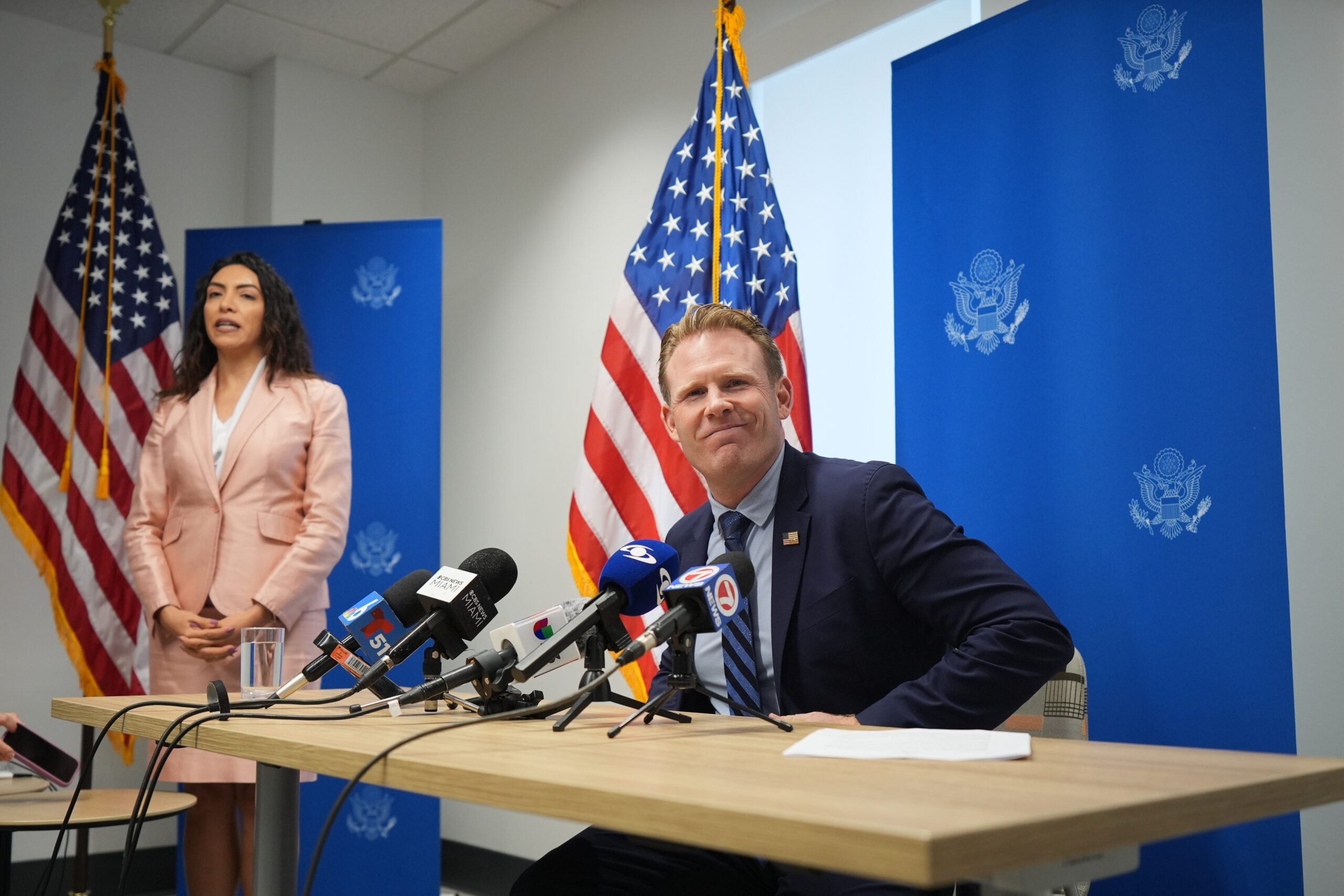

DALLAS — The Trump administration has elevated dozens of more complex World Cup visa decisions to senior leadership as officials try to balance FIFA commitments with national security concerns.
In an interview Sunday, White House World Cup task force Executive Director Andrew Giuliani said many high-profile or complicated visa cases have ultimately reached his desk for a final determination.
“Dozens, I would say dozens,” Giuliani said when asked how many edge cases had required senior-level review. He also suggested that some applicants who might otherwise face difficulties entering the country have received additional consideration because of U.S. commitments tied to hosting the World Cup.
“That’s part of the contract the U.S. government signed with FIFA,” Giuliani said.
In light of President Donald Trump’s tough border policies, these details provide a glimpse into the administration’s process of reviewing visas ahead of the largest World Cup tournament in history — a task that’s involved the State Department, Department of Homeland Security and the White House World Cup task force to keep the process moving.
Giuliani defended the decision to deny entry to Somali referee Omar Abdulkadir Artan, saying it was made by Customs and Border Protection and Homeland Security Secretary Markwayne Mullin.
While declining to discuss specific intelligence, he said Artan had been communicating with “bad actors” shortly before he was scheduled to travel to the U.S.
Giuliani had conversations with FIFA about Artan’s case because the Somali is one of the organization’s referees.
“We talked about it, obviously, right? I mean, it’s one of their referees,” Giuliani said.
“There are some things we can’t talk about,” Giuliani said. “We want all those players and coaches to come to the United States of America, and officials and referees, as long as they’re not communicating and coordinating with bad actors.”
Giuliani emphasized that the overwhelming majority of players, coaches, referees and officials have received visas without issue.
Still, Giuliani said the administration’s red line remains national security. Referencing broader concerns about individuals linked to terrorist organizations, he said the World Cup would not serve as a justification for admitting people deemed security risks.
“The first thing that is so key to this tournament being successful is the national security of the country,” Giuliani said. “We’re not going to let the World Cup be the excuse.”





Leave a Reply