
OTTAWA — Canadian Prime Minister Mark Carney’s rousing Davos speech, where he called on middle powers to not become losers to the world’s “hegemons,” delivered a message that positioned Canada as an influential convening power.
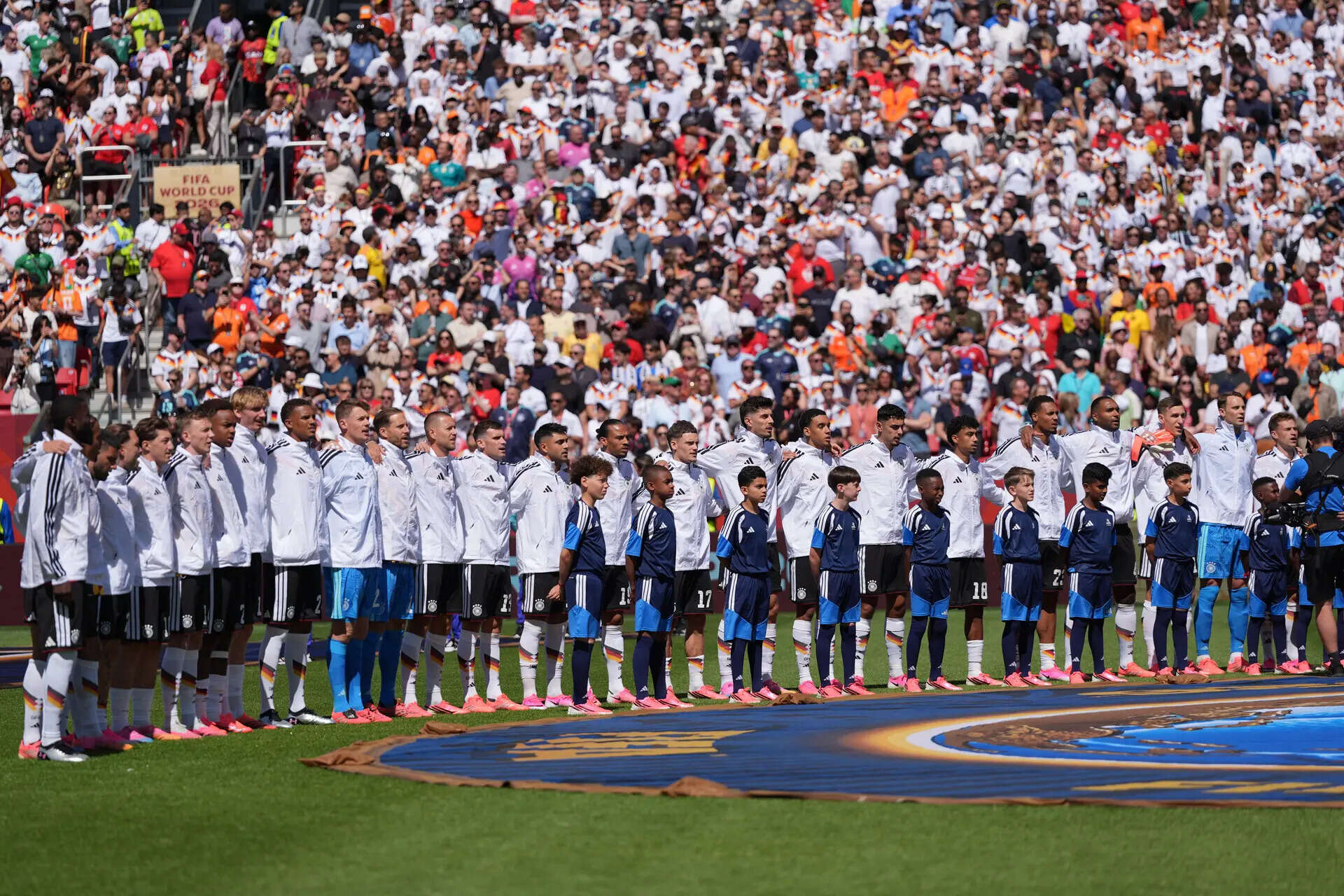
Now, with billions watching — including during this afternoon’s match between Germany and Côte d’Ivoire in Toronto — the World Cup is giving Canada an unprecedented opportunity to thirst-trap a global audience to take America’s neighbor a little more seriously.
“The international brand of Canada is important for our economy, for our place in the world, diplomatically, but also commercially,” Canada’s Secretary of State for Sport and Olympic gold medalist Adam van Koeverden told POLITICO.
“We just want to emphasize that Canada is open for business,” he said. “We’re taking advantage of the reality that all eyes will be on Canada for the next couple of weeks throughout the FIFA tournament … and we want to continue to reinforce relationships, make new friends [and] meet new corporate partners.”
Canada needs foreign investors to get the Carney government’s dreams of building oil pipelines, new rail and port expansions to unlock new wealth for a country that continues to be the target of tariffs and casual annexation threats from its closest ally. And a bellicose U.S. President Donald Trump has only helped Carney in his trips around the world to lure more foreign investment, selling Canada as a reliable destination to an unreliable United States.
A goal for senior Canadian government officials is to use the World Cup to bait deep-pocketed viewers to attend the inaugural Canada Investment Summit that Carney is organizing in September. The idea is to attract “the world’s largest investors” to raise C$1 trillion over the next five years to charge the economy — Carney’s message of adapting to the global “rupture” by wresting economic control of the future put into practice.
That could mean more cash to expand sport infrastructure, such as stadiums, to host more global sporting events. The Toronto Stadium is notably the World Cup’s smallest among the 16 host cities with a 43,000-seat capacity. But organizers don’t want people to fixate on that.
Sharon Bollenbach, executive director of the FIFA World Cup 2026 Toronto Secretariat, told Forecast the city is leaning in hard on its “world in a city” theme — a nod to a city widely recognized as the most multicultural in the world.
“We speak 250 languages in our city,” she said. “Our cultural diversity is very extensive and vibrant … in all of our neighborhoods, in food, in the culture.” Asked what’s different about Toronto compared to Los Angeles, another city that could claim the same characteristics, Bollenbach suggested it’s the general optimism in the air that sets the Canadian city apart. “I think we just live that every day in such a positive and energetic way that that’s something we really want to showcase,” she said.
There’s hope the waterfront images of Toronto’s CN Tower and Vancouver’s North Shore mountains in the backdrop of World Cup stadium shots will generate an eventual tourism boom that hasn’t yet happened for the tournament itself.
Sara Anghel, president and CEO of the Greater Toronto Hotel Association, said one factor in lower-than-expected demand is that half the game tickets sold in Toronto are “local-ish” from the city area and province. The trend isn’t unique to Toronto after FIFA canceled blocks of thousands of hotel rooms in host cities this spring in response to fizzled out expectations.
“June is already a really, really busy month for Toronto, and so when we’re bringing this World Cup that’s never happened in our city ever, we’ve displaced all of the meetings and conferences that would usually come into the city,” Anghel said.
“They’re staying away because of the FIFA games.”



Leave a Reply