
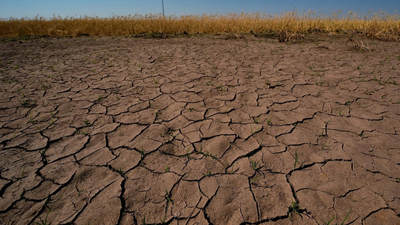
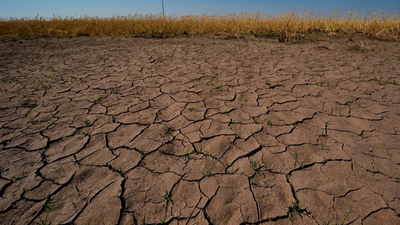
NEW DELHI: There doesn’t appear to be any respite from the El Nino over monsoon, with the World Meteorological Organisation’s (WMO) latest update on Friday indicating a “rapid development” of this climatic phenomenon during July-Sept, increasing the likelihood of heat waves, droughts and other extreme weather events in many parts of the globe, including the Indian subcontinent.India already faced the impact of El Nino in June that led to a huge rainfall deficit of 40% in the month, affecting ongoing sowing operations of almost all Kharif (summer sown) crops and thereby reducing overall acreage in the country by around 23% compared to the corresponding period last year.El Nino – a naturally occurring climate pattern characterized by above-average sea-surface temperatures in the central and eastern equatorial Pacific Ocean – is invariably associated with weak monsoon and harsher summer in India. These events typically occur every two to seven years and usually last between nine and 12 months.“El Niño conditions are already underway and are forecast to strengthen rapidly into a strong event… This will intensify the chances of drought and heavy rainfall and the risk of heatwaves on land and marine heatwaves in many regions of the world,” said WMO Secretary-General Celeste Saulo.Though the rainfall deficit in India will gradually be reduced with the spread of monsoon over the entire country and due to other meteorological factors during July-Sept, the status of Kharif acreage will depend on both quantitative as well as spatial distribution of rains in the ‘monsoon core zone’ – the rain-fed area where farming is largely dependent on the seasonal rains.The agriculture ministry’s acreage data shows total sown area at 182 lakh hectares as on June 25 — 23% less compared to 236 lakh hectares a year earlier. All major crops – paddy, pulses, oilseeds, coarse cereals (millets and maize) and cotton – saw lower acreage so far this year compared to the corresponding period last year.Acreage of oilseeds has seen the highest decline of 53%, followed by cotton (35%), pulses (30%), paddy (25%) and coarse cereals (12%) compared to the corresponding sown area in 2025.Amid the growing risk of weak monsoon due to El Niño, Union home and cooperation minister Amit Shah, meanwhile, reviewed the situation of deficit rainfall and its impact, and said th govt is continuously monitoring the situation of below-normal rainfall and “potential drought conditions in certain parts” of the country.He directed the agriculture and all related ministries, including Jal Shakti and power, to remain vigilant and coordinate with state govts to advise farmers on sowing the appropriate crops in such a situation while emphasising the need to focus on alternative crops that require less water, such as fodder, millets and pulses.Since the deficit of 40% rainfall in June led to steep decline in live storage of major reservoirs of the country, including the ones having hydro-electric generation potential, Shah instructed officials from the department of water resources to “monitor all water reservoirs across the country” and directed the power secretary to “take necessary action to ensure a smooth and adequate supply of electricity”.Union agriculture minister Shivraj Singh Chouhan also attended the review meeting and is learnt to have shared in detail the contingency measures being taken by his ministry to minimise the impact of the El Niño-linked deficit rainfall on farming operations. He also informed that adequate quantities of essential food grains, including rice and wheat, are available in the country, and the prices of essential commodities remain stable.Taking in view the impact of heavy rainfall in certain parts of northeast India, Shah instructed that the Inter-Ministerial Central Team of the ministry of home affairs should be deputed to Assam and Arunachal Pradesh to assess the damage caused by recent heavy rainfall, flash floods and landslides as both states have been affected, with Assam experiencing rising floodwaters in multiple districts and Arunachal Pradesh facing landslides and road blockages in several hilly areas.






Leave a Reply