
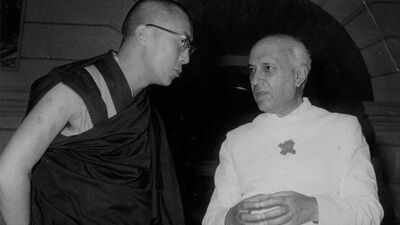
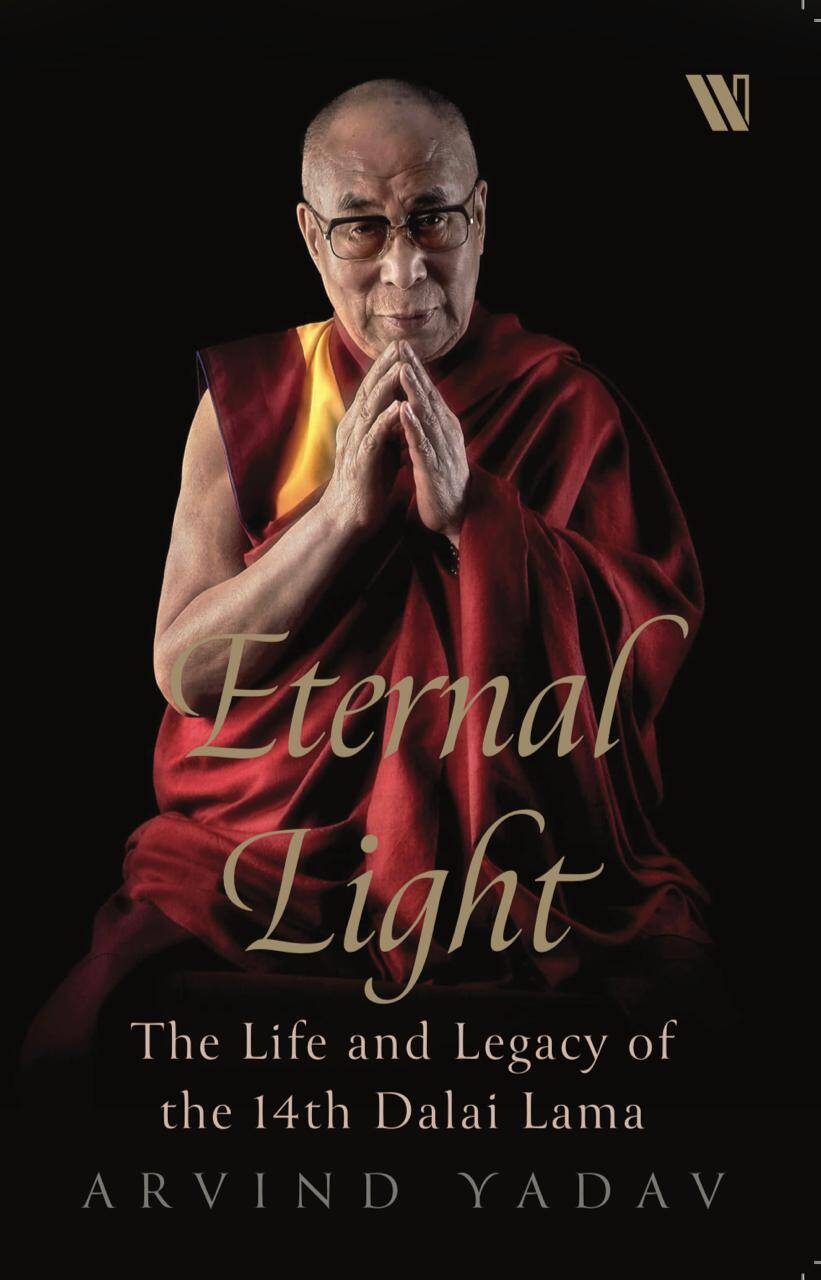
An excerpt from Eternal Light: Life and Legacy of the 14th Dalai Lama by Arvind Yadav sheds light on a little-known diplomatic episode from 1956, when the Dalai Lama confided in Prime Minister Jawaharlal Nehru that he wished to remain in India. The chapter chronicles Nehru’s response, his promise to speak to Chinese Premier Zhou Enlai on the Tibetan leader’s behalf, and the high-stakes diplomacy that unfolded before the Dalai Lama’s eventual exile.Excerpts from the book:After the Buddha Jayanti celebrations, the Dalai Lama had his first real conversation with Prime Minister Nehru. By then, his views had changed. He had already explained why he came to India, but now he had reached a new decision. The Dalai Lama believed it was no longer possible for him to return to Tibet. He thought he should stay in India until there was some sign of change in Chinese policy. The Dalai Lama had met many wise and sympathetic people in India, which helped him reach this difficult conclusion. For the first time, he met people who were not Tibetans but still felt true sympathy for Tibet. He realised that back in Tibet, he could no longer help his people. He couldn’t control their desire for violence, and all his peaceful efforts had failed. But from India, he could raise awareness about Tibet’s situation, get moral support from around the world, and maybe influence a change in China’s harsh policies.
The Dalai Lama felt he needed to explain this decision to Nehru. They met alone, with Nehru’s Tibetan interpreter present. The Dalai Lama began by thanking Nehru for the opportunity to visit India and participate in the Buddha Jayanti celebrations. He then shared his concerns about the worsening situation in eastern Tibet. He explained that the Chinese were determined to destroy Tibet’s religion, culture, and sever their historical ties with India. He told Nehru that the remaining hopes of all Tibetans were now placed on India, and he felt it was necessary to stay in India until Tibet could regain its freedom through peaceful means.Nehru listened carefully but remained firm in his belief that there was nothing that could be done for Tibet at that moment. He reminded the Dalai Lama that no country had ever officially recognised Tibet’s independence. Nehru agreed that it was pointless to fight against China because they could easily crush Tibet with more forces. He advised the Dalai Lama to return to Tibet and try to follow the Seventeen-Point Agreement peacefully.The Dalai Lama replied that he had already done everything he could to follow the agreement, but the Chinese had refused to honour their part, and there was no sign of change from their side. Nehru ended the conversation with a promise to speak with Zhou Enlai, who would be visiting India the next day.The Dalai Lama also met Zhou Enlai. He went to the airport to greet him and later had a long conversation with him. In their meeting, the Dalai Lama explained that the situation in Tibet’s eastern provinces was getting worse. The Chinese were making changes without considering local conditions, the wishes, or the interests of the Tibetan people. Zhou Enlai appeared sympathetic and said that the Chinese officials in Tibet must have made mistakes. He assured the Dalai Lama that he would report what was said to Mao but could not promise any concrete improvements.Prime Minister Nehru had a reception for the Chinese Premier at Teen Murti House. During that reception he introduced the Indian leaders to Zhou Enlai. Dr Karan Singh, Sadr-e-Riyasat of Jammu and Kashmir was also there. Zhou Enlai introduced the Dalai Lama and Panchen Lama to Dr Karan Singh. In their first meeting itself, Karan Singh and the Dalai Lama developed a special bond.A few days later, Zhou Enlai invited the Dalai Lama’s elder brothers, Thubten Norbu and Gyalo Thondup, to dinner at the Chinese embassy.The conversation they had with Zhou Enlai was more hopeful and specific. Since they didn’t hold any official position in the Tibetan government, they could speak more openly without fear of repercussions in Tibet. After the conversation, they told the Dalai Lama that they had been very open in their criticisms. They told Zhou Enlai that Tibet had always respected China as a neighbour, but now the Chinese were treating Tibetans as enemies. They accused the Chinese of using the worst elements of Tibetan society to create conflict while ignoring the patriotic Tibetans who could have improved relations between Tibetans and Chinese. Furthermore, they pointed out that the Chinese had stationed large, unnecessary armies in Tibet, especially in Lhasa, which had destroyed the Tibetan economy and caused prices to rise, leading Tibetans to face starvation. They said the Tibetans were demanding that Chinese troops withdraw and a new agreement based on equality be signed, but the Chinese in Lhasa were ignoring the people’s voice.Zhou Enlai didn’t seem pleased by the criticisms but remained polite and calm. He reassured the Dalai Lama’s brothers that the Chinese government had no intention of using undesirable Tibetans or the Panchen Lama to weaken the Dalai Lama’s authority or cause division.Zhou Enlai said the Chinese didn’t want to interfere in Tibet’s internal affairs or cause an economic burden. He admitted that some of the difficulties might have been caused by misunderstandings among local Chinese officials and promised to improve food supplies in Lhasa. He also said he would start withdrawing Chinese troops once Tibet could manage its own affairs. He promised to report the complaints to Mao and address the issues. Zhou Enlai emphasised that these were not empty promises. He said that the Dalai Lama’s brothers could stay in India to see if the promises were kept. If they weren’t, they would be free to criticise the Chinese government.At the end of the meeting, he made one final request. He had heard that the Dalai Lama was thinking about staying in India, but he urged the Dalai Lama’s brothers to convince him to return to Tibet. Zhou Enlai warned that staying in India would only bring harm to both the Dalai Lama and the Tibetan people, but the Dalai Lama did not heed this warning.






Leave a Reply