
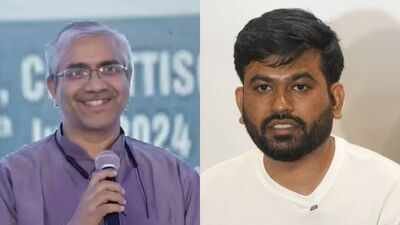
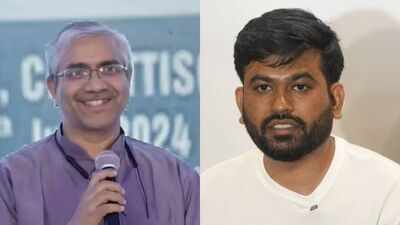
NEW DELHI: Rashtriya Swayamsevak Sangh (RSS) leader Atul Limaye has alleged that the Cockroach Janata Party (CJP)-led protest over the NEET-UG paper leak evolved into an “experiment for alternative politics”, claiming that several political, student, labour and civil society organisations joined the agitation to propagate the idea of “subversion of democracy through democratic means.“Addressing an ABVP event in Chhatrapati Sambhajinagar on July 30, Limaye said the protest should be “decoded” to understand its chronology, methodology, support system and ideological underpinnings. He also alleged that anti-Hindu and “anti-national” slogans were raised during the agitation and questioned how it transformed from a student-led protest into a broader political movement.During his address, Limaye said, “In Today’s times, CJP agitation should be studied as a case study. This has now come to the knowledge of everyone, but this was A phenomenon going on for years now. And if we have to study this whole agitation, we will have to see its full chronology, methodology and what their support system is, and the innovative system which they used and the ideology behind it. Of we see chronology, Abhijit Dipke was from our Marathwada itself. When he launched CJP, he got tremendous following (on social Media), and when he came back to India, he came back on 6th June and did his agitation on 7th.”Describing the course of the agitation, he added, “But he didn’t receive the response which was expected. So, he roamed around the country from 7th to 19th. He started agitation in various cities of the country, or tried to start agitation, but even there did not get that kind of response. So, he started agitation, sit-in protest at Jantar Mantar from the 20th onwards, and gradually the face of the agitation got changed.“According to Limaye, the movement later drew the participation of student organisations, labour unions, human rights groups, women’s organisations, farmers’ bodies and other civil society groups.He said, “What kind of things happened after that which changed the face of this agitation? What kind of support system did attach to this agitation? We need to see which organisations and institutions got attached to this agitation, and this will give us an idea of what kind of support system. This agitation obviously involved the youth, the students of the country. And that is why several student organisations got attached to it. Among the prominent organisations which were leading the stage in this protest was All India Student Association (AISA). And the second such Association was SFI.”He further said, “Some human rights organisations, many tribal organisations, women organisations like Pinjra Tod joined them. Many Muslim organisations, Christian organisations, some institutions working in the legal sector, environment sector, journalistic associations also joined them. Some farmers’ associations joined them, as Samyukta Kisan Morcha and Bharatiya Kisan Union joined them.”Invoking Italian philosopher Antonio Gramsci’s theory of cultural hegemony, Limaye argued that the protest was aimed at challenging democratic institutions and cultural values while operating within democratic processes.He said, “Why did the opposition to Hindus arise from the stage? Why were leaders from several political parties seen on the stage, and how did it convert from a student protest to a political protest? It was not limited to Delhi, but expanded in all the states. For this, we have to decode Yogendra Yadav’s remark, ‘Democracy’s future now will not be decided in Parliament but on streets, elections will not decide, resistance will.‘ The cause of the protest was genuine, but who captured the movement? If we understand this, then we will understand this protest. There is a lot to learn. This protest was an experiment for an alternative politics.”He added, “This theory states subversion of democracy through democratic means. This is well documented, and Italian scholar Gramsci gave the theory of cultural hegemony. He said that cultural hegemony needs to be destroyed for revolution. The deconstruction theory challenged Lord Ram and other figures. Alternative politics states that till there is a system, like our Parliamentary system, there cannot be revolution. All the systems, including the judiciary and police, need to be challenged.”Claiming that such politics could be pursued either electorally or through weakening public faith in institutions, Limaye said, “There are two ways: one is election and the second is subversion of democracy through democratic means. There is infiltration in the judiciary, education system, and bureaucracy. Second is challenging the institutions and eroding faith in them. The results are so dangerous. Many police officers said the way the women were behaving, it was difficult to tolerate.
Share your thoughts in the comments
Be respectful · TOI community guidelines
The way they were dressed and the language they used, we were ashamed. This was an attempt to degrade the culture.”CJP founder Abhijeet Dipke rejected the allegations and said the RSS had no moral authority to describe others as anti-national. Responding to Limaye’s remarks on Monday, Dipke referred to the period when the RSS was banned following Mahatma Gandhi’s assassination.Abhijeet Dipke said, “People who murdered Mahatma Gandhi are calling us anti-national. The murderers of Mahatma Gandhi have no moral right to call anyone else anti-national. Nathuram Godse was the first anti-national.”The CJP had led a 37-day protest at Jantar Mantar over the NEET-UG paper leak. The agitation was withdrawn on July 25 after Union education minister Dharmendra Pradhan resigned and the organisation said it had received assurances on its other key demands.






Leave a Reply