
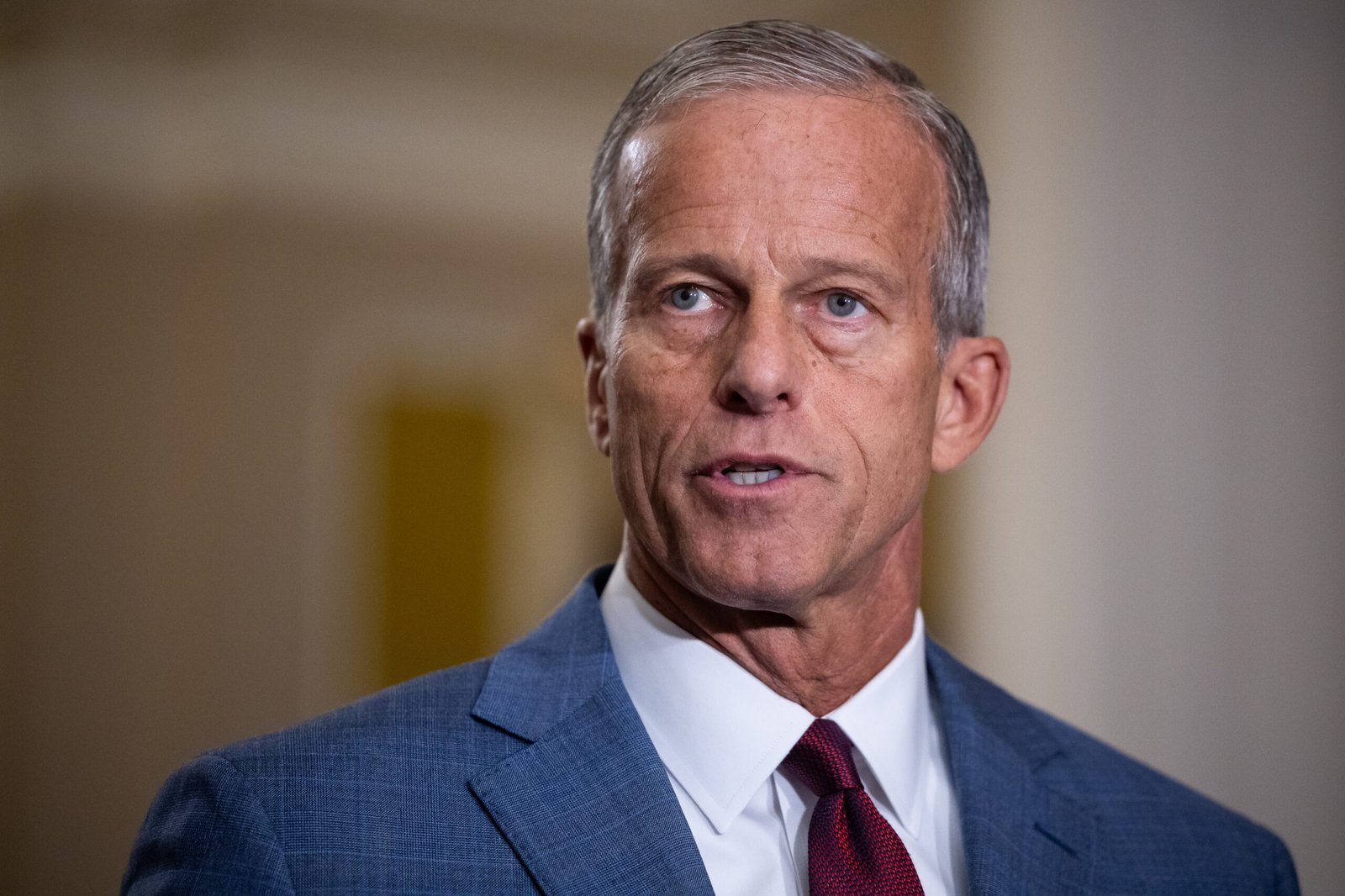

Senators Monday will take up a bipartisan funding patch measure that sets them up for a clash with House lawmakers in September.
Senate appropriators released stopgap bill text Sunday that would fund federal agencies through Dec. 11 at current levels, with some exceptions. Leaders set an initial procedural vote tonight with hopes of passing the measure before the Senate breaks for recess.
But the bill includes several rebukes of President Donald Trump, and House lawmakers will need to decide when they return in the fall whether to take up the Senate’s version or try to muscle their own version forward.
Senators are also facing an immediate deadline crunch: Leaders will need bipartisan time agreements to fast-track legislation in order to accomplish their ambitious schedule this week, including for the funding patch. The chamber’s Republicans are preparing to potentially stay in session through the weekend, two people granted anonymity to disclose private scheduling told POLITICO.
As for differences with the House: Senate Democrats with the backing of key Republicans like Appropriations Chair Susan Collins pushed for language to block Trump from finalizing a plan to put political appointees in charge of approving grants. The prohibition would last for the duration of the funding patch.
There’s also language Democrats have demanded ensuring no new funding goes to immigration enforcement agencies, since Republicans funded those programs through a party-line package this spring.
And while it incorporates some of the funding increases and authorizations the White House sought for specific programs, the Senate bill does not contain major military boosts the administration requested, including an extra $1 billion for a “Trump-class” battleship.
The differences stem from weeks of bipartisan negotiations between Collins and top Democratic appropriator Patty Murray — unlike the House-passed funding extension which Republicans advanced without consulting Democrats.
“This measure gives Congress the time we need to continue our work on bipartisan appropriations bills, which are always my strong preference for handling annual government funding,” Collins said in a statement.
The funding legislation is GOP leaders’ top priority in a busy sprint to recess, which is expected to include votes on Russia sanctions legislation, nominations, a cryptocurrency bill and potential initial votes on a college athletics bill.
And still up in the air: Whether Majority Leader John Thune brings a budget resolution for a third party-line bill to the floor or if his right flank insists on forcing their colleagues take a vote to allow the recess to start.
What else we’re watching:
— HOUSE GOP LEADERS SILENT AMID MILLER MESS: House Republican leaders aren’t yet publicly responding to domestic and child abuse allegations against Rep. Max Miller, including weighing in on whether Miller should continue to serve or run for his seat again. Spokespeople for Speaker Mike Johnson and his leadership team didn’t respond to a request for comment Sunday after the allegations against Miller were complicated by a statement from his former father-in-law, Sen. Bernie Moreno, who denounced the Ohio congressman for the first time. Moreno called for him to exit the House. Moreno’s statement is the first from the senator directly weighing in on Miller ahead of the Aug. 5 deadline to put someone else on the ballot.
— BLANCHE NOMINATION BACK FROM THE DEAD: Todd Blanche is suddenly back on track to be confirmed as attorney general later this week after a late-night deal Sunday. A spokesperson for Sen. John Cornyn said just before midnight he had come to terms with the Justice Department on a deal to rein in the controversial settlement agreement Trump reached with the IRS in April. With fellow holdout Sen. Thom Tillis indicating he plans to follow Cornyn’s lead, the deal appears to pave the way for a successful Senate Judiciary vote Tuesday. That could allow for Blanche’s confirmation before the summer recess begins later in the week.
Jennifer Scholtes, Jordain Carney, Mia McCarthy, Chris Marquette and Katherine Tully-McManus contributed to this report.





Leave a Reply