
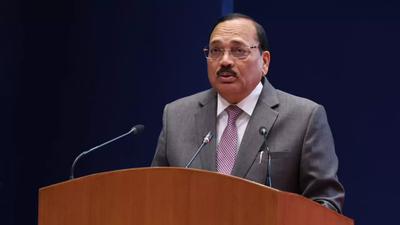
NEW DELHI: Chief Justice of India Surya Kant on Friday strongly disapproved of the Bar Council of India’s now-revoked decision to stop enrolment of 2026 graduates of Hyderabad’s NALSAR University of Law as advocates after students opposed his invitation as chief guest for the university’s convocation. The Supreme Court said students had a right to protest peacefully and stayed any coercive action against NALSAR students or faculty by the BCI or state Bar Councils.“If students are protesting peacefully, who is BCI to take action? It is the right of the students to protest peacefully. It is a dialogue between students and me. No one else has to step in,” the CJI said.The bench, comprising CJI Surya Kant and Justices Joymalya Bagchi and V Mohana, said the BCI’s action was “absolutely uncalled for”. The court posted the matter for hearing after two weeks.Also read: ‘Uncalled for’: CJI pulls up Bar Council of India over threat of action against NALSAR studentsThe controversy began after a section of NALSAR students urged the university to reconsider inviting CJI Kant as chief guest for its upcoming convocation. The students had cited his reported remarks during a hearing on alleged police excesses against protesters during the July 20 march to Parliament.
How the NALSAR row began
At least six representations were submitted to the NALSAR administration from students of different batches, with the first being submitted on July 23. The students objected to the proposed invitation and referred to remarks attributed to the CJI during the hearing.One of the representations cited his response to an offer to show videos of the alleged police action: “We are not interested in videos; we don’t have time to watch.” The letter also quoted him as telling counsel: “Don’t waste our time, and don’t waste your time”.The students argued that inviting the CJI conflicted with the university’s stated commitment to constitutional rights and access to justice.Also read: NALSAR students oppose CJI Surya Kant as convocation chief guest“A convocation is meant to be a moment where the University’s own values, including a commitment to constitutional rights, access to justice, and reasoned engagement with grievances, are visibly reflected in the choices it makes. We feel that receiving our degrees from a dignitary whose recent public conduct, as reported, appears dismissive of serious allegations of police brutality against protesting citizens sits uncomfortably with what we have been taught to value during our time at NALSAR.“Five subsequent representations from different batches supported the concerns raised in the initial letter. Students claimed that hundreds had backed the representations, although the numbers could not be independently verified.“We respect the CJI’s position. But we have been taught the Constitution and constitutional values, and we don’t want to support something that goes against those values,” a student who was also part of the Student Bar Council told TOI.
BCI threatens to block enrolment
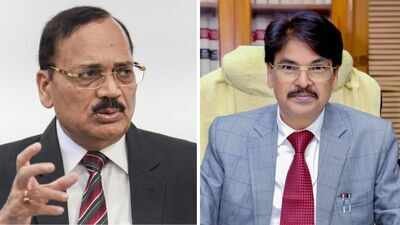
The issue escalated on Thursday when BCI chairperson Manan Kumar Mishra directed state Bar Councils not to enrol NALSAR’s 2026 law graduates as advocates until further orders.Also read: BCI bars Nalsar students over CJI Surya Kant protest, retractsThe BCI sought a factual report from NALSAR on those who had allegedly initiated, organised or mobilised the campaign against CJI Kant’s participation in the convocation.“Till further orders, no student of Nalsar University of Law, who has obtained law degree in the year 2026, shall be enrolled by any state bar council as an advocate.”Mishra said the final decision would be taken on August 19 after receiving a report from the university’s vice-chancellor. He also asked NALSAR to distinguish between students who merely signed or supported representations and those who organised or coordinated the campaign or proposed an actual boycott.The BCI’s initial letter also said, “A student of Law, having no regard or respect for the highest judicial office of the country, is not expected to be a responsible or sensible advocate, teacher or a judge. Such persons shall always be a liability on the profession. Such conduct reflects adversely upon the person’s suitability for entry into or association with the legal profession and is inconsistent with the dignity, discipline and ethical standards of the legal profession.”The council further alleged that some academic staff had been involved in “misleading, instigating and misguiding” students.“As per some reliable sources, there exists groupism and dirty politics among some of the academic staff and they have played a very active role in misleading, instigating and misguiding the students. This is a very serious matter. The teachers, instead of involving themselves in their teaching job, are doing nasty politics in the campus. BCI, being the regulator of Legal Education cannot be a mute spectator of such a serious situation.”The decision triggered criticism, including from Supreme Court Bar Association president Vikas Singh, who called the move arbitrary, illegal and disproportionate, although he said he did not support the students’ opposition to the CJI’s invitation.
BCI retracts order within hours
The BCI withdrew its initial directive later on Thursday following widespread criticism.In its revised communication, Mishra said the council had “thoroughly discussed and deliberated” on the earlier letter and modified its direction.
Share your thoughts in the comments
Be respectful · TOI community guidelines
He said the “vast majority” of NALSAR’s 2026 graduating students were innocent and “were not inclined to take part in the move of disrespect”. However, he added that “It has been further reported by some reliable sources that a handful of teachers and outsiders were instrumental in instigating innocent students.”The BCI subsequently allowed the 2026 graduates to be enrolled while awaiting an inquiry report from NALSAR.On Friday, the Supreme Court’s intervention effectively brought the focus back to the students’ right to peacefully express their disagreement with the proposed convocation invitation.Kant said the matter represented a direct dialogue between the students and him, making clear that other institutions should not intervene in the students’ peaceful protest.





Leave a Reply