

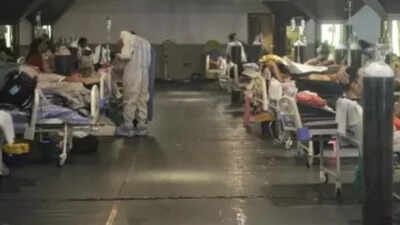
NEW DELHI: The Centre has identified 160 district hospitals for the first phase of a programme to increase emergency and trauma care capacity by 50%, with the facilities targeted for strengthening by March 2027, as the government moves to implement key health-sector announcements made in the Union Budget 2026-27.Union Health Minister J P Nadda reviewed the progress of the projects on Thursday and directed officials to ensure time-bound implementation, regular monitoring and coordination between ministries, states and institutions.A total of 613 district hospitals have been categorised for phased implementation after a gap analysis against Indian Public Health Standards (IPHS). Of these, 160 hospitals have been placed in Phase I, 203 in Phase II and the remaining 250 in Phase III.Three committees have been constituted to work on infrastructure, drugs, diagnostics and quality; human resources, academic expansion and skilling; and digital systems and pre-hospital care.The review also covered the government’s plan to train 1.5 lakh multi skilled caregivers over the coming year through National Skills Qualifications Framework-aligned programmes. Training has already begun, covering areas such as wellness, yoga and operation of medical and assistive devices. The Ministry of Health and Family Welfare is working with the Ministry of Skill Development and Entrepreneurship to scale up the programme.The government plans to add 1 lakh allied health professionals over five years across 10 disciplines. Consultations have been held with states, hospitals, industry and regulators, while funding options, including a PPP model, are being examined.Under Biopharma SHAKTI, the Centre aims to develop a network of more than 1,000 accredited clinical trial sites through a proposed ₹500-crore hub-and-spoke model, supported by stronger digital systems and a central trial facilitation agency.The Centre is also pursuing five Regional Medical Hubs to promote medical value tourism, with five priority disease areas identified for developing evidence-based integrative treatment protocols.For drug regulation, the CDSCO is being strengthened with a dedicated scientific review cadre and specialist workforce. An expert committee finalising the staffing structure has submitted its report.
Share your thoughts in the comments
Be respectful · TOI community guidelines
Mental healthcare was also reviewed, with NIMHANS-II planned as a 1,000-bed institute and CIP, Ranchi and LGBRIMH, Tezpur being upgraded as regional apex institutions. NIMHANS, Bengaluru will mentor both.Nadda stressed that preparatory work should translate into time-bound, measurable outcomes. The initiatives span emergency care, allied health, caregiving, drug regulation, clinical research and mental healthcare, with 160 district hospitals and 1.5 lakh caregivers the most immediate deliverables.







Leave a Reply