
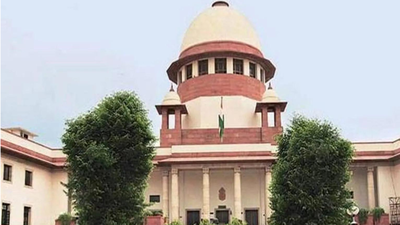
NEW DELHI: Bihar police had proved its case before the trial court and Patna high court against six persons accused of firing indiscriminately to kill a man in broad daylight in 2001, but its evidence was trashed by the Supreme Court, which took more than a decade to acquit the accused by concluding that it was a case of “no investigation” having taken place.The snail-paced legal system saw one of the accused serving a life term awarded by the trial court and upheld by HC in 2015. The other five convicts had appealed against the HC decision. Acquitting them, a bench of Justices J B Pardiwala and K Vinod Chandran said, “There is complete lack of evidence in the present case, and testimonies (of eyewitnesses) do not inspire confidence.” SC’s remark that “the case is not of a faulty investigation but of no investigation having been carried out” indicates possible lack of judiciousness on the part of trial court or HC to separate grain from the chaff while appreciating evidence in the case. Otherwise, it is incomprehensible as to how the complete lack of evidence in the case, as pointed out by SC, had escaped the scrutiny of two judicial tiers.Justices Pardiwala and Chandran said it was aware that faulty investigation cannot be taken advantage of by the accused but added, “When there is no reliable evidence, merely because the IO was recalcitrant or a complaint of collusion was raised against him, the court cannot presume the guilt of the accused.”
Share your thoughts in the comments
Be respectful · TOI community guidelines
SC said, “We are unable to find the prosecution having established the culpability of the accused beyond reasonable doubt. As we noticed, the eye-witness testimony does not inspire confidence, and there are no recoveries made or seizures effected as would have been done in a proper investigation.”SC said the murder motive projected by the prosecution was sticky, an expert medical opinion went against the witness testimony on how the incident occurred, and there was no recovery of weapons or cartridges from the scene of crime in the case that saw witnesses claiming indiscriminate firing by the accused. Disbelieving the eye-witness account that the assailants came from behind and fired indiscriminately at the victim, who was walking, the bench said, “Expert evidence that there was an indication from the nature of the wound that the victim was sitting and that the firing was made from close quarters persuades us to disbelieve the eyewitness testimony.“






Leave a Reply