
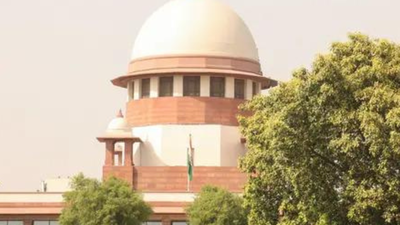
NEW DELHI: The full benefit of protective provisions of Juvenile Justice Act has not yet been extended to children who generally develop delinquent behaviour due to having grown up in poverty and environs marked by inequality, illiteracy and discrimination, Supreme Court has said.Exonerating a minor from the charge of attempt to erase evidence in a dowry death case, a bench of Justices Prashant Kumar Mishra and Sh-ree Chandrashekhar traced in detail the history and development of JJ Act. They said because of industrialisation and urbanisation, rural folk migrated to cities and this weakened community cohesion, resulting in families losing control over their children.Writing the judgement, Justice Chandrashekhar said Wednesday, “Poverty, inequality, illiteracy and the discriminatory environment in which a child grows trigger delinquent behaviour… The rise in the number of cases coming to this court raising the plea of juvenility for the first time indicates in ample measure that there is a huge gap in understanding of the law by stakeholders.”The order stands in stark contrast to the lengthy judgement by a bench of Justices J B Pardiwala and Ujjal Bhuyan on July 21 in the case ‘X vs Bihar’ where they held “today’s children are exposed to complex information, graphic content and adult experience that were inaccessible to the previous generation”.Writing the July 21 judgement, Justice Pardiwala had analysed what propelled a person to commit a crime – “It could be enmity, it could be poverty, it could be greed, it could be perversity in mind and many others…” But the bench had not mentioned inequality, illiteracy, or a discriminatory environment as grounds for a child to turn delinquent.The bench had further said, “There is no doubt that proliferation of technology and the pervasive influence of social media has altered the cognitive and psychological development of children. In such circumstances, courts as living institutions must be responsive to this reality.”“The approach of courts or the juvenile justice boards dealing with a child in conflict with the law cannot remain stagnant since the legislation came to be enacted. It must bear a balanced approach towards the evolving nature of the juvenile and legitimate demands of society,” Justices Pardiwala and Bhuyan had further said.
Share your thoughts in the comments
Be respectful · TOI community guidelines
Justices Mishra and Chandrashekhar said the prosecution’s eagerness to bring the culprit to court and forgetting to assess the boy’s age led to overlooking of JJ Act and violation of the rights of juveniles in conflict with the law.“A child should not be treated as a criminal. He is a victim of the circumstances. Sometimes he is drawn to a world of crime due to socio-economic or emotional and psychological reasons. The state owes a responsibility to reintegrate juveniles in society, rather than permanently stigmatising them,” Justice Chandrashekhar said.





Leave a Reply