
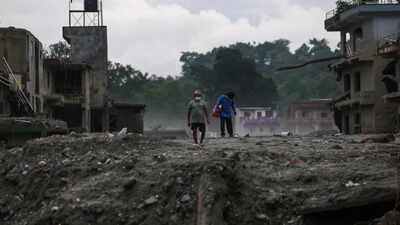
NEW DELHI: The ministry of external affairs on Friday said developed countries must take the lead in reducing emissions and support developing nations through finance and technology transfer, reiterating India’s position that climate action must be guided by the principle of common but differentiated responsibilities.The remarks by MEA spokesperson Randhir Jaiswal came in the aftermath of the devastating flash floods in Nepal and amid questions over remarks concerning climate-related compensation from major economies, including India, China and the United States.
‘Climate change is a common challenge’
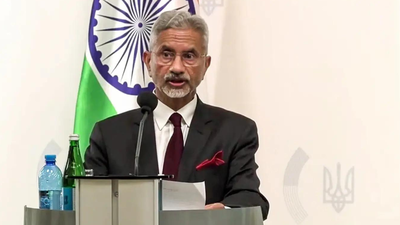
Addressing the issue at a weekly media briefing, Jaiswal said India had consistently maintained that climate change was a shared challenge.“I understand that a clarification has also been issued by the Nepalese side. Having said that, let me say that India has consistently maintained that climate change is a common challenge, and action in this regard must be based on the principle of common differentiated responsibilities and respective capabilities,” he said.Jaiswal said countries historically responsible for emissions should take the lead in tackling the challenge and supporting developing nations.“Developed countries who historically are responsible for the emissions and have contributed overwhelmingly to the civil crisis, must take lead in reducing emissions and supporting developing countries by way of finance and technology transfer to meet this challenge,” the MEA spokesperson added.
India reiterates support for Nepal
Jaiswal also said India had extended solidarity and support to Nepal following the tragedy and would continue to assist the country in its reconstruction and recovery efforts.“In the wake of this tragedy, we have extended our solidarity and support to the government and people of Nepal. As a close friend and partner, India responded promptly, and we will continue to support the reconstruction and recovery efforts in the country,” he said.Referring to Nepal Prime Minister Balen Shah’s appreciation of India’s assistance, Jaiswal said Prime Minister Narendra Modi had spoken to his Nepalese counterpart after the disaster and conveyed India’s support.“We have seen that the Prime Minister of Nepal has thanked us for our support… our prime minister spoke to the Prime Minister of Nepal and conveyed that India stands shoulder to shoulder and extends all its support to Nepal in this time of crisis, and it will offer whatever help is required,” he said.
Nepal clarifies compensation remarks
Meanwhile, Nepal foreign minister Shisir Khanal clarified on Thursday that neither he nor the Nepalese government had sought climate-related compensation from India, China or the United States.“Neither I nor anyone in the ministry of foreign affairs or the government of Nepal has claimed or asked for compensation from India or any other country, including China or the United States,” Khanal told news agency ANI.
Share your thoughts in the comments
Be respectful · TOI community guidelines
Also read: Nepal minister clarifies ‘compensation from world’ remark after flash floodsHe said Nepal’s appeal was for the global community to recognise climate change and its impact on the country.“Our call has been for the global community to look at this disaster from the perspective of climate change and the impact it’s having in Nepal,” he added.Khanal also said India, China and Nepal shared environmental ecosystems and should work together to prepare for the impact of climate change in the Himalayas.He stressed the need to look beyond one-time disaster assistance and consider the longer-term effects of rising temperatures and climate change on communities.




Leave a Reply