
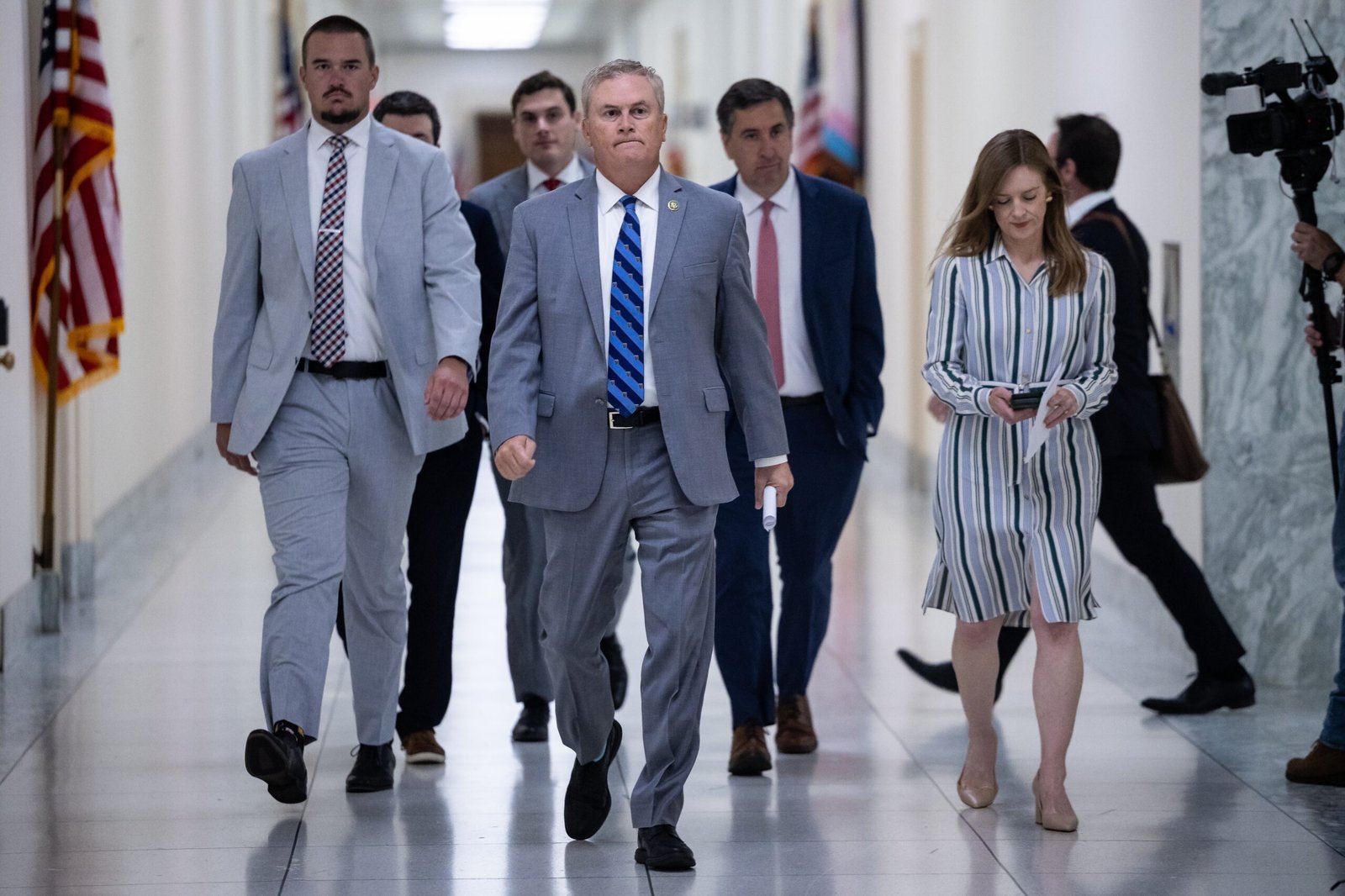

House Oversight Chair James Comer has introduced legislation that would ensure survivors of sexual abuse can speak freely about their experiences, even if they signed a nondisclosure agreement.
The measure comes the day after the Kentucky Republican’s panel voted to recommend the House hold billionaire investor Leon Black in contempt of Congress for refusing to turn over all of his non-disclosure agreements related to the late convicted sex offender Jeffrey Epstein.
It’s also the first piece of legislation Comer has produced as a direct result of the committee’s ongoing Epstein investigation. Members have been working for over a year to collect information about the web of powerful people who may have enabled Epstein to prey on young women and girls for years without consequence.
In all, the Oversight Committee has facilitated 19 depositions and transcribed interviews of individuals with ties to Epstein and his accomplice, Ghislaine Maxwell, who is now in federal prison.
“The federal government for decades failed the survivors of Jeffrey Epstein and Ghislaine Maxwell’s crimes,” Comer said in a statement. “We sadly cannot undue the harm and abuse inflicted upon these women. However, we have an obligation to take action to reform our laws to ensure survivors are protected and abusers can be held accountable.”
Comer also said members have, through their investigation, “learned how powerful men weaponized nondisclosure agreements to silence survivors of sexual abuse,” inspiring him to introduce legislation called the Survivor’s Voice Protection Act.”
The bill would, specifically, render a non-disclosure agreement “void and unenforceable” in instances where it would prevent people, including victims of alleged sexual abuse, from disclosing information about it. It would apply retroactively to any non-disclosure agreements entered into prior to the bill becoming law.
The legislation also would establish a fiduciary responsibility to report grooming of a minor to law enforcement and defines the term as behavior directed toward a minor that is, among other things, “intended to establish an emotional connection with a minor through manipulation, trust building, or influence to facilitate future acts of sexual conduct or normalize or desensitize the minor to acts of sexual conduct, even if no in-person meeting or act of sexual conduct is completed, and includes directing or conspiring with another person to engage in such a course of conduct.”






Leave a Reply