
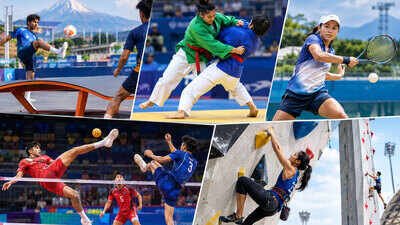
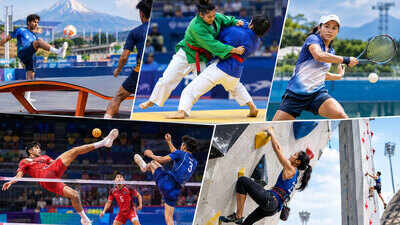
The Asian Games have always been more than a showcase of the sports that dominate television screens.From cricket and hockey to athletics, shooting, badminton and wrestling, some disciplines have a deep following in India. But Aichi-Nagoya 2026 will also put the spotlight on sports that remain largely unfamiliar to the country’s mainstream sporting audience.The 20th edition of the Asian Games will be held in Japan from September 19 to October 4, with around 11,000 athletes from 45 countries and regions competing across 43 sports. India will be represented by 503 athletes across a wide range of disciplines.Some of those sports are familiar internationally but still developing a following in India. Mixed martial arts, surfing, esports and padel, for instance, are expanding rapidly and have attracted growing global attention.Then there are sports such as Teqball, Kurash, Soft Tennis, Sepak Takraw and Sport Climbing.They may not yet command the same audience as cricket, badminton or hockey in India, but they will be part of the country’s Asian Games campaign in Japan.So, what exactly are these sports?
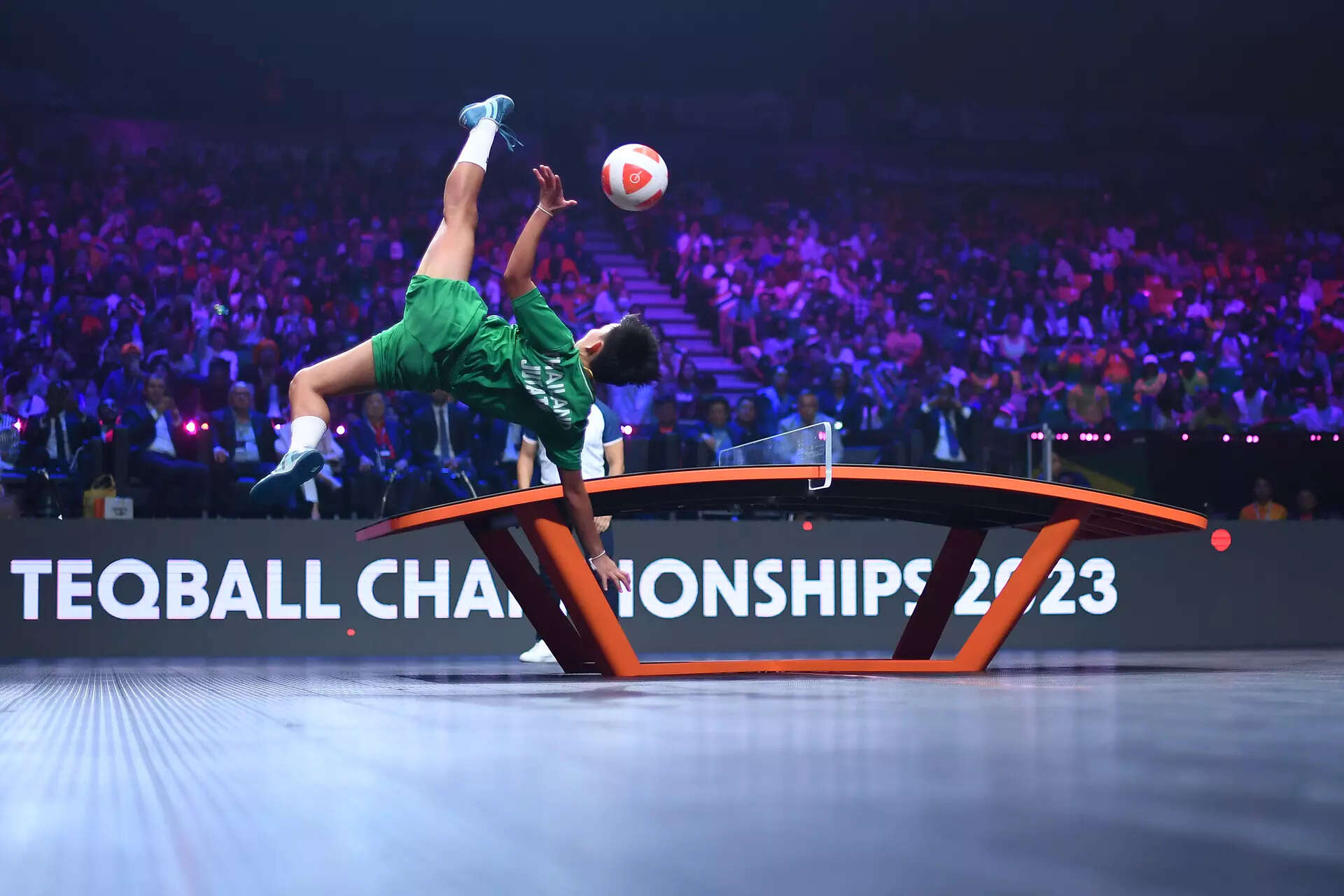
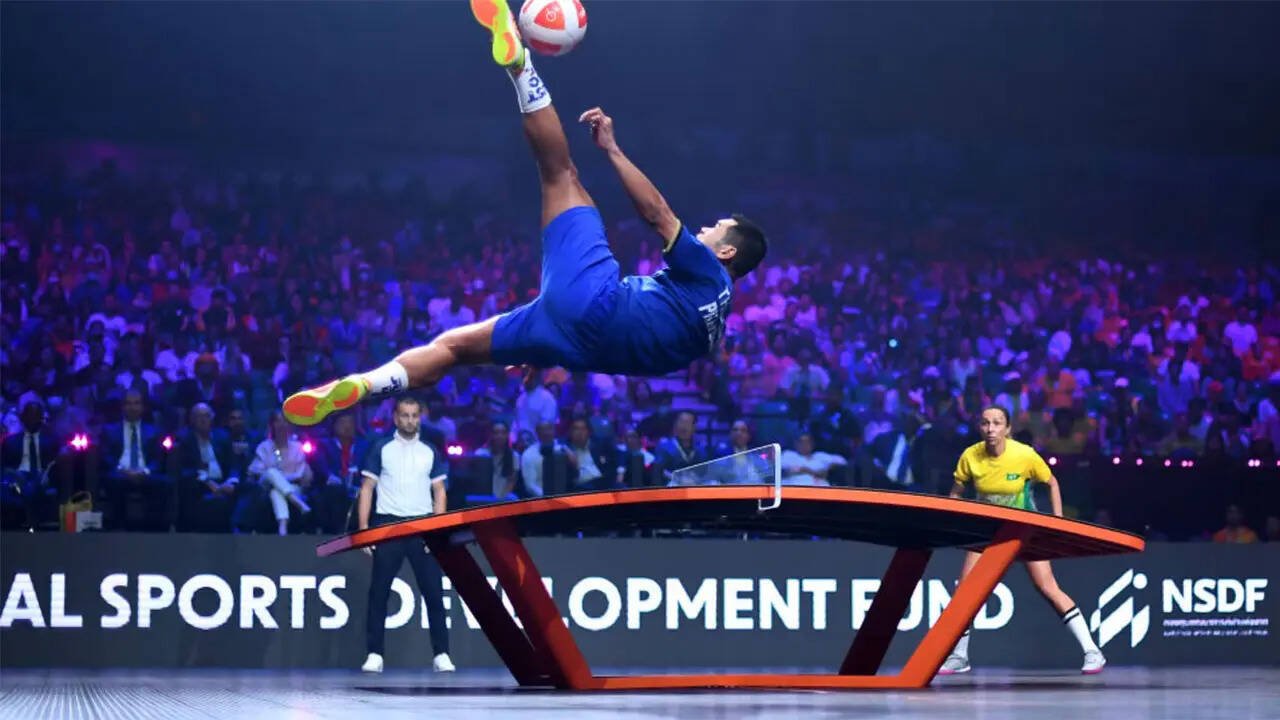
Teqball (Getty Images)
Teqball: When football meets table tennis
If football and table tennis were combined into one sport, the result might look something like Teqball.Played on a specially designed curved table, Teqball requires players to control and return a football using body parts other than the hands and arms. The sport combines football technique with the precision and rhythm associated with table tennis. Players can compete in singles or doubles, with a maximum of three touches before the ball has to be returned.The sport was developed in Hungary and has grown rapidly over the past decade.And Aichi-Nagoya will mark an important milestone: Teqball is making its Asian Games debut as a medal sport. The Olympic Council of Asia added it to the 2026 programme in March.India will have three representatives: Mohamed Anas Imran Beg, Declan Marshall Gonsalves and Quimcy Dsouza. They will compete in men’s doubles, mixed doubles and women’s singles.A football becomes the object of a game that looks part tennis rally, part freestyle football and part table-tennis exchange.
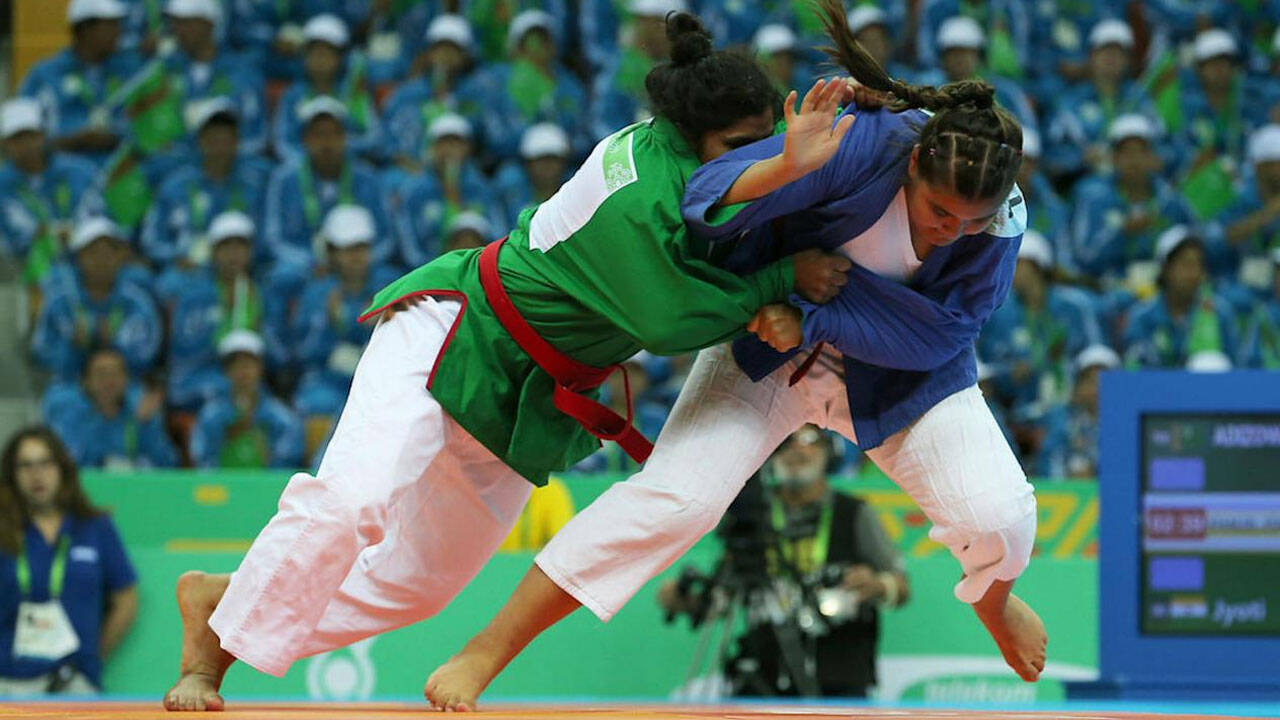
Kurash: The wrestling sport where the fight stays on its feet
Kurash may look familiar to anyone who has watched judo or wrestling, but its rules create a distinctly different contest.An ancient jacket-wrestling tradition from Central Asia, particularly associated with Uzbekistan, Kurash is built around throws rather than ground fighting.The defining feature is simple: the contest remains standing.Competitors wear jackets and belts and attempt to throw their opponent onto the back. Groundwork is not permitted, while techniques such as striking, kicking, choking and joint locks are prohibited.That makes Kurash a fast and explosive sport. There is little of the prolonged ground grappling that audiences might associate with some other combat disciplines. The emphasis is on grip, balance, timing, strength and the ability to execute a clean throw.Kurash has been part of the Asian Games programme in recent editions, and India already has a small but significant history in the sport.India won two Kurash medals at the 2018 Asian Games in Jakarta-Palembang, both in the women’s 52kg category. Pincky Balhara won silver and Malaprabha Jadhav took bronze.India’s Aichi-Nagoya squad includes Vipin Kumar in men’s -66kg, Vishal and Yash Kumar in men’s +90kg, Bharti and Sangita Balhara in women’s -57kg, and Pincky Chauhan in women’s -78kg.For Indian viewers accustomed to wrestling, judo and kabaddi, Kurash is perhaps one of the easier sports to understand once the central rule is known: get the opponent off balance, throw them cleanly and stay on your feet.
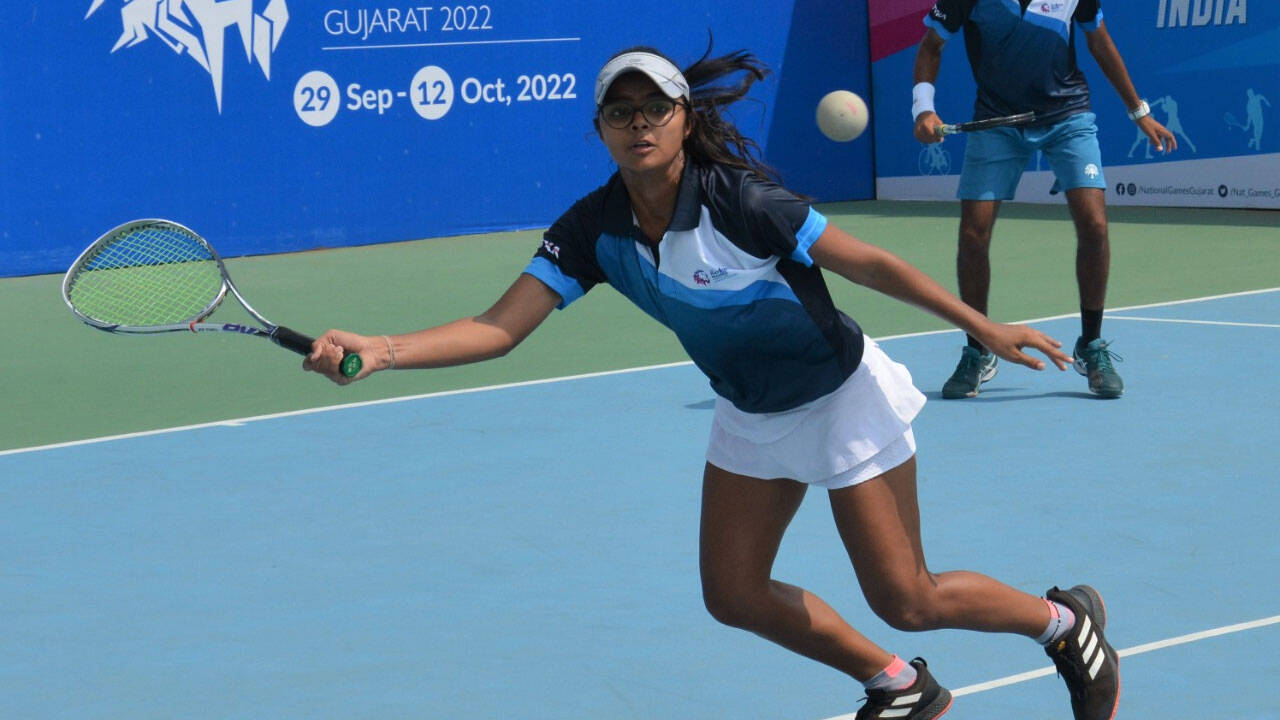
Soft Tennis: It looks like tennis, but the ball changes everything
At first glance, Soft Tennis can be mistaken for ordinary tennis.The court and net are broadly familiar. The players use rackets. The objective is still to hit the ball into the opponent’s court.But the equipment and playing characteristics are different.Soft Tennis uses a lightweight, air-filled rubber ball rather than the heavier felt-covered ball used in conventional tennis. According to the International Soft Tennis Federation, the ball weighs between 30 and 31 grams. That softer, lighter ball changes the rhythm of the game.Soft Tennis originated in Japan in the late 19th century and subsequently spread across Asia. It has been part of the Asian Games programme since 1994.The scoring system is also different from conventional tennis. Rather than the familiar 15-30-40 sequence, Soft Tennis uses numerical scoring, making the scoring easier to follow for newcomers.India has competed in Soft Tennis at previous Asian Games but is yet to win a medal. Aichi-Nagoya will therefore provide another opportunity to break that drought.India’s six-member squad comprises Yogesh Choudhary, Om Yadav, Jay Meena, Aniket Chirag Patel, Aryan Thakur and Aadhya Tiwari. They will compete across the men’s team event, men’s singles and mixed doubles, with Aadhya also entered in women’s singles.
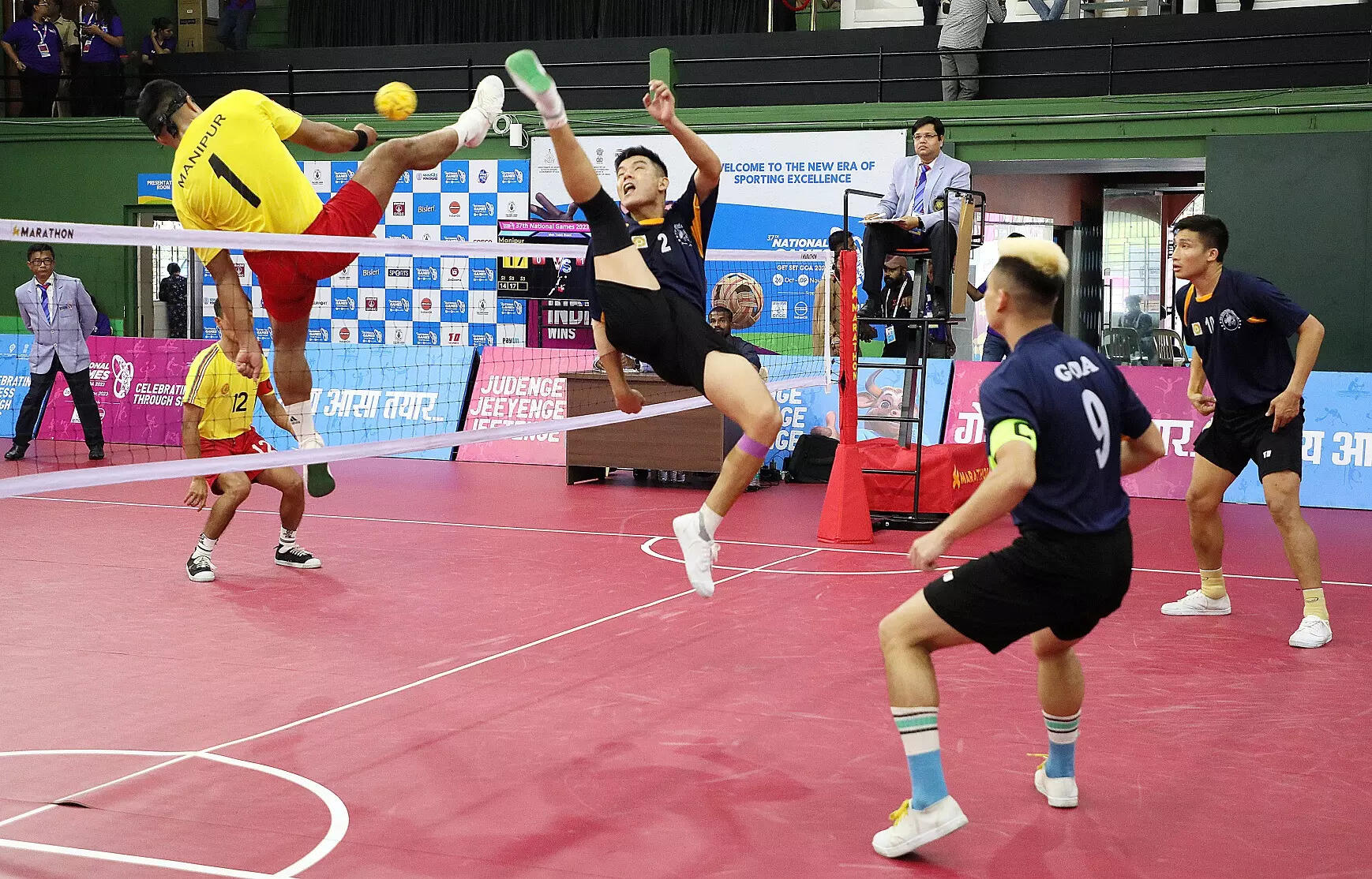
Sepak Takraw
Sepak Takraw: Football skills on a volleyball court
Few Asian sports can produce moments as spectacular as Sepak Takraw.The sport combines elements of volleyball with the kicking, heading and acrobatic skills associated with football.Two teams compete across a net, with three players forming a regu. The court is similar in dimensions to a badminton court, while the players are not allowed to use their hands or arms.Feet, knees, chest and head become the main tools.Each side has a maximum of three touches to control the ball and send it back over the net. The attacking player can then launch into spectacular aerial movements — including scissor kicks and bicycle-kick-style strikes — to send the ball beyond the defence.The result is one of the most visually striking sports on the Asian Games programme.Sepak Takraw has been part of the Asian Games since 1990, but it remains relatively unfamiliar to large sections of the Indian sporting audience.India, however, has been gradually building a record in the discipline.The country has won two Asian Games bronze medals so far: a men’s Team Regu bronze at Jakarta-Palembang 2018 and a women’s Regu bronze at Hangzhou 2022.India will field both men’s and women’s teams in Aichi-Nagoya, with the men’s squad competing in Team Regu and Quadrant events.The men’s contingent includes Arun, Jasvir, Ashish Chundawat, Shyam Singh, Lokhon Singh Elangbam, Bobby Kumar, Ashok Singh Mayengbam, Ram Kumar Sharma, O Amarjit Singha, Malemnganba Singh Sorokhaibam, Henary Singh Wahengbam and Akash Yumnam.The women’s contingent includes players such as Leirentonbi Devi Elangbam, Prity Langoljam, Menenu Tsukru, Maipak Devi Ayekpam, Priya Devi Elangbam, Shilpa Elangbam, Chaoba Devi Oinam, Seyiekhrieno Tepa and Malemnganbi Yumnam.For India, Sepak Takraw is no longer an entirely new experiment. The medals in the last two editions have already provided a foundation.
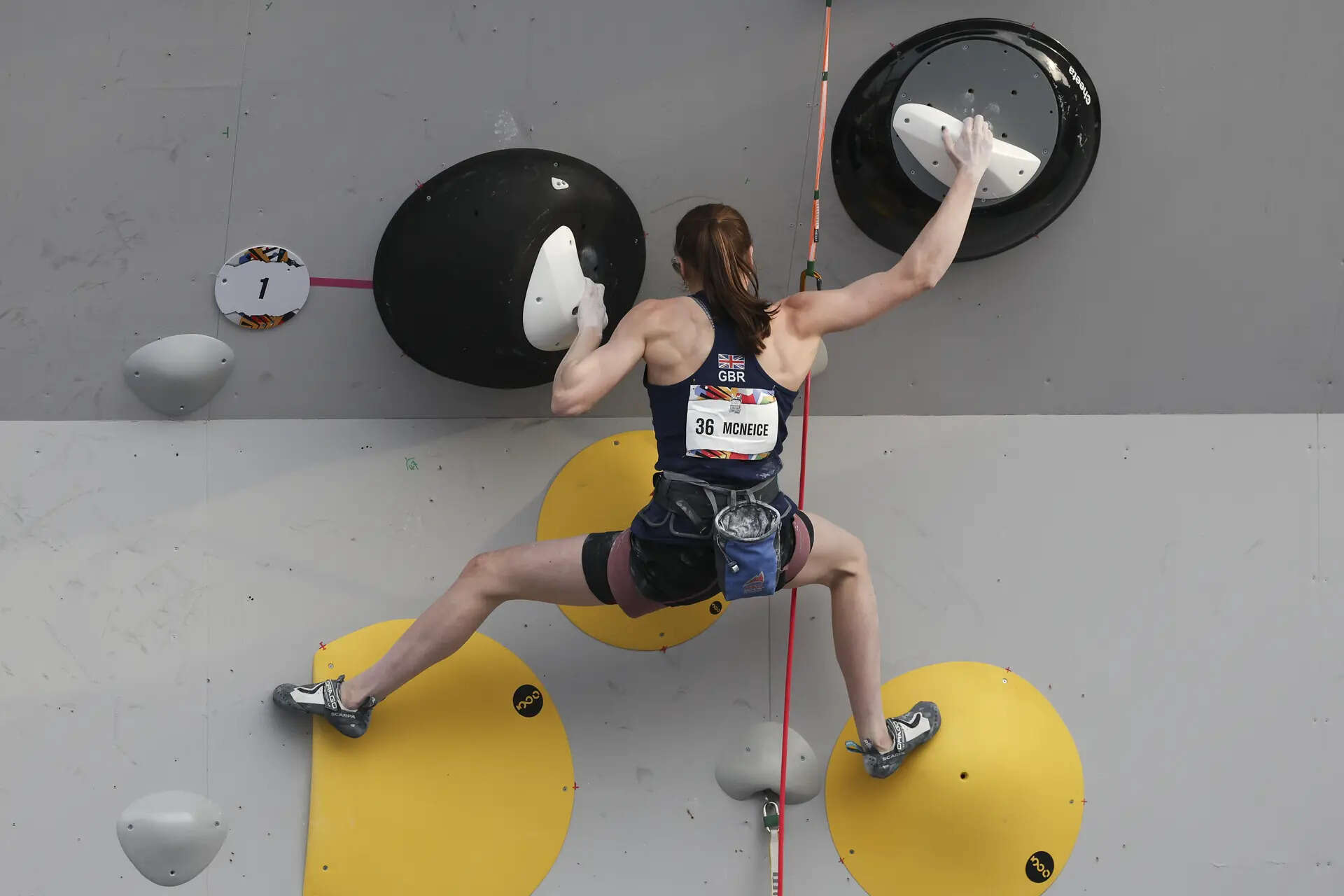
Sport Climbing (Getty Images)
Sport Climbing: Speed, strength and a race against gravity
Sport Climbing may be the most visually recognisable of the five to younger audiences, thanks in part to its growing international profile.At the Asian Games, climbers compete on artificial walls, using strength, balance, flexibility, technique and problem-solving ability to navigate routes covered with coloured holds.There are three disciplines: Speed, Boulder and Lead.Speed is exactly what it sounds like. Climbers race side-by-side up an identical 15-metre wall, with the fastest time deciding the winner.Boulder is different. Climbers tackle shorter, difficult routes without ropes, relying on technique and problem-solving to complete the designated problems.Lead takes the contest higher. Climbers attempt to ascend a wall more than 12 metres high, with the result determined by how high they manage to climb within the allotted time.The three disciplines test different qualities. Speed is about explosive acceleration and precision. Boulder is about solving a physical puzzle. Lead combines endurance, strength and route-reading.Sport Climbing made its Asian Games debut at Jakarta-Palembang 2018. India has competed in the sport at the last two editions but is yet to win an Asian Games medal.At Aichi-Nagoya, India’s representatives include Deepu Mallesh in men’s speed and Joga Purty in women’s speed.
More than just unfamiliar names
The five sports represent different sides of the Asian Games.Teqball is a young hybrid sport trying to establish itself on the global stage. Kurash carries centuries of Central Asian tradition into a modern competitive format. Soft Tennis demonstrates how a familiar sport can develop a distinct identity through different equipment and rules. Sepak Takraw showcases Southeast Asia’s spectacular athletic culture. Sport Climbing brings strength, speed and problem-solving together on a vertical stage.They also underline why the Asian Games remain different from the Olympics.The continental Games have traditionally provided space for sports rooted in particular regions as well as newer disciplines seeking wider international recognition. Aichi-Nagoya’s programme includes 43 sports, with Teqball among the new additions and established Asian disciplines such as Kurash, Sepak Takraw and Soft Tennis continuing to feature.For Indian fans, that means the next few weeks will offer more than the familiar medal races.There will be moments when a curved table, a jacket throw, a soft rubber ball, an airborne kick or a climber racing up a wall suddenly becomes the centre of attention.





Leave a Reply