
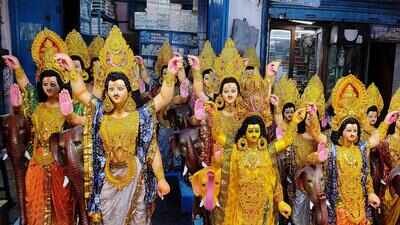
On Vishwakarma Puja, remembering a leather factory that honoured a Hindu god with Muslim hands participating and biryani from Park Street. Nobody thought it needed explaining.Few Hindu festivals can be entered in an office calendar years ahead without consulting a panjika, and Vishwakarma Puja, which falls today, is the most dependable of them, because it is pegged to Kanya Sankranti, the last day of Bhadra, a solar date rather than a lunar one, which is why it generally lands on September 17 every year.It seems only right that the god of engineers should keep better time than most gods.He is, by his résumé, the most accomplished contractor in the Hindu universe. Tradition credits him with Lord Krishna’s Dwarka, the golden Lanka that Hanuman ji later set alight, the Pandava capital at Indraprastha and the chariots in which the gods flew. What is less remarked upon is how differently India has chosen to picture him. In the west and north-west he is an old, four-armed man with a white beard and a swan for a mount, which scholars read as a nod to Brahma; in the east he is a young, muscular man with a black moustache, no sons in attendance, and an elephant as his vahana, which suggests God Indra instead. West Bengal, a state with no shortage of bearded elders, decided that its engineer should look like a foreman in his prime, which tells you something about who was doing the worshipping.The flying chariots are how Bengal explains its kites, which dot Kolkata’s skies on this day. Hindu mythology is full of gods travelling by air, and Vishwakarma is held to have built the vehicles. The skies over Kolkata on this day used to (and perhaps still do to a lesser extent) fill with petkati and chandiyal, and the morning began with the cry of bhokatta from some rooftop where a boy had just cut a rival’s string.
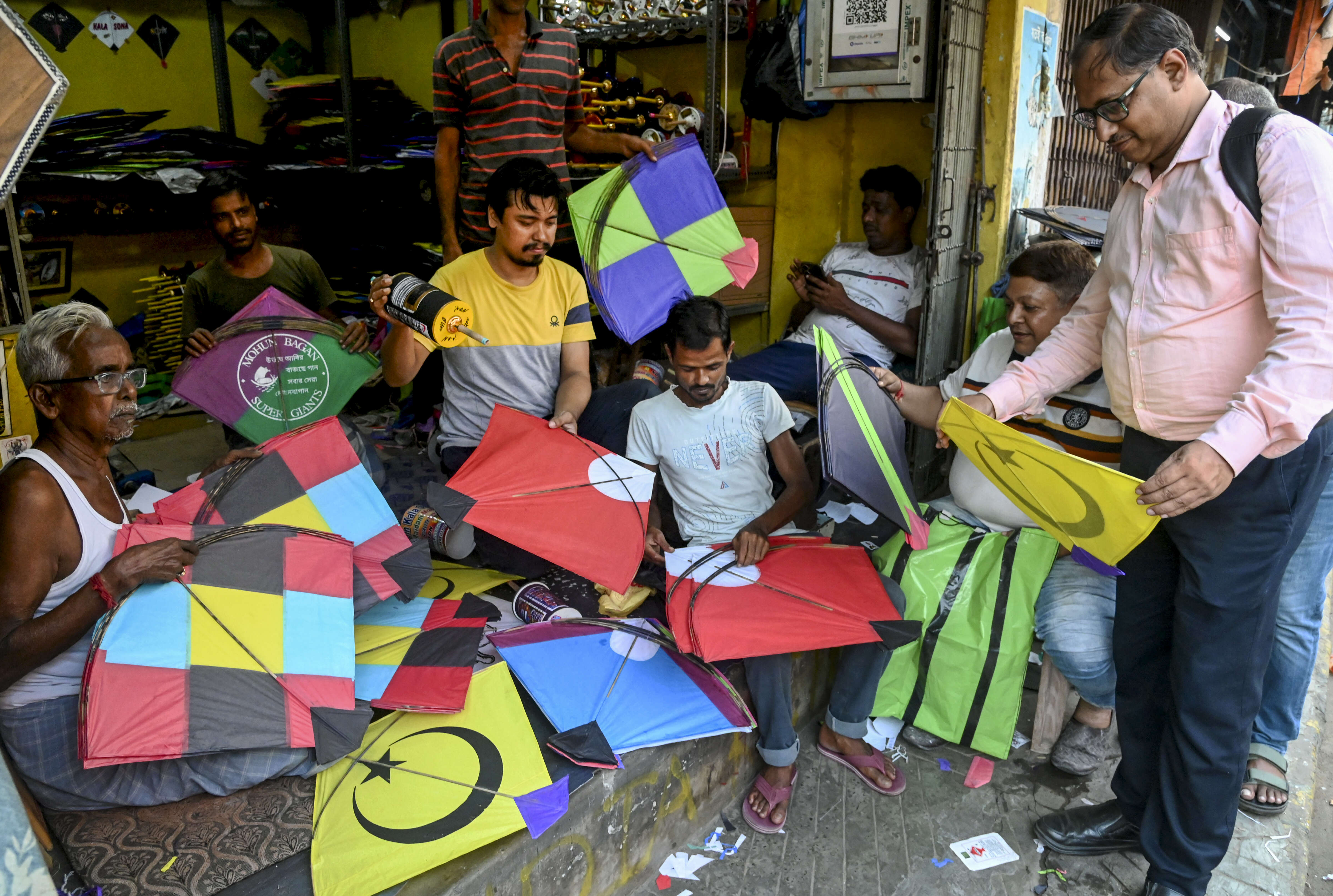
Kites being bought
Held on the last day of Bhadra, the puja also opens the long Sharodiya season, so the kites were, in effect, the city’s first announcement that Maa Durga was on her way. In many Bengali homes the day carries a second observance that has nothing to do with machines. Arandhan, tied to Manasa Puja at Bhadra Sankranti, requires that food be cooked the night before and eaten stale the next day, with cooking itself forbidden; the custom has loosened with modern life but survives in Bengal’s villages and in Kolkata’s suburbs. The folk phrase for it, Bhadre rendhe, Ashwine khaoa — cook in Bhadra and eat in Ashwin — is as good a summary as any.
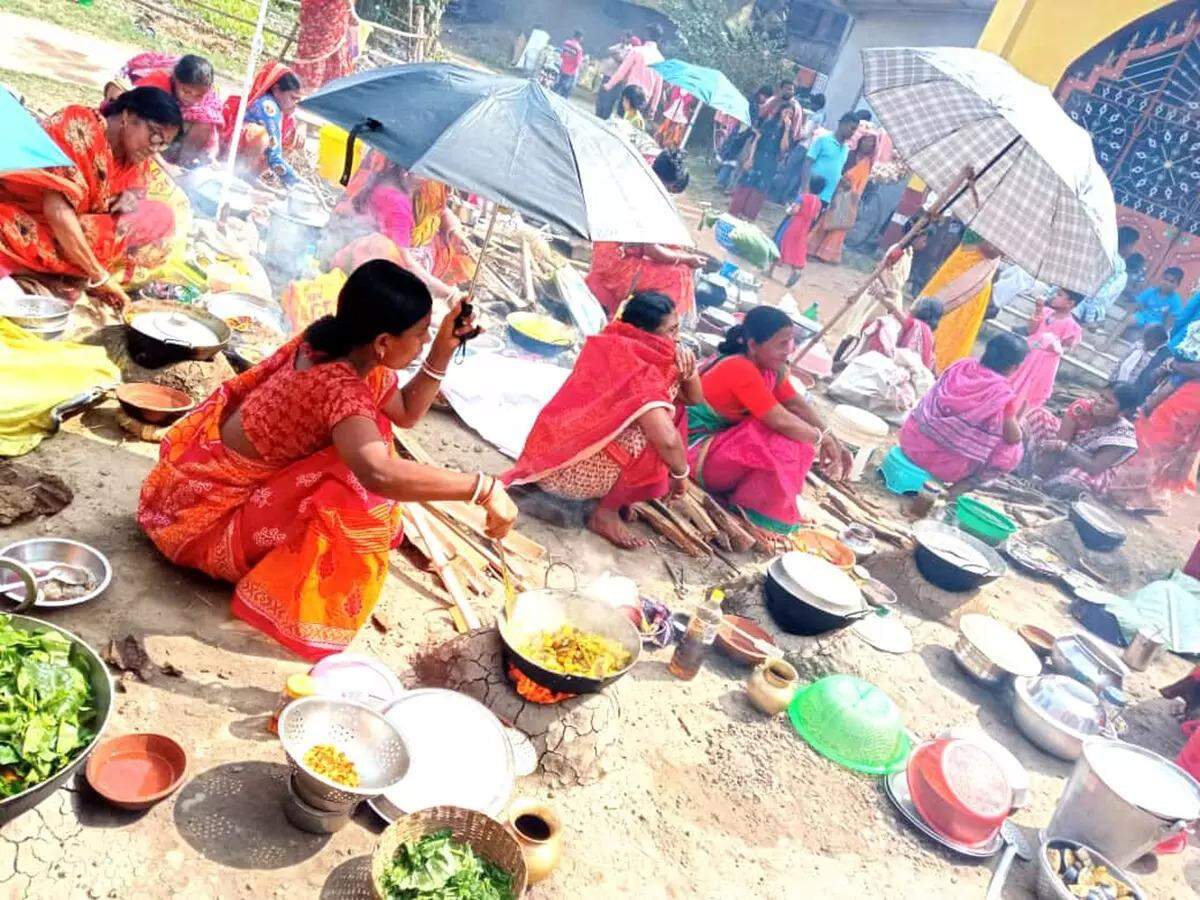
Ranna Puja ( File Image)
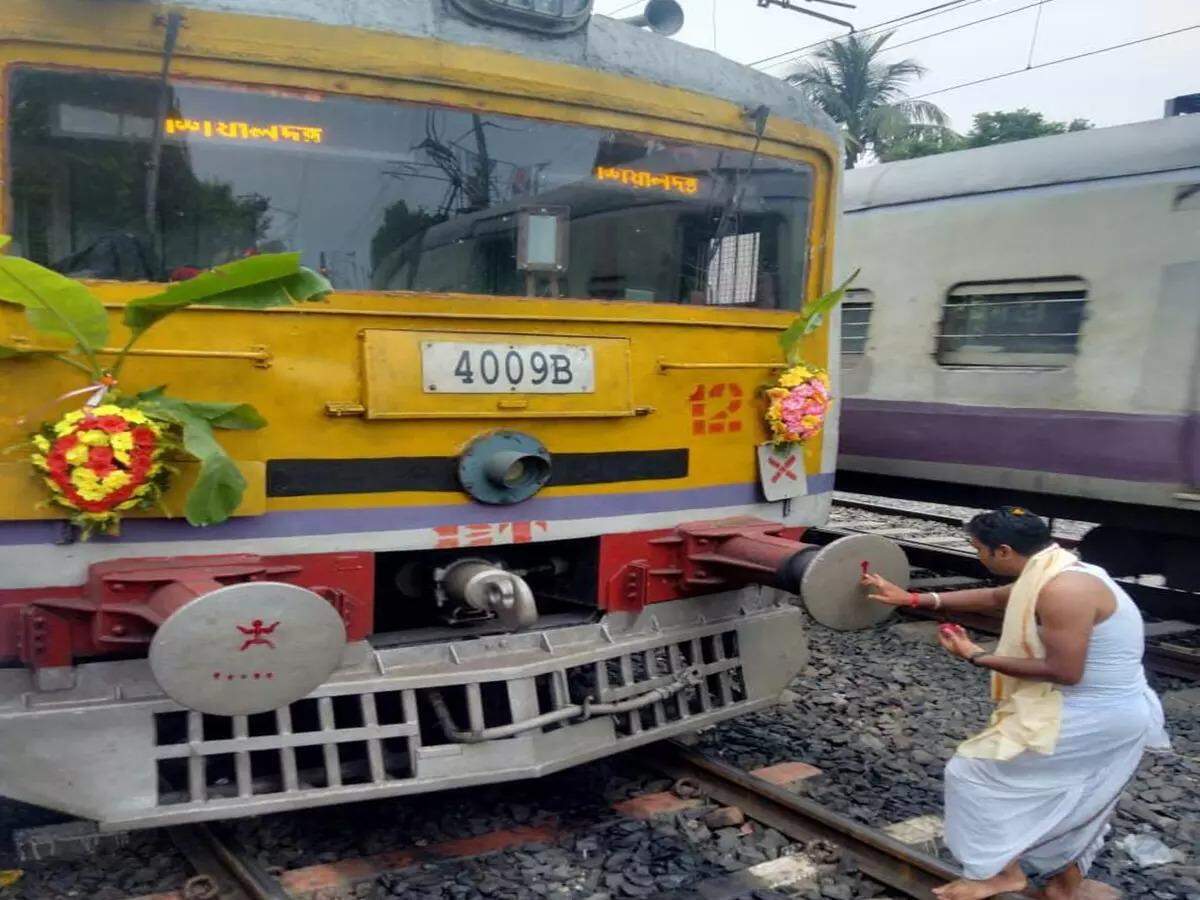
The puja’s real home, though, was never the household. It is observed mostly on factory floors, where workers pray for safe conditions and for their machines to run well, and shrines go up among the tools themselves. Historians studying Kolkata’s working class have argued that this was something the workers made their own; Dipesh Chakrabarty wrote about festivals as a source of solidarity inside hostile workplaces, and Leela Fernandes’s ethnography of the jute mills treated the building of Vishwakarma pandals as a space of the workers’ cultural autonomy.The leather factory: My family’s business was a leather factory on Tiljala Road, right behind Don Bosco School, and on this day the more than four hundred men who worked there, nearly all of them Muslim, did not touch their tools. The work that honoured the god had been done the day before, when the craftsmen who spent the rest of the year shaping leather goods turned to sheets of coloured paper instead, cutting out decorations with a skill that matched their day jobs and a gusto that suggested they found paper the more forgiving material. Everything the day required was prepared on the eve, and on the day itself the hands rested.By the time the priest arrived, the god of craftsmen was presiding over a room that craftsmen, most of whom did not pray to him, had dressed for him. I have never been sure how much of the abstention was reverence and how much was the ordinary pleasure of a working day on which no work was expected, and I suspect the men themselves would have found the question tiresome, which is perhaps the point.
File Image
Then there was lunch. Many factory feasts on the day were vegetarian, a mutton curry being the mark of the more generous units, and ours had apparently decided that gastronomy in this feast was a competitive sport and opted for biryani. The biryani came from Shiraz on Park Street, which opened in 1941 at the Park Street and Mullick Bazar crossing, specialising in Awadhi food, founded by Mohammed Arshad Ali and Ali Hussain, who had come to Calcutta from Bihar. Calcutta’s biryani, as every Calcuttan will tell you at length, came down from Awadh with Wajid Ali Shah’s exile, and Shiraz’s cook Shamsuddin, who joined in the 1970s and reworked its biryani, is said to have had an ancestor who cooked for the nawab.
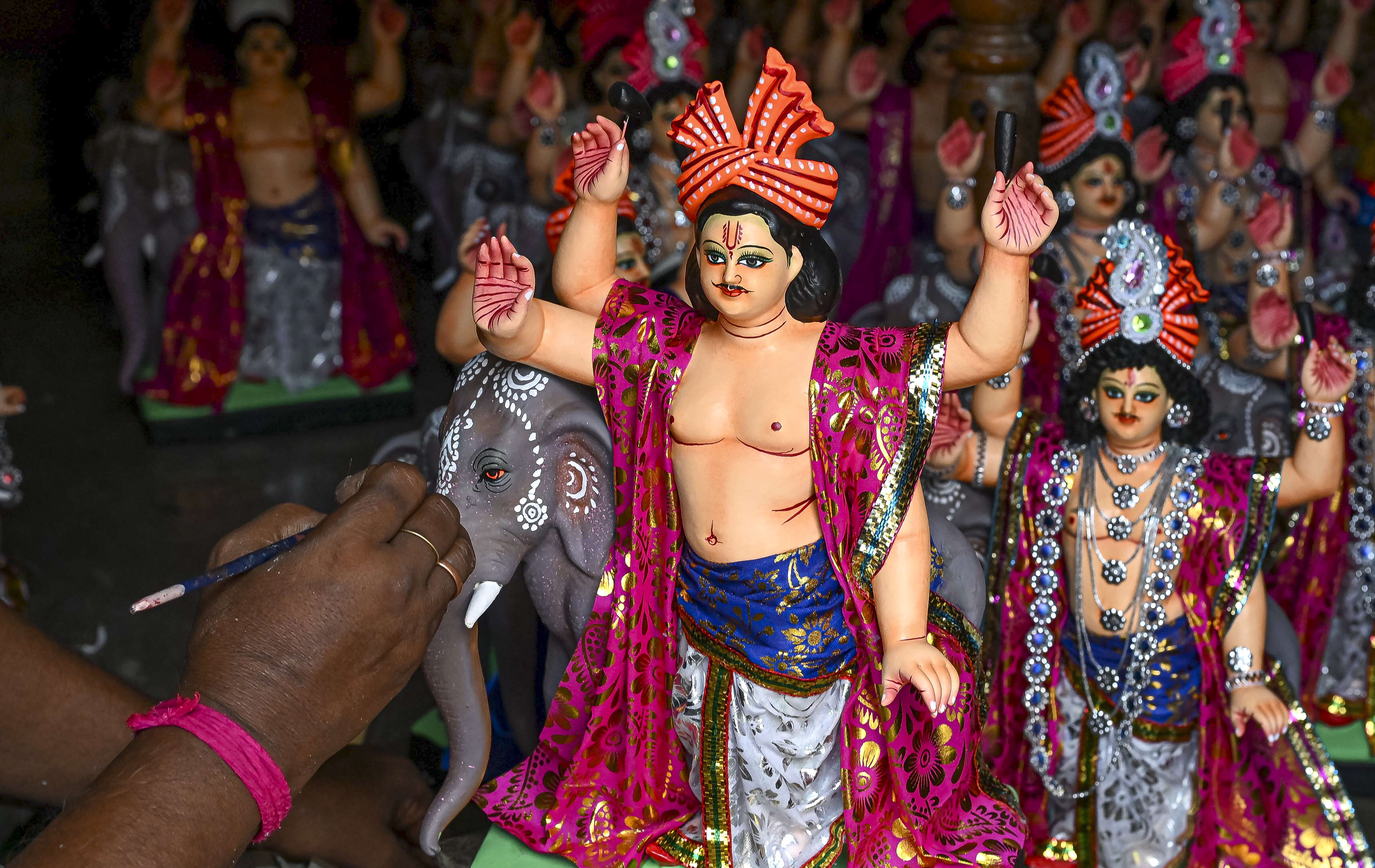
Nadia: An artisan works on an idol of Lord Vishwakarma ahead of ‘Vishwakarma Puja’, at a workshop, in Nadia, West Bengal. (PTI Photo)(PTI09_16_2026_000049B)
Consider the arrangement then. A feast for the Hindu god of craft, cooked to a deposed Muslim king’s recipe by a kitchen that claims descent from his, eaten by four hundred Muslim leatherworkers and one Bengali Hindu family, on a day when the stoves in half of Bengal’s kitchens were not supposed to be lit. The factory had solved Arandhan by outsourcing it to a Park Street restaurant, and nobody, as far as I remember, felt the need to hold a seminar about it. (We’d hold a good many seminars or news channel debates now.)The next morning the god went into the waters of the Hooghly, and the men went back to their benches. The tools, having been worshipped for a day, went back to being worked, which is, if you think about it, the only form of worship a tool has ever asked for.
Share your thoughts in the comments
Be respectful · TOI community guidelines
Sources/Reading:Dipesh Chakrabarty, Rethinking Working-Class History: Bengal 1890–1940 (Princeton University Press, 1989)Leela Fernandes, Producing Workers: The Politics of Gender, Class, and Culture in the Calcutta Jute Mills (University of Pennsylvania Press, 1997)






Leave a Reply