
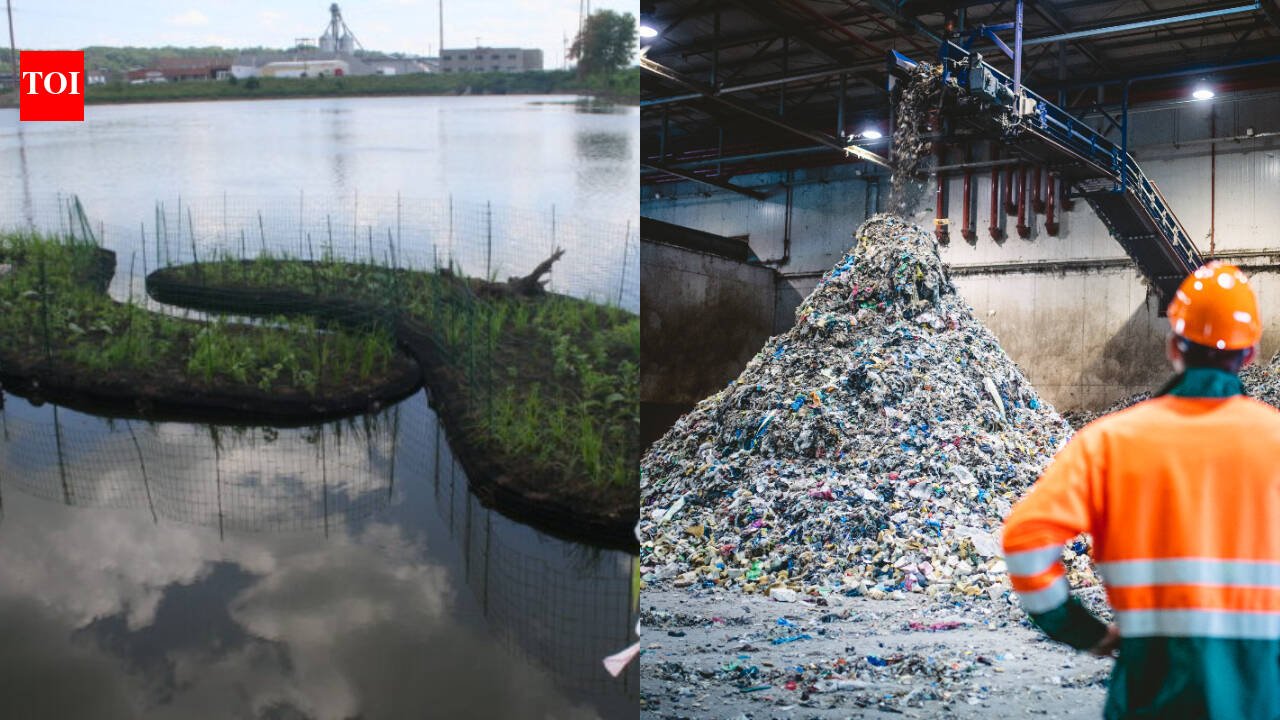
Sometimes the answer for a city that has fought floodwaters for years isn’t more concrete, bigger pipes or taller walls. In Dubuque, Iowa, an old creek that was reopened became the site of an unusual experiment: 14 floating islands made partly from thousands of recycled plastic bottles. The islands were installed in 2017 as part of the Bee Branch Creek restoration and were designed to do more than just add greenery. Today, they help protect the creek, improve water quality and provide small pockets of habitat for fish, birds and aquatic life, states an online report by IECA News. Scroll down to read the details.
Making a buried creek into an asset
Flooding has been a problem in Dubuque for a long time, especially in the 7-square-mile Bee Branch Watershed, where more than half of the city’s residents live or work. Repeated flash floods damaged some 1,300 homes and businesses, with widespread destruction to buildings, roads and stormwater infrastructure, adds the report.The city responded by daylighting the Bee Branch, a creek that had been buried in a storm sewer about a century ago. The waterway’s reintroduction into the landscape allowed natural features to be incorporated into the flood mitigation project.
A floating home built from recycled plastic
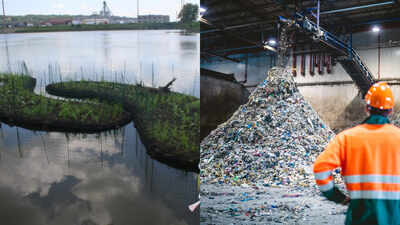
There are 14 islands totaling 2,674 square feet. Each island is a miniature replica of the natural archipelagos of the Mississippi River. Before the islands were placed in the creek, four prototype designs in a variety of shapes and sizes were developed, states IECA News. They constructed their primary floating structures from some 67,000 recycled BPA-free water bottles. Also, native plants were added along with carefully selected pieces of driftwood to create year-round useful habitat. And, fencing around the islands protects the new vegetation from waterfowl. Stainless-steel cables anchor the structures to the creek bed and the flexible anchoring permits the islands to shift with changing water levels and flow directions. The project was partially funded by grants and donations and cost $176,000, states the report.
More than just floating gardens
The islands perform a variety of ecological functions. Their construction is such that their structures interrupt the wave energy and this helps to reduce erosion along the edges of the creek. They also serve as barriers to slow water as it moves around the islands, allowing suspended sediment to settle and helping keep the water clear. Now, plants absorb nutrients, such as nitrogen and phosphorus, on the islands. Preventing these nutrients from entering waterways can help reduce the amount of nutrients that eventually contribute to ecological problems downstream in the Mississippi River and Gulf of Mexico. Below the surface, the islands can be even more valuable. The plant roots and the floating structures provide space for biofilms, microorganisms that can help break down pollutants. The roots below the water also provide shelter to fish and juvenile aquatic species, and insects and crustaceans use the vegetation as part of the wider food web. And birds also use the islands as resting places and potential nesting habitat above the water.
Keeping the islands in good health
As per the report, the project also shows that nature-based infrastructure needs ongoing maintenance. The islands are regularly checked for buoyancy, vegetation and anchoring systems. A 2019 inspection found most plants were thriving, but some had to be replaced after animal interference and parts of protective fencing needed repairs. Dubuque’s experience shows that careful site selection, native vegetation, durable materials, secure anchoring and regular maintenance are important factors for other communities considering similar projects. What started out as a piece of a flood-control project has turned into something bigger: a working part of urban ecology. On Bee Branch Creek, recycled plastic is now the foundation of living habitat, and the floating islands show how flood infrastructure can create room for nature, as well.Images Courtesy: IECA News and istock







Leave a Reply