
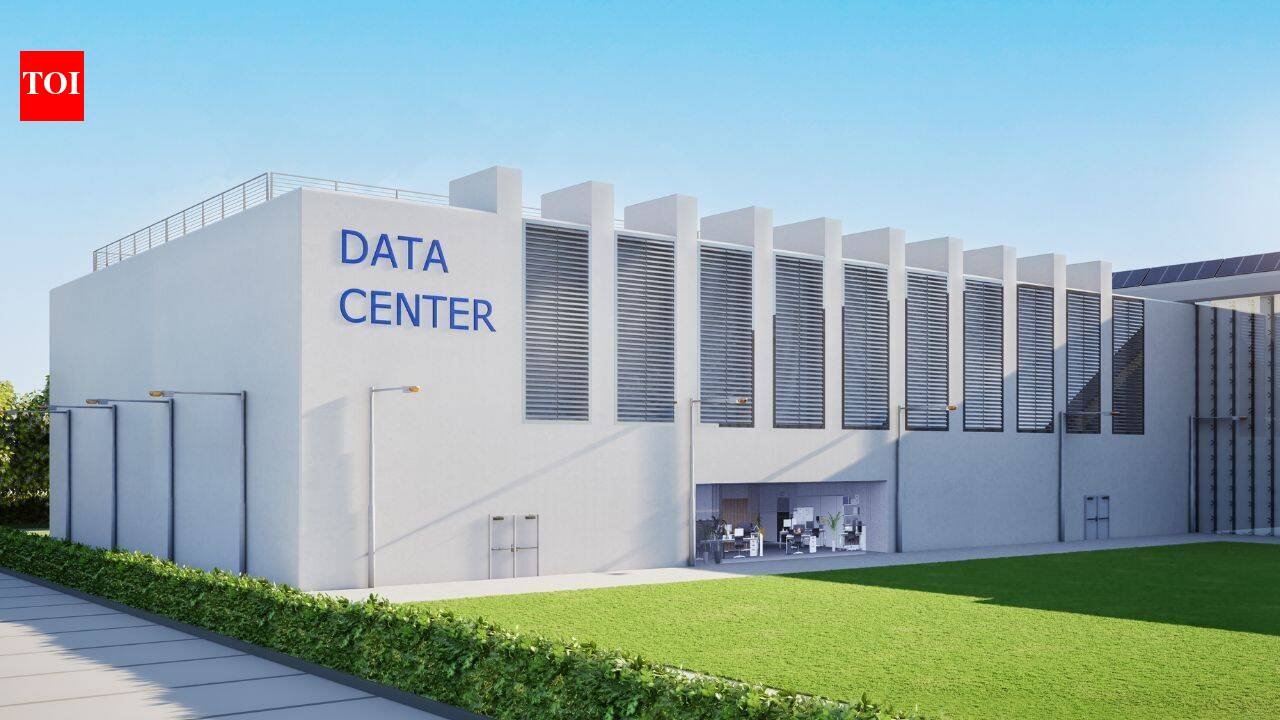
New Jersey has imposed a record $1.07 million penalty on DataOne after inspectors found 62 large natural-gas generators installed and operating without required air-pollution permits at the company’s massive artificial intelligence data center in Vineland. The state Department of Environmental Protection discovered the generators during a July 29 inspection and said each unit had a capacity of 1,982 kilowatts. Reports from 6abc and The Sun Papers describe the penalty as the largest enforcement action against a data center in New Jersey. Together, the generators represent nearly 123 megawatts of potential power generation, making the case significant as AI facilities expand and demand large backup or temporary energy systems. DataOne has disputed the state’s findings but said it would apply for the required permits while moving towards a lower-emission fuel-cell system.
What the inspection uncovered
The New Jersey Department of Environmental Protection inspected the DataOne site in Vineland on July 29. During the visit, officials found 62 stationary natural-gas generators installed and operating at the facility.The generators were not small household backup units. Each one had a rated capacity of 1,982 kilowatts, or nearly 2 megawatts. Together, the 62 engines represented approximately 122.9 megawatts of nameplate generation capacity, according to engineering industry publication ENR.State officials said DataOne had installed and operated the generators without first obtaining the preconstruction permits and valid operating certificates required under New Jersey’s Air Pollution Control Act.The generators had not been observed during a previous DEP inspection in December 2025. Their appearance at the site by July 2026 raised questions about when they were installed and how long they had operated before the inspection.The state’s enforcement action focused on the equipment itself, but the discovery also drew attention to the broader challenge of regulating rapidly expanding AI infrastructure. A large data center can require enormous amounts of dependable power, especially while a permanent electricity supply is being developed.
Why the permits were required
New Jersey law requires stationary generators with a capacity of 37 kilowatts or more to obtain a preconstruction permit and a valid operating certificate. Each DataOne generator was rated at 1,982 kilowatts, making every unit substantially larger than the state’s permitting threshold.A preconstruction permit allows regulators to review a proposed source before it is installed. The review can consider expected emissions, fuel consumption, pollution controls, operating conditions and potential effects on nearby communities.An operating certificate confirms that the equipment can run under approved conditions. It also helps regulators monitor whether the source is complying with limits and reporting requirements.The permitting process is particularly important for combustion equipment. Natural-gas generators produce emissions such as nitrogen oxides and carbon monoxide, along with greenhouse gases. The amount released depends on the engines’ design, operating hours, fuel use and pollution-control systems.Without the required approvals, regulators may not have had complete information about the generators’ operation. Environmental groups said that made it difficult to determine how long the equipment had been running and what its overall impact might have been.
The record $1.07 million penalty
The DEP issued an Administrative Order and Notice of Civil Penalty Assessment against DataOne. The order imposed a $1.07 million penalty and required the company to apply for the necessary permits or cease installing and operating the generators.Governor Mikie Sherrill’s administration described the fine as the largest enforcement action against a data center in New Jersey history.The penalty is also being presented as a warning to the wider technology industry. State officials said data centers must comply with air-quality laws even when they are being built quickly or using equipment described as temporary.Governor Sherrill said the state was taking action to ensure that the growth of data centers did not come at the expense of communities or the environment. DEP Commissioner Ed Potosnak said the action was intended to send a message that developers would be held accountable for pollution violations.The fine is large in dollar terms, although environmental advocates argued that a penalty of this size may not be enough to discourage billion-dollar infrastructure projects from moving ahead without approvals.
DataOne’s response
DataOne has disputed the state’s interpretation of the generators’ status.The company said it disagreed with the determination that the equipment was operating in violation of the state’s permitting requirements. However, DataOne also said it would apply for the permits and continue discussions with the DEP.The company has described the generators as part of a temporary power arrangement. It said the facility was transitioning to fuel cells as its permanent power solution.DataOne’s position reflects the complex power needs of a large data center. A facility may require electricity before its permanent connection to the regional grid is complete. Developers can use on-site generators to provide power during construction, testing or early operations.But the state’s position is that temporary use does not remove the requirement to obtain permits. If the equipment is large enough to fall under the Air Pollution Control Act, its installation and operation must be reviewed by regulators.The DEP has ordered DataOne to obtain the approvals immediately or stop installing and operating the engines.
A major AI infrastructure project
DataOne’s Vineland facility is described as a 300-megawatt artificial intelligence data center. Its scale reflects the growing energy demand associated with AI computing.Artificial intelligence systems require powerful processors that operate in large clusters. These processors consume electricity and generate heat, requiring substantial cooling systems. Data centers also need backup power to prevent interruptions that could affect computing customers.The proposed 300-megawatt capacity is far larger than the electricity demand of an ordinary commercial building. The 62 generators discovered at the site represented almost 123 megawatts of generation capacity, showing how much power the facility needed even before the project reached its full planned scale.The rapid development of AI facilities has intensified debates about electricity supply, grid reliability, water use, emissions and local infrastructure. Communities may welcome construction activity and economic investment, but they also want assurances that large industrial operations will follow environmental rules.The Vineland case has brought those concerns into sharper focus because the facility’s power equipment was operating before the required approvals were in place.
Concerns from nearby residents
Residents living near the Vineland site had already raised concerns about noise from the generators.Large natural-gas engines produce a steady mechanical sound when running. When dozens of units operate in the same area, the combined noise can become difficult for nearby households to ignore, particularly at night.Local residents and environmental advocates have also questioned the possible effects on air quality. The concerns are not limited to emissions from one generator. They involve the combined output of 62 engines operating at a major industrial facility.The complaints have added a community dimension to the state’s enforcement action. For residents, the issue is not only whether DataOne eventually receives permits. They also want to know how the generators were installed, how long they operated without approvals and whether their use affected local living conditions.Noise and air pollution are regulated through separate rules, but both can influence how communities experience a large data center. A site can comply with one set of requirements while still attracting complaints about another aspect of its operation.
Why the power system matters
Data centers depend on continuous electricity. Even a brief interruption can disrupt servers, cloud services and AI workloads.That demand can encourage developers to install on-site generation while they wait for permanent grid connections or other infrastructure. Natural-gas generators are widely used because they can produce electricity on demand and operate for long periods.However, large generator banks also create environmental obligations. Their operation may produce air pollutants, greenhouse gas emissions, noise and traffic linked to fuel or maintenance activities.The size of the DataOne installation made the permitting question especially important. Each engine was more than 50 times the state threshold requiring an air permit, according to NJ.com.The state’s enforcement action therefore concerns more than a technical paperwork issue. It involves whether a large source of potential pollution was placed into service without regulators having the opportunity to review it beforehand.
The planned shift to fuel cells
DataOne said it planned to use low-emission fuel cells for the facility’s permanent power system.Fuel cells produce electricity through an electrochemical reaction rather than conventional combustion within an engine. Depending on the technology and fuel used, they can reduce local air pollutants and operate more quietly than a large collection of natural-gas generators.The company’s proposed transition could address some of the concerns surrounding the temporary engines. It may reduce noise, limit local emissions and provide a power source designed specifically for long-term data-center operations.However, the transition does not eliminate the immediate permitting issue. The generators are still operating or available for operation, and the DEP has required DataOne to obtain approvals or stop using them.The environmental benefits of fuel cells will also depend on their design, fuel source, efficiency and operating conditions. A lower-emission system may reduce local impacts, but it still requires oversight and compliance with applicable regulations.
A test for New Jersey’s data-center policy
The Vineland penalty arrives as New Jersey and other states consider how to manage the rapid growth of data centers.Developers argue that AI and cloud computing facilities can bring jobs, construction spending, tax revenue and technology investment. State governments may also view data centers as part of a modern digital economy.At the same time, residents and environmental organisations have called for stricter review of their energy and environmental effects. They are asking regulators to examine emissions, noise, water consumption, electricity demand and the cost of connecting facilities to the power grid.The DataOne case may strengthen demands for closer oversight. Opponents of rapid development could point to the unpermitted generators as evidence that projects are moving faster than regulatory systems can handle.State officials, however, have presented the action as proof that existing laws can be enforced. The $1.07 million penalty and permit order show that large data centers are not exempt from air-pollution requirements, even when they are still under construction.
What happens next
DataOne must apply for and obtain the required permits or cease installing and operating the generators under the DEP order. The company has said it will work with state officials while continuing its transition to fuel cells.Further reviews may examine the engines’ operating history, emissions, noise and compliance with any conditions imposed through the permitting process.The case could also lead to closer inspections at other data centers using temporary or backup generators. Regulators may want developers to clarify their power plans before construction begins and determine whether temporary equipment requires approvals.For Vineland residents, the immediate question is whether the generators continue operating and whether the site’s noise and air-quality conditions change. For New Jersey officials, the larger question is how to support AI development without allowing environmental safeguards to become an afterthought.The record penalty makes the state’s position clear. Data centers may need enormous amounts of power, but their energy systems must still be permitted, monitored and operated within the law.






![‘Hanuman Ansh’ box office collection Day 49 [LIVE]: Vishal Chaturvedi and Shobhinaw Satyaa’s spiritual biopic on Neem Kaorli Baba sustains momentum, eyes Rs 290 crore India net | Hindi Movie News](https://onlinechhattisgarh.com/wp-content/uploads/2026/09/1790234313_47529300.jpg)
Leave a Reply