
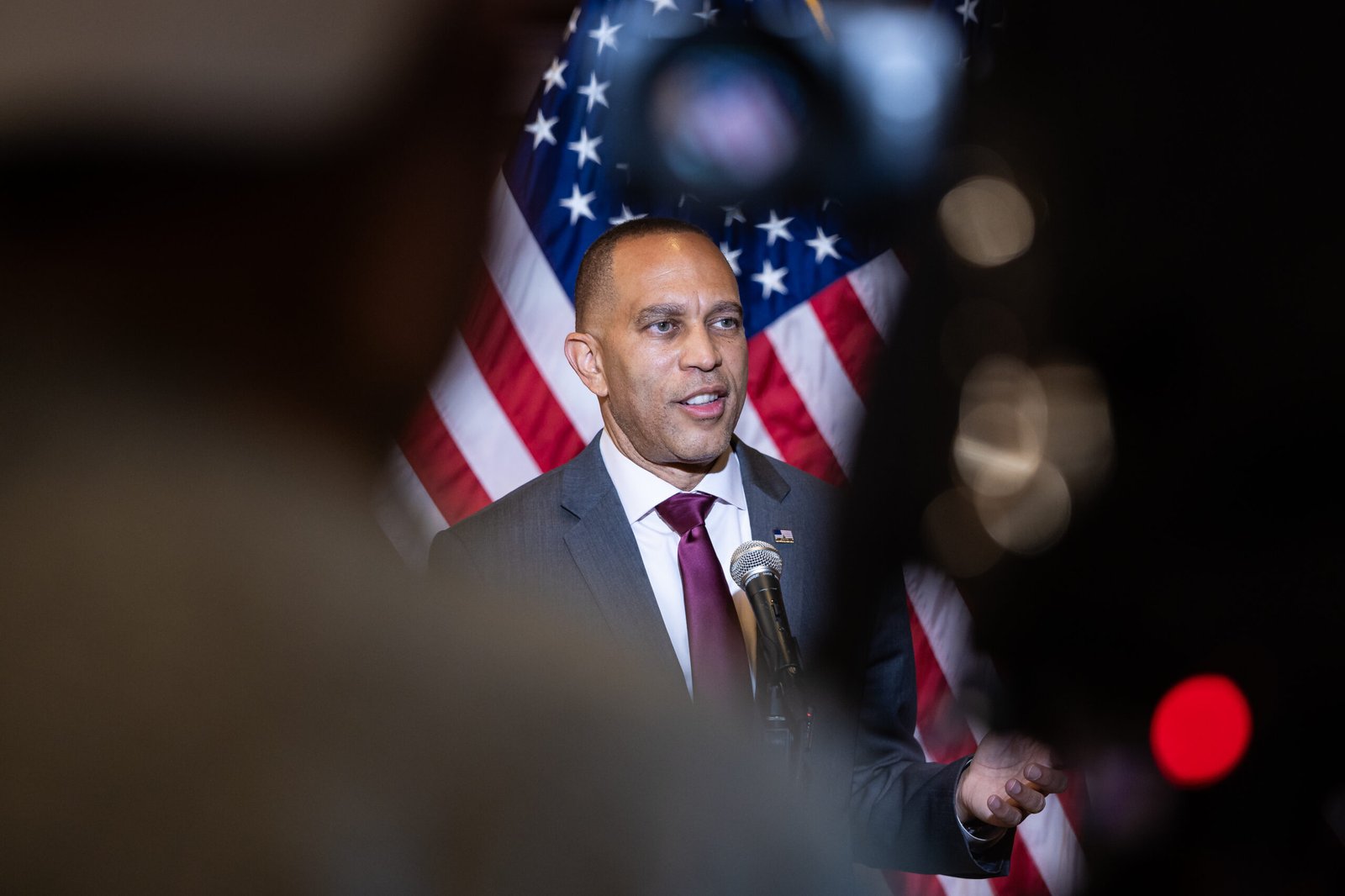

Democrats watching Speaker Mike Johnson deal with a chaotically slim majority have seen enough — and they’re trying to avoid the same fate.
The party is investing in deep-red districts that could pad a future majority and strengthen the hand of Hakeem Jeffries, who’s widely favored as speaker if Democrats win the chamber in November.
“Another five-or-so-seat buffer would be a game-changer,” said one senior House Democrat, who like others in this report was granted anonymity to discuss internal party dynamics. That lawmaker added it would help Jeffries “rise above some of the incoming bullshit he’s going to have to deal with.”
Every extra seat would help Jeffries secure the speaker’s gavel without having to make concessions to the two clashing blocs within his party: progressives and moderates.
Recent spending reflects these ambitions. Since the start of August, Democratic-aligned groups and candidates have spent or committed more than $73 million in ad dollars to GOP-held districts that President Donald Trump won by at least 10 points in 2024, according to a POLITICO review of data from AdImpact. The NewDem Action Fund, the political arm of the centrist New Democrat Coalition, is spending in some even redder districts.
“Every single endorsed candidate supports Hakeem Jeffries for speaker of the House,” said the fund’s chair, Rep. Greg Stanton. “We will be a strong governing partner with Hakeem Jeffries to make sure that his speakership is as successful as possible.”
Tight majorities are misery-makers for speakers. Before Johnson, former Speaker Kevin McCarthy gave numerous concessions to his party’s right flank to assume the role — only to later be ousted by those same lawmakers. And former Speaker Nancy Pelosi had to cut a deal with moderates to secure her post in 2018 by promising to limit her leadership term.
Even with the gavel secured, a speaker has more flexibility to manage the floor if he or she can let some party colleagues peel off on tough votes.
Progressive challengers ousted a handful of Democratic incumbents in primaries this year, and they could adopt tactics from the ultraconservative House Freedom Caucus if Democrats win just a narrow majority.
Meanwhile, newly elected moderates, particularly from rural districts that swung heavily for Trump in 2024, could end up as a bigger problem for Jeffries — as they were for Pelosi when she was speaker.
What else we’re watching:
— HAWLEY’S POPULIST AI REBELLION: Sen. Josh Hawley’s push against artificial intelligence is placing an unmistakable marker for anti-tech rhetoric in the 2028 campaign among ambitious Republicans. Hawley’s call for AI safety legislation this week — including imposing corporate liability when AI causes harm — contrasts with Trump’s favoring of voluntary standards and exposes the growing rift between Republicans on how to respond to the technology. But Hawley’s influence is poised to expand as more Republicans start to echo his tone.
— GOP ADS SPUR CORPORATE HEARTBURN: A series of TV campaign ads this midterms season has highlighted a growing reality: On the right it’s become increasingly in vogue to bash big business. The ascendancy of Trump has ushered in a new era of skepticism toward multinational corporations in a party traditionally known as corporation-friendly. That puts big financial services firms, health insurance companies and tech titans — the subjects of the hottest rhetoric — at risk for becoming high-profile political punching bags for Republican 2028 presidential hopefuls.
Andrew Howard, Meredith Lee Hill, Riley Rogerson, Jessica Piper, John Hendel, Jasper Goodman and Victoria Guida contributed to this report.







Leave a Reply