
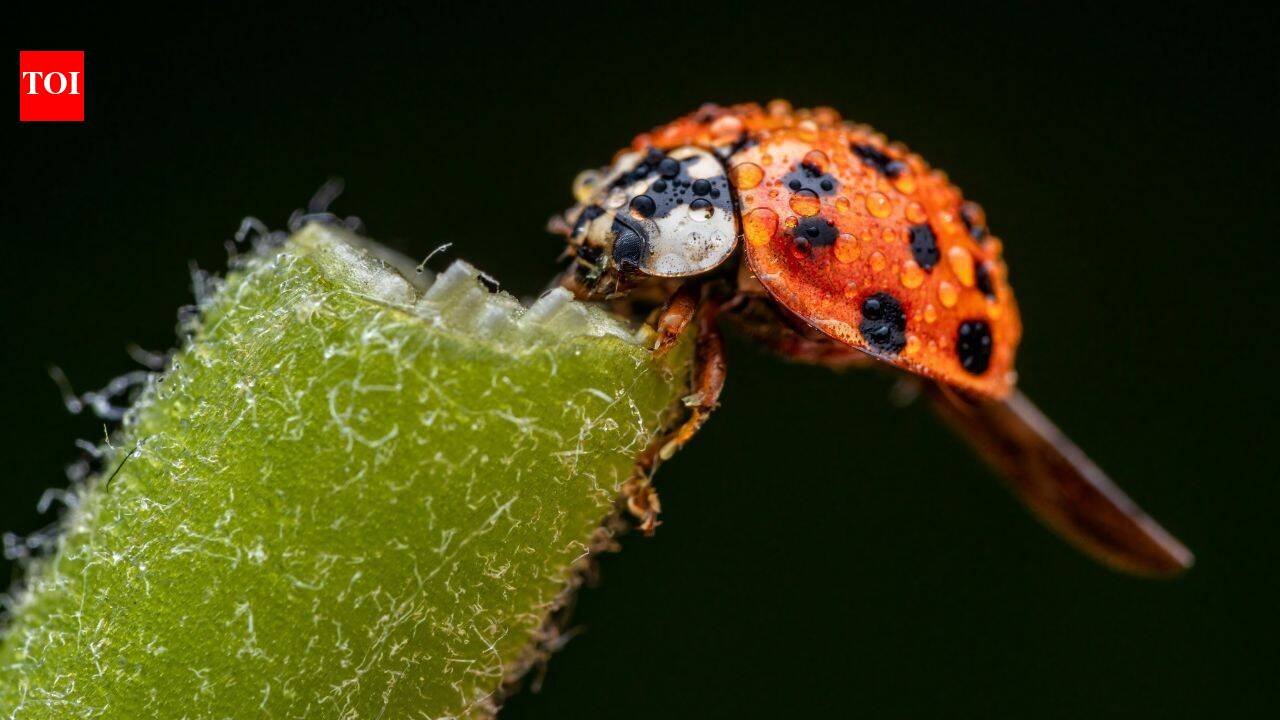
The multicoloured Asian lady beetle was introduced to the United States with a clear purpose. Starting as early as 1916, agricultural officials released the insect, scientifically known as Harmonia axyridis, in an effort to control aphids, scale insects and other crop pests without relying as heavily on chemical insecticides. It was an appealing form of biological control, but the story took an unexpected turn. After the species established wild populations in the late 1980s, it spread rapidly across the country and beyond, becoming one of the world’s most successful invasive insects. According to reports by the USDA Agricultural Research Service, it can outcompete native ladybirds and is now regarded as an invasive species in many regions.
An import meant to help farmers
The multicoloured Asian lady beetle is native to Asia, where it feeds on aphids and other soft-bodied arthropods. Those feeding habits made it attractive to US agricultural researchers looking for natural ways to control pests in orchards, forests, gardens and field crops. Aphids can damage plants by extracting sap, while scale insects can weaken trees and shrubs, so a predator that consumed large numbers of these pests appeared to be a useful ally.Federal, state and private entomologists released Harmonia axyridis at several locations over the years. The beetles were meant to reduce pest populations and, in turn, lower the need for insecticides. In some settings, that promise was fulfilled, especially in pecan orchards and on ornamental plants, where the beetles helped control aphids.At the time, biological control was widely viewed as a practical alternative to chemical pest management. Introducing predators can offer benefits when the predator remains focused on its target prey and fits into the new ecosystem without causing disruption. The challenge is that ecosystems are complex, and an insect that is helpful in one place can behave very differently after crossing continents.
The first wild populations
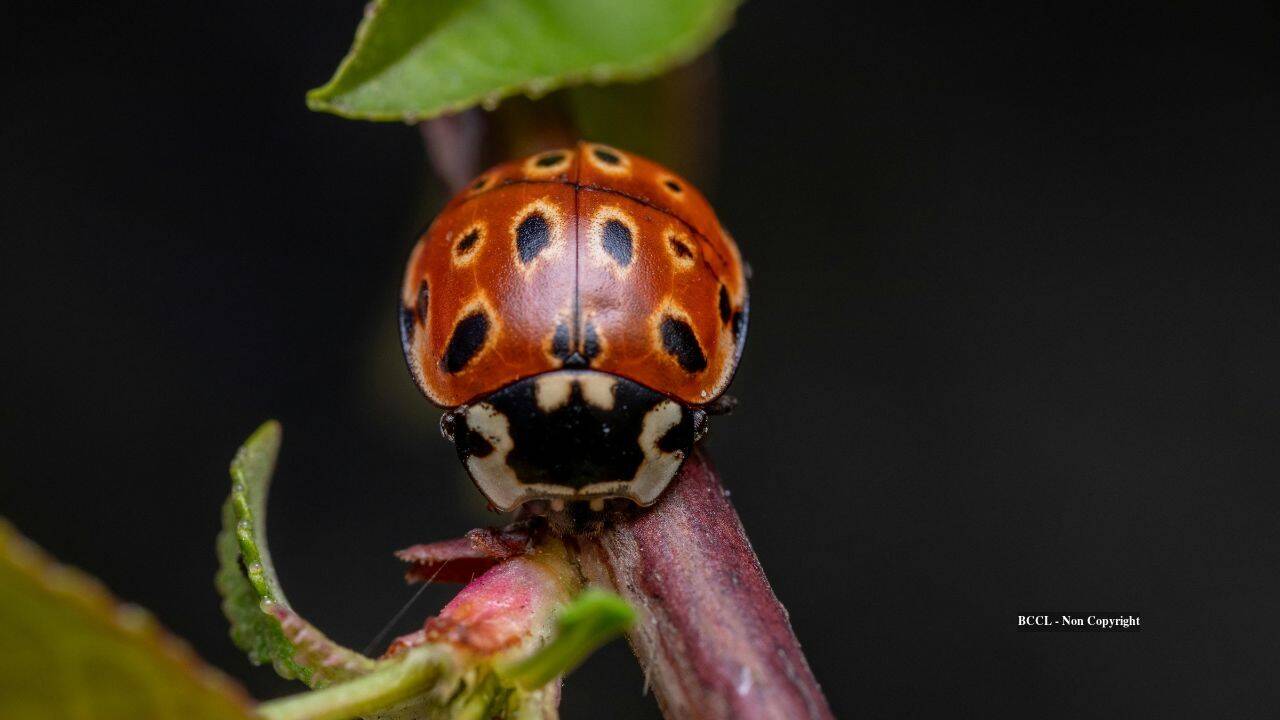
Asian lady beetles
Although releases began as early as 1916, the first established US populations of multicoloured Asian lady beetles were not documented until 1988. They were found in Louisiana near the busy port of New Orleans, far from many of the locations where planned releases had occurred. That gap raised a key question: did the species establish because of intentional releases, accidental introductions through trade, or both?USDA researchers note that accidental entries likely occurred through imported nursery stock at ports in Delaware and South Carolina. This makes it difficult to trace the exact origin of the invasion. What is clear is that once Harmonia axyridis gained a foothold, it spread rapidly through North America and later across other continents.The beetle’s success was helped by its adaptability. It can survive in orchards, forests, row crops, gardens and urban areas, feeding on a broad range of prey. It also reproduces quickly, with development from egg to adult taking roughly 15 to 25 days depending on temperature and food availability. These traits gave it a major advantage in new habitats, as per the reports.
A familiar beetle with many faces
The Asian lady beetle can be difficult to identify because its appearance varies greatly. Its wing covers may range from black to mustard yellow or red, and the number of spots can vary from none to many. In the United States, a common form is mustard to red with 16 or more black spots, but the diversity in colour and markings means it is not always easy to distinguish from native species at a glance.Like other ladybirds, it goes through four distinct life stages: egg, larva, pupa and adult. Females begin laying eggs on host plants in early spring, and the larvae immediately begin hunting aphids and other soft-bodied prey after hatching. Both adults and larvae are active predators, meaning the species can have a strong effect on insect populations wherever it becomes abundant.That feeding efficiency is exactly what made the beetle valuable to agriculture. However, a voracious appetite is not limited to crop pests. It can also put pressure on native ladybirds that depend on the same food sources, turning an agricultural helper into a conservation concern.
When helpful became harmful
The USDA describes the Asian lady beetle as a mixed blessing. It remains an effective predator of aphids and other pests, but has also become a nuisance in homes and a threat to biodiversity. In invaded countries Harmonia axyridis is considered invasive as it can outcompete other ladybug species for food and habitat.Native ladybugs might be unable to compete with a highly adaptable newcomer moving into the same ecological niche. Harmonia axyridis is larger than many native species, highly mobile and able to use a wide range of habitats. Its ability to find food across different crops and landscapes can give it an advantage when prey is scarce.The beetle also has strong defences. USDA research notes that it possesses chemical, mechanical and microbiological anti-predator traits that cause many predators to avoid it. These defences reduce the natural pressure that might otherwise limit its numbers, allowing populations to increase and spread.
A difficult species to control
Scientists have studied whether predators and parasitoids could naturally slow the Asian lady beetle’s expansion. The evidence suggests that many vertebrate and invertebrate predators in invaded regions are relatively ineffective at limiting the beetle. Some birds and insects can consume it, but its defensive adaptations often make it an unappealing or difficult target.Parasitoids, organisms that develop on or inside a host and ultimately kill it, may offer some potential. USDA researchers identified certain true flies in the genus Phalacrotophora as possible natural enemies capable of overcoming some of the beetle’s defences. However, researchers stress that more work is needed to understand whether these relationships can meaningfully reduce populations at a larger scale.The case of Harmonia axyridis illustrates a common pattern in biological invasions. A species introduced without its full set of predators, parasites and ecological constraints may initially flourish. Over time, native species may adapt and new relationships may form, but that process can take years or decades and may not undo the harm already caused.
A nuisance in homes too
For homeowners, the most visible problem often arrives in autumn. As temperatures drop, adult Asian lady beetles seek sheltered places to overwinter, including homes, sheds and other buildings. They are particularly drawn to light-coloured structures, such as white, grey and yellow houses, which can act as visual cues for the insects.The beetles do not damage structures in the way termites or carpenter ants do. They do not chew wood, bore through walls, feed on carpets, or lay eggs indoors. However, they can gather in large numbers in wall spaces and then enter living areas on warm winter or early spring days while searching for an exit.When disturbed or crushed, the insects can release a yellow, unpleasant-smelling fluid from their leg joints in a defensive behaviour known as reflex bleeding. The fluid can stain walls and fabrics, making the beetles unwelcome guests despite their role as pest predators. USDA guidance recommends sealing exterior cracks and crevices before autumn and using a vacuum or broom to remove beetles that enter indoor spaces.
Lessons from a century-old decision
The Asian lady beetle’s journey from a planned pest-control import to a widespread invasive species offers an important lesson about ecological caution. Biocontrol reduces pesticide use and protects crops, but all nonnative species come with risks that aren’t always immediately apparent. A predator may control one pest while competing with native species or creating new problems elsewhere.More than a century after the first US releases, Harmonia axyridis remains both useful and disruptive. It still has some use controlling aphids in certain agricultural settings, but the unintended consequences of its spread have come at a cost to native ladybugs and home comfort. Its history is a warning that even well-meaning attempts to help the environment have to be assessed not just on the benefits they bring in the short term, but on what they might lead to in the longer term.







Leave a Reply