
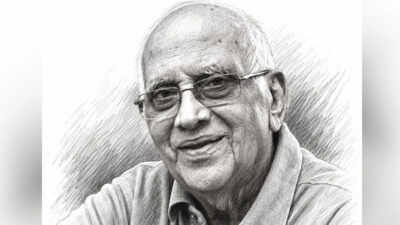
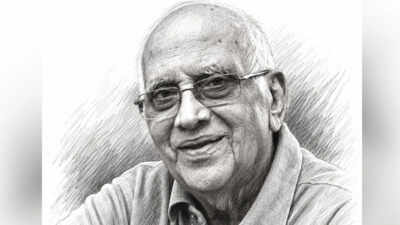
BENGALURU: Singeetham Srinivasa Rao, who died in Chennai on Saturday aged 95, had a career that spanned more than seven decades of Indian cinema. He entered films in 1954 as an apprentice to legendary Telugu filmmaker KV Reddy, assisting him on Donga Ramudu and Mayabazar.From those early days on the sets of a Telugu classic, Rao went on to become one of Indian cinema’s most inventive filmmakers, leaving a particularly rich mark on Kannada cinema while also making acclaimed films in Tamil, Telugu and other languages.His Kannada journey began before he became a director. Rao was the executive director of Samskara (1970), Pattabhirama Reddy’s landmark adaptation of UR Ananthamurthy’s novel. The film, which won the National Film Award for Best Feature Film, became a defining work of Kannada parallel cinema. It was an early indication of the range of a filmmaker who would later move comfortably between art-house cinema and popular entertainment.His directorial debut in Kannada came with Rajkumar in Haalu Jenu in 1982. What followed was one of the notable actor-director collaborations in Kannada cinema, with Chalisuva Modagalu, Eradu Nakshatragalu, Shravana Banthu, Jwaalamukhi, Bhagyada Lakshmi Baramma and Devatha Manushya — all after Gogak Chaluvali. The films moved across family drama, romance, crime and comedy, with Rao adapting his craft to each. Devatha Manushya was also Rajkumar’s 200th film.His association with the Rajkumar family extended beyond the thespian himself. In Anand (1986), Rao introduced Shivarajkumar as a leading man. He later directed Raghavendra Rajkumar in Chiranjeevi Sudhakar. His association with the Rajkumar banner also included work on other films produced by the family.There was another side to Rao’s Kannada work that is less often remembered: music. A disciple of composer S Rajeswara Rao, he also composed music, giving Kannada cinema some memorable albums. He composed the songs and score for Bhagyada Lakshmi Baramma and the songs for Samyuktha, moving between direction and music with the same ease with which he moved between genres.Then came Pushpaka Vimana (1987), the dialogue-free film starring Kamal Haasan. The movie, which became one of the most distinctive films of its time, was another example of Rao refusing to be confined by conventional cinematic language. Though often remembered primarily through its Tamil connection, it was produced as a Kannada entry and won the National Award for Best Popular Film Providing Wholesome Entertainment.
Share your thoughts in the comments
Be respectful · TOI community guidelines
His apprenticeship under KV Reddy had taken him through some of Telugu cinema’s landmark films. Decades later, he returned to Telugu cinema as a director with films such as Aditya 369 and Bhairava Dweepam. In Tamil, his collaborations with Kamal Haasan produced films including Raja Paarvai, Apoorva Sagodharargal and Michael Madana Kama Rajan. His work also extended to Hindi, Malayalam and English.Across more than seven decades, Rao’s filmography was less a straight line than a series of departures. He began as a young apprentice learning from KV Reddy on films such as Mayabazar, became part of the Kannada New Wave through Samskara, worked extensively with Rajkumar, introduced two of his sons, experimented with a dialogue-free film and continued moving between languages and genres almost until the end.


Leave a Reply