
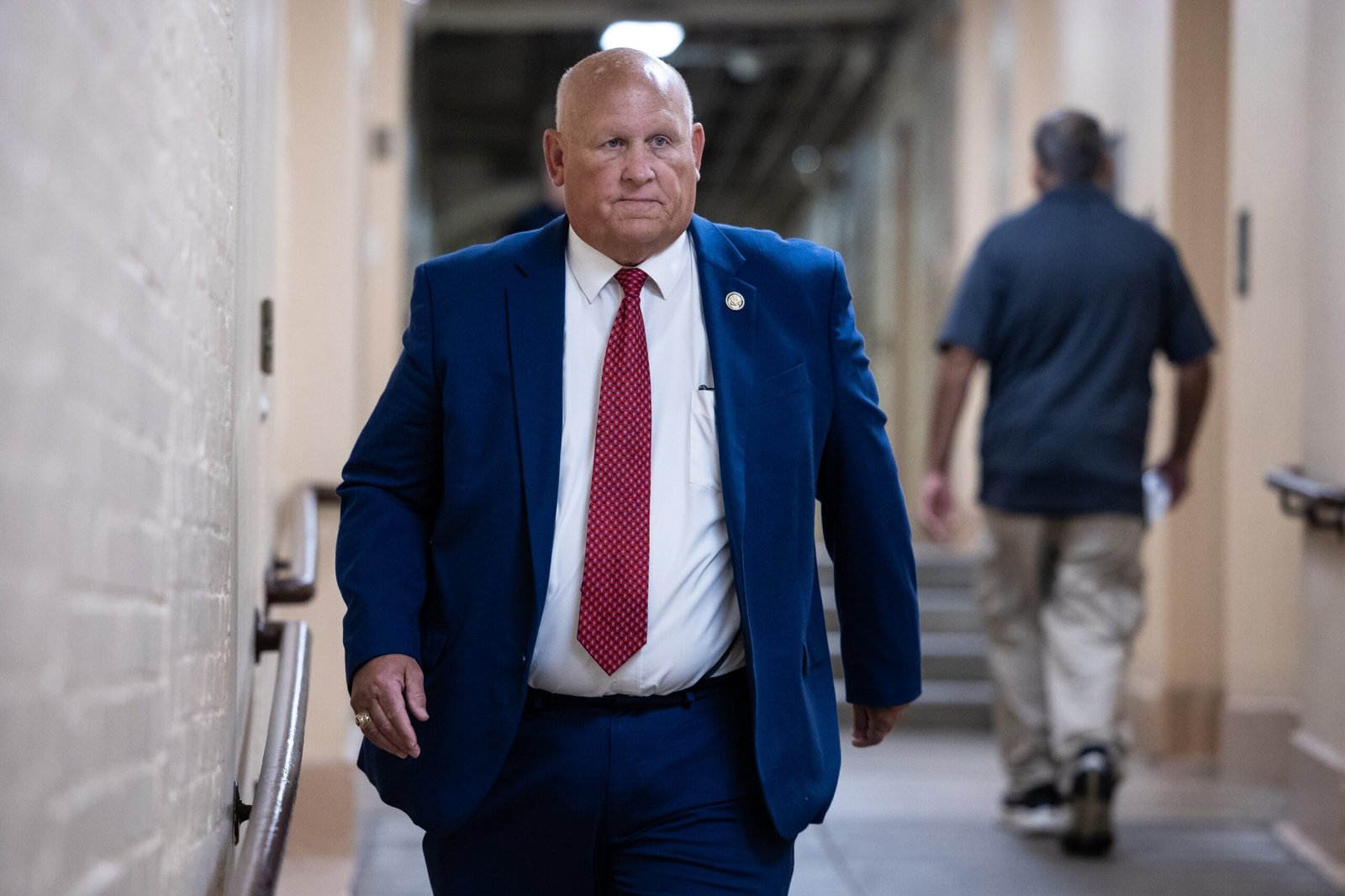

The chair of the House Agriculture Committee said he’s not willing to “accept bad results” as a tradeoff for the benefits of advancements in artificial intelligence — a direct rebuttal to OpenAI CEO Sam Altman.
“As someone who practiced health care for 28 years, I’m never willing to accept bad results. I think we just need to do our best,” Rep. G.T. Thompson, a Pennsylvania Republican, told reporters Monday.
He was responding to Altman’s comments to Decoded by POLITICO that people “should accept some bad things happening for the benefits of this technology and people having the agency.”
Pressed further on whether he agreed with Altman’s premise, Thompson replied, “No, I think we have to work harder to prevent any bad things from happening.”
Altman’s comments come in the wake of increased panic over the risks of catastrophic destruction from AI, with many industry leaders and experts arguing that guardrails are needed on the technology to prevent it from spinning out of human control.
Pressure is building on Congress to regulate the rapidly-advancing technology, but lawmakers are divided over whether the AI industry needs federal regulation or if it’s capable of governing itself.
The executives of major AI labs and tech companies gathered at the White House last week to discuss solutions with President Donald Trump, who believes overregulating AI will have national security repercussions. The group ended up signing a “morally binding” AI accord that critics say won’t do enough to prevent a worst-case scenario.
Thompson noted Monday he believes that AI will bring “tremendous solutions,” specifically in regards to finding cures for health issues like cancer and Alzheimer’s disease. But he also said AI has to be led with “principle” — comparing it to how he addressed digital assets in a bill to regulate the cryptocurrency industry, which he worked on as chair of the Agriculture Committee.
“The first principle is ‘do no harm.’ So we need to protect consumers, and that means, I think, building some guardrails — some guidelines — to do that,” Thompson said. He added that the second principle is to “foster innovation.”
“I think AI has a lot to do with that,” he added. “I don’t think AI works without RI: Real Intelligence.”







Leave a Reply