
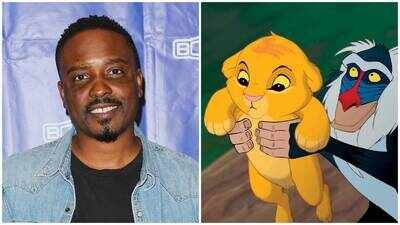
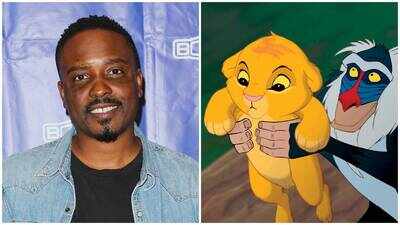
At 13, most children are still figuring out what they want to be when they grow up. For Jason Weaver, however, life had already presented an opportunity that could have changed his family’s fortunes overnight. When Disney offered him $2 million to lend his voice to young Simba in The Lion King, it was the kind of money most teenagers could only dream of. But his mother and manager, Marilyn “Kitty” Haywood, saw something beyond the staggering figure. She turned down the lump-sum offer, negotiated an upfront payment of around $100,000 and royalties instead, and made a decision that Weaver says continues to pay off more than three decades later.Now 47, the actor and singer has revealed how his mother’s foresight helped him build a lasting source of income from one of Disney’s most successful animated films. Recalling the deal in a 2019 interview with VladTV, which has recently resurfaced on social media, Weaver said the original offer was essentially designed to pay him once and close the matter.“When they offered that deal, it was really just to take this money and go,” he recalled, suggesting that Disney already anticipated the enormous commercial potential of the film.For a family from Chicago, $2 million in the early 1990s was no small amount. Weaver had already experienced success, including playing a young Michael Jackson, for which he said his biggest cheque until then had been around $80,000. The Disney offer was therefore a life-changing sum by any ordinary measure. Yet his mother understood that the value of the opportunity might extend far beyond what was being offered upfront.
Why his mother turned down $2 million
Haywood, who had experience in the music industry as a singer with the Chicago group Kitty & the Haywoods and as a backing vocalist for Aretha Franklin, was not easily swayed by a large cheque. She understood that entertainment contracts could have consequences lasting years, and she wanted her son to benefit if the film continued to generate revenue long after its theatrical release.Her thinking was rooted in Disney’s own history. The studio had repeatedly brought its classic animated films back to audiences through re-releases, allowing them to find new generations of viewers. With Aladdin and Beauty and the Beast having already established the commercial strength of Disney’s animated revival, she had reason to believe that The Lion King could enjoy a similarly long life.As Weaver explained, his mother looked beyond the immediate payout and considered what the film might mean for him decades later.“She was able to see the playing field and go, wait a minute, this is gonna make a lot of money over time, so what happens when my son turns 40? Is he still gonna be able to get a check from this when they eventually release this?” he recalled. “And sure enough, she was absolutely right.”Instead of accepting the $2 million outright, Haywood negotiated an upfront payment of approximately $100,000 along with royalties. It was a gamble that required patience and a willingness to bet on the film’s future success rather than take a guaranteed fortune in the present.
The gamble that kept paying off for more than three decades
The decision was not without risk. Weaver has said that royalty arrangements were not routinely offered to newcomers at the time, with such deals more commonly associated with established stars. His mother’s industry experience, however, gave her the confidence to negotiate rather than simply accept Disney’s first proposal.The scale of The Lion King’s success ultimately made that decision particularly rewarding. What began as an animated feature grew into a global entertainment franchise, spanning merchandise, video games, stage productions, theme park attractions and subsequent screen adaptations.Weaver has pointed to the enormous sums generated by the franchise over the years, observing that the money Disney made from it could run into hundreds of millions, if not billions, of dollars. Against that backdrop, the original $2 million offer began to look less like an extraordinary windfall and more like a one-time payment that could have cost him years of earnings.The actor has said that he has since earned more through the arrangement than the amount Disney initially offered. He has not publicly disclosed the total royalties he has received or the precise amount of his recurring payments, but he continues to describe the income as a welcome source of financial security.In fact, the first royalty cheque was so unexpected that even Weaver and his mother initially questioned whether it was correct.“When I got my first royalty check, me and my mom thought it was a mistake,” he said.That disbelief has given way to appreciation over the years. For Weaver, the payments are a reminder of a decision made when he was too young to fully understand the financial implications of the opportunity in front of him.
‘I wasn’t thinking about a portfolio’
Looking back, Weaver has also acknowledged that receiving $2 million at 13 might not necessarily have led to the same long-term outcome. As a teenager, he was unlikely to have been thinking about investments, financial planning or ways to preserve a fortune over several decades.“I wasn’t thinking about a portfolio, or diversifying,” he said.His mother’s decision, therefore, did more than secure a potential stream of future earnings. It also protected him from the possibility of receiving an enormous sum at an age when managing it responsibly would have been a challenge.The continuing royalties have proved particularly valuable because they are not dependent on whether he is currently working on a film, television show or music project. As Weaver put it, the residual income remains helpful even today.“Honestly that income, that residual income that I generate—man that is so helpful,” he said. “Even nowadays, when I get a check, it’s like…yes!”The arrangement also has implications for the next generation. Weaver has said that he agreed to terms allowing the royalties to pass down to his children and potentially their descendants, extending the benefits of his mother’s decision well beyond his own career.
From young Simba to a career across television, film and music
While The Lion King remains one of the defining achievements of Weaver’s early career, it was far from his last major professional milestone. After voicing young Simba and singing on the film’s soundtrack, he went on to establish himself as an actor in both television and cinema.He appeared in the sitcom Thea from 1993 to 1994 before taking on the role of Marcus Henderson in Smart Guy, which ran from 1997 to 1999. His film credits include Drumline, The Ladykillers and ATL. In more recent years, he has appeared in television series including The Chi and Sistas.Music remained an important part of his journey, too. Weaver released his debut album, Love Ambition, through Motown in 1995. In 2004, he featured on Chingy’s single “One Call Away”, which reached No. 2 on the Billboard Hot 100.His career has therefore extended well beyond the Disney classic, but the financial benefits of his work on The Lion King continue to occupy a special place in his story.
A decision that turned a childhood opportunity into a lasting legacy
The success of The Lion King has only reinforced the wisdom of Haywood’s decision. The original animated film became a global box-office phenomenon, while the 2019 photorealistic remake went on to earn more than $1.6 billion worldwide. The franchise’s continuing popularity has helped keep the story relevant to new generations of audiences.Online estimates have placed Weaver’s net worth between $4 million and $7 million, although those figures have not been independently confirmed. More importantly, the actor himself has made clear that the royalties have continued to provide meaningful financial support throughout his adult life.There is also something deeply personal about the story. At 13, Weaver was the face, or, more accurately, the voice, of a character who would become a beloved part of popular culture. He could not have been expected to predict the franchise’s extraordinary longevity. His mother, however, recognised that a successful film could become an enduring asset rather than a single paycheque.More than 30 years later, the result is a reminder that the biggest financial decision is not always about how much money arrives today, but how much value an opportunity can create over time.For Weaver, the $2 million Disney offer might once have seemed like a dream come true. Instead, his mother’s willingness to look beyond it helped turn a childhood role into a source of income that continues to surprise him, and one that may benefit his family for generations to come.






Leave a Reply