
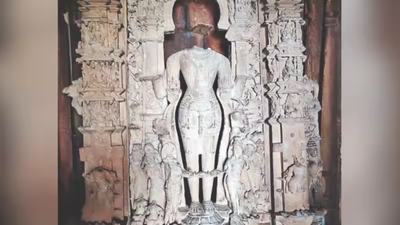
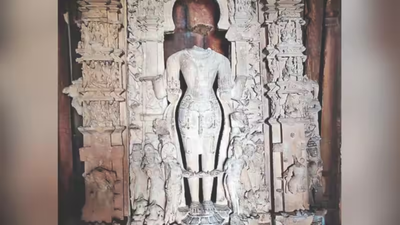
The Archaeological Survey of India (ASI) has found the missing head of an 11th-century Vishnu idol at Khajuraho, whose restoration became the subject of a recent controversy involving the Supreme Court, and plans to reattach it after expert examination. ASI has also introduced a three-year deadline for archaeological excavations to curb delays in research and cut approval times for most conservation projects to 15-20 days, director general Yadubir Singh Rawat told TOI in an exclusive interview. He also revealed plans for a preliminary excavation at Ujjain’s Vaishya Tekri, where a Buddhist stupa could be larger than Sanchi’s, although its actual scale and significance remain to be established.Controversy over the beheaded Vishnu idol at Khajuraho’s Javari temple reached the Supreme Court last year when advocate Rakesh Dalal sought restoration, replacement or reconstruction of the seven-foot statue. While dismissing the petition, then CJI BR Gavai had said, “Go and ask the deity itself to do something now.” Though Gavai later said he respects all religions and that his statement was taken out of context, a lawyer had tried to throw a shoe at him inside the courtroom.Rawat said the missing head had been found in an ASI store. “During a visit to Bhopal for the Brics summit, I learnt that the statue’s head – which had been kept in our store – had been found. The person in charge informed me that someone likely tried to break off the head to steal it but failed to do so. We are having experts examine it and will soon reattach it to the statue.”
Share your thoughts in the comments
Be respectful · TOI community guidelines
On encroachments at protected monuments, Rawat said “The root of this problem lies in the list prepared by British rulers in 1904 under the ‘Ancient Monuments Preservation Act’ – a list that the then govt adopted post-Independence without any review. The British had included cemeteries and graves of their obscure soldiers, horses and pets – which they deemed highly significant – among protected monuments.” Rawat said a review in 1953 incorporated state monuments into a definitive list, but the central list remained unchanged. The resulting difficulties led to 17 monuments being removed from it.Regarding funding disparities, he said allocations depended on visitor numbers, maintenance requirements, security expenses and public facilities. Taj Mahal and Red Fort, he said, served as showcases for ASI, while Taj Mahal’s maintenance required substantial expenditure because of its delicate structure and heavy tourist footfall. ASI paid around Rs 3 crore monthly for more than 200 CISF personnel deployed there.He said ASI circles had been instructed to prepare conservation and tourism development proposals for lesser-known sites like Bareilly’s pyramid-like Bhim ki Gada structure.




Leave a Reply