
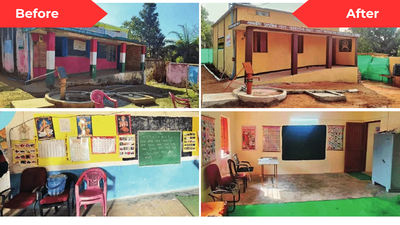
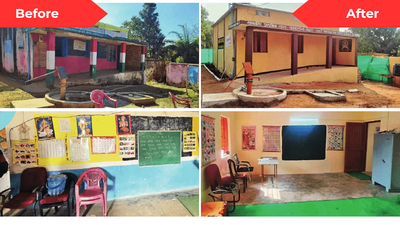
Once listed in intelligence files as a Maoist stronghold, Chukka Tola village in Madhya Pradesh’s Balaghat district has undergone a remarkable transformation—one that did not come through force, but through foresight. Previously embedded within the support network of CPI (Maoist) leadership, including the high-profile Milind Teltumbde, the village now stands at the centre of an unusual counter-insurgency model: rebuilding communities through education.At the heart of this shift is the ‘Vidyanjali’ initiative under the Ekal Suvidha Kendra framework, spearheaded by SP Aaditya Mishra, a 2018-batch IPS officer. Instead of conventional policing tactics, the programme focuses on restoring neglected primary schools in remote tribal areas, many of which had fallen into disrepair over the years.The approach is distinctive—police personnel themselves contribute physical labour, or shramdaan, to repair infrastructure, cutting costs and building trust within communities.The idea emerged from ground-level intelligence that revealed a consistent pattern: regions where extremist influence thrived often lacked basic educational infra- structure. With schools abandoned or dysfunctional, children were left disconnected from formal systems, creating fertile ground for alienation and radicalisation. Rebuilding schools, therefore, became both a developmental and strategic priority.What began as a pilot project in a single dilapidated school in Chukka Tola has now expanded across the district. So far, approximately 250 schools have been renovated, surpassing the initial goal of upgrading 100 schools by early 2026. Each school has been restored at an average cost of around Rs 1.2 lakh—significantly lower than traditional construction models—thanks to voluntary labour and community participation.The changes on the ground are striking. Schools that once had crumbling walls, broken furniture, and unsafe facilities have been converted into clean, functional learning spaces. Fresh paint, proper desks, improved lighting, and teaching aids have replaced decay. Essential amenities such as safe kitchens, clean toilets, drinking water, and electrification have also been prioritised, creating an environment conducive to learning.The initiative gained momentum after authorities declared the effective end of Naxal activity in the district in December 2025. With security concerns reduced, the focus shifted to long-term stability through development. Early personal involvement by SP Mishra and his family—who adopted schools themselves—helped inspire local businesses and citizens to contribute. To date, nearly Rs 3.9 crore has been mobilised through public donations.“The aim is to rejuvenate primary schools. Through this initiative, we are not just painting walls; we are building a future where every child has access to better facilities and learning conditions,” Mishra said.Transparency has been ensured through a dedicated online portal, allowing individuals and organisations to directly support the project. A registered Vidyanjali Society manages funds and facilitates contributions, including corporate social responsibility support.Beyond infrastructure, the broader goal is social reintegration. Parallel efforts include rehabilitation of surrendered Maoists, access to identity documents, banking services, and livelihood support for affected families. Officials describe the initiative as a shift in policing philosophy—from enforcement to engagement. In villages like Chukka Tola, the echoes of conflict are gradually being replaced by the sounds of classrooms—signalling a quieter, more enduring victory.






Leave a Reply