


On May 16, 2026, the Cockroach Janta Party (CJP) was launched as a satirical political collective on social media, sparked by a widely misquoted remark from Chief Justice of India Surya Kant.
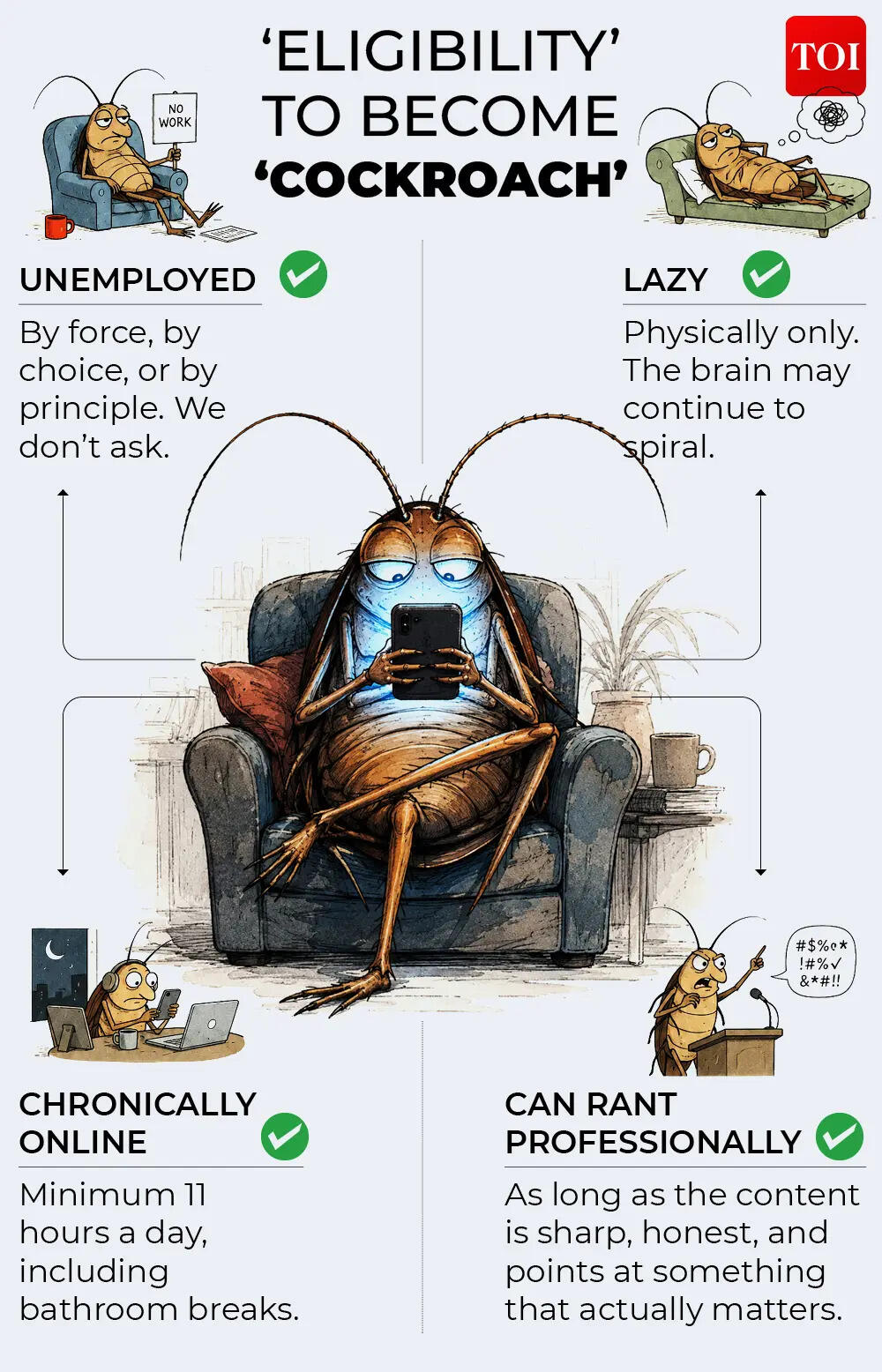
His comments went viral out of context, morphing into a viral line about “unemployed youth like cockroaches”, which quickly became a rallying cry for a generation already seething over jobs, cost of living, and perceived elitism in power.
From meme to mass movement
The CJP began life as a tongue‑in‑cheek “party” with a cheeky online manifesto declaring it “the voice of the lazy and unemployed”, but its timing and aesthetic — rough‑cut graphics, dark humour, and razor‑sharp Gen‑Z memes — struck a nerve.Within five days of its launch, the CJP’s Instagram account had amassed over 21 million followers, far outpacing the Congress’ 13 million followers and surpassing the BJP’s 9 million followers.Its X account grew to more than 200,000 followers before being withheld in India, while the founder Abhijeet Dipke’s personal X account neared 200,000 followers.International media outlets quickly framed the phenomenon as a digital‑age protest movement, describing it as the “desperate and frustrated” expression of India’s youth shaped by record‑high unemployment, soaring education‑loan burdens, and a sense that traditional politics ignores their anxieties.The CJP branded itself as an anti‑establishment, “roach‑squad” movement that mocks the self‑seriousness of mainstream parties while channeling very real discontent — joblessness, credential inflation, and the feeling that “the system is stacked” against the average young person.
How BJP reacted
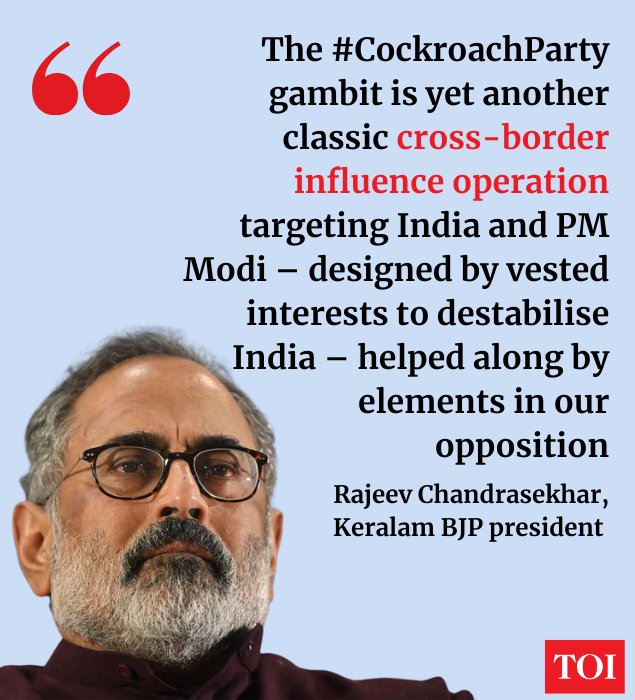
At home, the BJP responded with a hostile, conspiratorial narrative, labelling the CJP a “cross‑border influence operation” aimed at destabilising India’s institutions.Senior leaders, including multiple BJP MPs and Rajya Sabha figures, floated the idea of an official probe into the movement, alleging links to external actors and “shadow” networks.Kerala BJP president Rajeev Chandrasekhar argued that the party is being “helped along by elements in our opposition” to target both the Modi government and India.
Meanwhile, union minister Sukanta Majumdar alleged that almost half of the outfit’s social media support was originating from Pakistan and less than 10% was from India.Speaking to reporters, Majumdar claimed: “49 per cent followers of ‘Cockroach Janta Party’ on social media are from Pakistan.”Union Minister Kiren Rijiju also weighed in on the controversy through posts on X. In one post, he wrote: “I pity those who seek their followers in social media from Pakistan & George Soros gang.”The digital clampdown intensified when X withheld the CJP’s official account in India.The platform’s action triggered a separate backlash, with critics accusing the government of using legal tools to mute a satirical outlet that, while inflammatory, largely operated within the bounds of online political parody.
Opposition’s awkward dance
Opposition parties adopted a more nuanced, damage‑control‑plus‑opportunity posture.Prominent leaders from the Congress, Trinamool Congress (TMC), and Samajwadi Party (SP) publicly “joined” the CJP in jest, posting memes and cheeky membership cards, while using the moment to lambaste the BJP’s job‑creation record and youth‑policy failures.Congress MP Shashi Tharoor, who styles himself as a CJP “member”, lauded the movement’s ability to capture youth frustration but also warned that the energy must be channelled into real‑world politics.
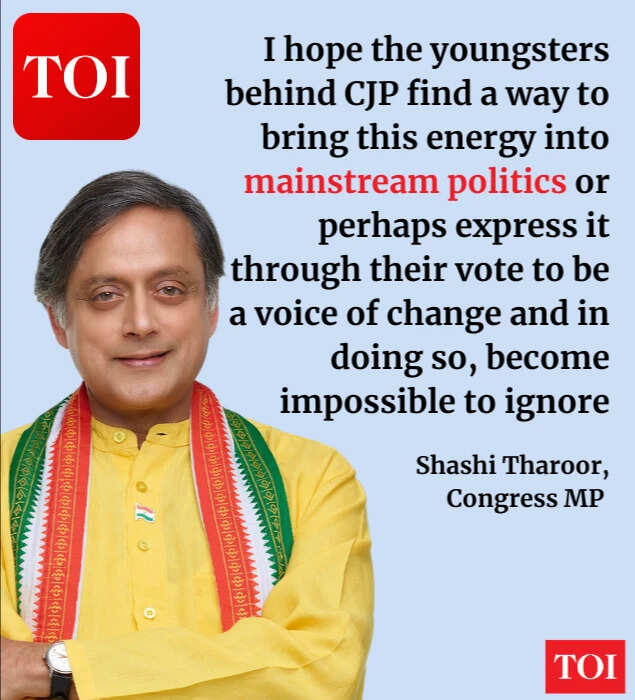
In a widely shared thread, Tharoor wrote that he was “incredibly intrigued by the rise of #CockroachJantaParty”, noting that it reflects genuine disillusionment among young Indians who feel “discounted, mocked, and ignored” by the establishment. Yet he urged them to “bring this energy into mainstream politics or at least into their vote”, arguing that the only way to become “impossible to ignore” is through organised participation, not just viral symbolism.Several opposition commentators have echoed him, suggesting that if traditional parties fail to listen to the same grievances the CJP amplifies, they risk losing another generation to apathy—or to the next online movement.
How to turn ‘reel’ revolt into real change?
On the ground, the CJP remains purely virtual — a meme‑driven, Instagram‑centred collective with no registered structure, no candidates, and no formal engagement with electoral machinery.Its 21-million‑plus Instagram following, tens of thousands of memetic posts, and an ecosystem of fan‑run X handles clearly show it has successfully tapped into a genuine political mood: cynicism toward elites, distrust of institutions, and a hunger for a language of politics that is irreverent, visual, and unapologetically young. Yet the question remains whether such a satirical “reel” movement can survive — or translate its momentum into the real world.“An online viral movement requires a relatable face as the anchor, a set of concrete issues catering to the frustrations and anxieties of a cross-section of people and willingness to take initiatives to establish a concrete organisation to metamorphose online solidarity into tangible political action,” said political analyst Sajjan Kumar.So far, the CJP has no manifesto beyond parody, no policy alternatives, and no clear roadmap for electoral or civic engagement; its strength lies in critique, not governance.
4 sticking points
For a movement claiming to represent frustrated youth waiting for change, the gap between meme culture and actual political transformation remains dangerously wide.Lack of formal structure, no sustainability plan, weak response to foreign influence allegations, ambiguous political participation stance, and vulnerability to opposition instrumentalisation — could prevent the CJP from becoming anything more than a viral moment.“First and foremost, the CJP should clearly declare what it stands for. Merely reactive mode with a mocking tone won’t take them too far. Second, the leader must come in the open and clarify that the party stands with everyone, irrespective of their ideological inclination, to avoid being dismissed as being partisan and working for anti-BJP outfits. Herein, it must clarify its stand on the opposition parties in general and the Indian National Congress in particular. Finally, transparency on the issue of funding and narrative arc are a prerequisite to acquire popular legitimacy,” said Kumar.
- Lack of formal organisational structure: The CJP remains an unregistered satirical collective rather than a legitimate political party. While this works for memes, it undermines credibility when the movement tries to get serious. Without formal registration, legal standing, or clear leadership hierarchy beyond Abhijeet Dipke, the movement cannot translate online support into actual political power or policy influence.
- Over-reliance on virality without sustainability plan: The movement gained 22 million Instagram followers in five days but has no clear roadmap for maintaining engagement beyond meme culture. Political analyst observations suggest the CJP’s popularity reflects “growing Gen Z resentment” but lacks mechanisms to convert frustration into organised action.
- Ambiguous stance on actual political participation: The CJP describes itself as “India’s most honest political party for the lazy” while simultaneously planning a “virtual Gen-Z convention”. This contradiction — being both proudly lazy and politically active — creates confusion about whether the movement seeks real political change or remains content as online protest theater.
- Underestimating the opposition’s instrumentalisation: Shashi Tharoor’s call to “bring this energy into mainstream politics” reveals how opposition parties view the CJP as a tool rather than a genuine movement. The quick “joining” of TMC, Congress, and AAP politicians suggests the movement risks becoming a pawn in established parties’ anti-BJP strategies rather than maintaining independent credibility.
For traditional parties, however, the CJP serves as both a warning and an invitation: a reminder that youth anger is no longer confined to occasional rallies or election‑time sloganeering, but is now a 24/7 digital force that can outdraw official accounts, mobilise millions, and, if mishandled, embarrass the state on the global stage.Some supporters have drawn a parallel to AAP, but Kumar points out: “The Anna Hazare-led anti-corruption movement may have had a strong online component but it started on the ground by mobilising middle class, civil societies and professionals on the plank of a pervasive corruption informing all the establish political parties.”“However, the CJP lacks all the elements: a credible anchor, a willingness to be on ground, a broader disassociation with all the established political parties and peddling an anchor issue which may fetch the solidarity of people, especially the Gen-Zs, irrespective of the current political embeddedness.”
Wake-up call for Gen Z
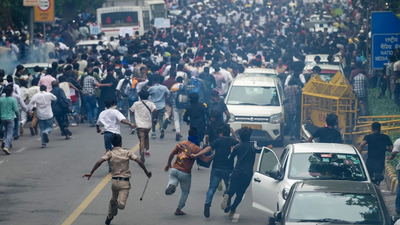
The Cockroach Janta Party’s explosive online popularity combined with its complete inability to translate digital virality into real-world political impact serves as a stark wake-up call for ambitious, disgruntled Gen Z.Giving a like on social media, changing your WhatsApp display picture to a cockroach meme, and using AI to create hilarious content that vents deep-seated frustration is simply not enough.Boots are needed on the ground.If the CJP stands any chance of becoming a real political force, its supporters must come out of their comfortable rooms and take to the streets. As Congress MP Shashi Tharoor noted, young people must “bring this energy into mainstream politics” or express it through voting to become “impossible to ignore”.Protests, demonstrations, and ground-level interaction with the population that isn’t online-savvy are absolutely required. India’s unemployed youth represent a massive demographic that cannot be reached solely through memes.The rural voters, older generations, and working-class families who aren’t scrolling Instagram won’t be swayed by viral hashtags alone.For Gen Z seeking real change, the lesson is clear: digital activism must be paired with physical presence.The movement’s future depends on whether supporters can evolve from virtual ranting to real-world organising, from comfortable rooms to crowded streets, from likes to legitimate political pressure.





Leave a Reply