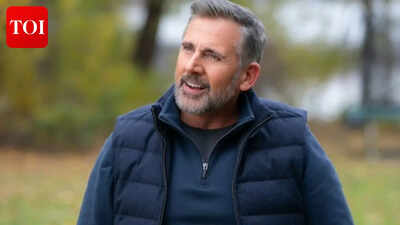
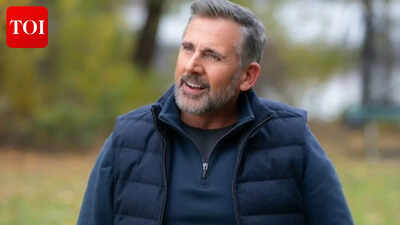
Steve Carell didn’t just become a comedian. He became a conscience. From ‘The Office’ to ‘The 40-Year-Old Virgin’ to ‘Anchorman’ to ‘Little Miss Sunshine’ to ‘The Big Short’ to ‘Beautiful Boy.‘ He has been in some of the funniest and most emotionally resonant films and television shows of the last three decades. He has been nominated for the Academy Award. He has won the Golden Globe. He has been one of the most beloved comic actors in Hollywood for decades. He did broad comedy. He had dry wit. He did heartbreak. He did drama. He transitioned from sketch television to sitcom to film to prestige drama without ever losing the quality that made people love him in the first place. A fundamental decency. A refusal to get laughs at someone else’s expense. And through all of it, he held to a philosophy about comedy that is rarer than it should be. Thus, he once said, “I don’t like comedy where people are making fun of other people. I think you can find the humour in a situation without being mean-spirited or cruel.”
Quote of the day by Steve Carell
“I don’t like comedy where people are making fun of other people. I think you can find the humour in a situation without being mean-spirited or cruel.”Steve Carell shared this during a major press tour interview in July 2010 while promoting his comedy film ‘Dinner for Schmucks.’ The timing of the quote was not accidental. It was a direct response to what journalists kept asking him. Because ‘Dinner for Schmucks’ is built around one of the cruellest premises in mainstream comedy. Corporate executives host a dinner where each guest must bring the biggest fool they can find, purely so everyone can laugh at them in secret. Carell played Barry Speck, the eccentric, naive target of the joke, a man who spends his days meticulously crafting elaborate art dioramas using taxidermied mice. A character designed, on paper, to be ridiculous. Designed to be mocked. Journalists wanted to know how he felt about that. And his answer revealed everything about how he approaches his craft. He said his goal was to play Barry with total sincerity, sweetness, and dignity. Not to wink at the audience. Not to signal that he knew Barry was absurd. But to play him as a fully real human being whose passion deserved to be celebrated, not ridiculed. He didn’t want audiences laughing at Barry. He wanted them to laugh with him.
What does it actually mean?
Steve Carell is drawing a line that exists in comedy but rarely gets talked about directly. The line between laughing at someone and laughing with them. Between humour that connects and humour that excludes. Between comedy that finds the absurdity in a situation and comedy that finds a person to humiliate.Most people have felt both sides of that line. Everyone knows what it feels like to laugh at something genuinely funny, where the humour comes from the strangeness of life, from the gap between expectation and reality, from the universal awkwardness of being human. And everyone knows what it feels like when the laughter is aimed at a person. When someone is the joke rather than in on it. It feels different. It leaves a different residue.Carell is saying he has no interest in the second kind. And that’s a meaningful creative position, not just a moral one, because the easiest form of comedy has always been mockery. Finding someone strange or weak or different and pointing at them. It requires almost no craft. The audience laughs because they feel superior. But that laugh is cheap, and it fades quickly.The harder thing, the thing Carell has built his entire career on, is finding humour that doesn’t require a victim. Comedy that comes from situation, from character, from the recognisable chaos of ordinary life. Michael Scott in ‘The Office’ is one of the greatest comic characters in television history, and he works precisely because Carell never played him as simply a fool to be laughed at. He played him as a desperately lonely man whose flaws were enormous but whose need for love and connection was completely real. The audience laughed at the situations he created, but they also felt for him. Both things at once. That’s the harder trick. That’s the one worth doing.Barry Speck in ‘Dinner for Schmucks’ operates on the same principle. A lesser actor plays Barry as a joke. Carell played him as a person. And that small but fundamental choice is the difference between a film that makes you feel vaguely uncomfortable about your own laughter and one that earns every smile it gets.
Who is Steve Carell?
Steve Carell was born on August 16, 1962, in Concord, Massachusetts, and grew up to become one of the most versatile and respected comedic actors of his generation. He studied history at Denison University in Ohio before pursuing acting, eventually joining ‘The Second City’ comedy theatre in Chicago, where he honed the improvisational instincts that would define his early career.He broke into wider television consciousness as a correspondent on ‘The Daily Show with Jon Stewart‘ before landing the role that changed everything. His portrayal of the painfully oblivious regional manager Michael Scott in the American version of ‘The Office’ ran for seven seasons and became one of the defining performances in the history of American television comedy. He won the Golden Globe for the role and was nominated for the Emmy multiple times.His film career has been equally remarkable. He starred in ‘The 40-Year-Old Virgin,’ ‘Anchorman: The Legend of Ron Burgundy,’ ‘Little Miss Sunshine,’ ‘Dan in Real Life,’ ‘Get Smart,’ ‘Crazy, Stupid, Love,’ ‘The Big Short,’ for which he received widespread critical acclaim, and ‘Beautiful Boy,’ in which he delivered a devastating dramatic performance as a father watching his son battle addiction. He received his Academy Award nomination for ‘Foxcatcher’ in 2014, playing the deeply unsettling John du Pont in a performance so transformative that audiences struggled to recognise him.Through all of it, the thread has remained consistent. A commitment to finding the humanity in every character he plays. A refusal to sacrifice dignity for an easy laugh. A belief that the funniest thing you can do is be completely, vulnerably, sincerely human. Not cruel. Never cruel.





Leave a Reply