
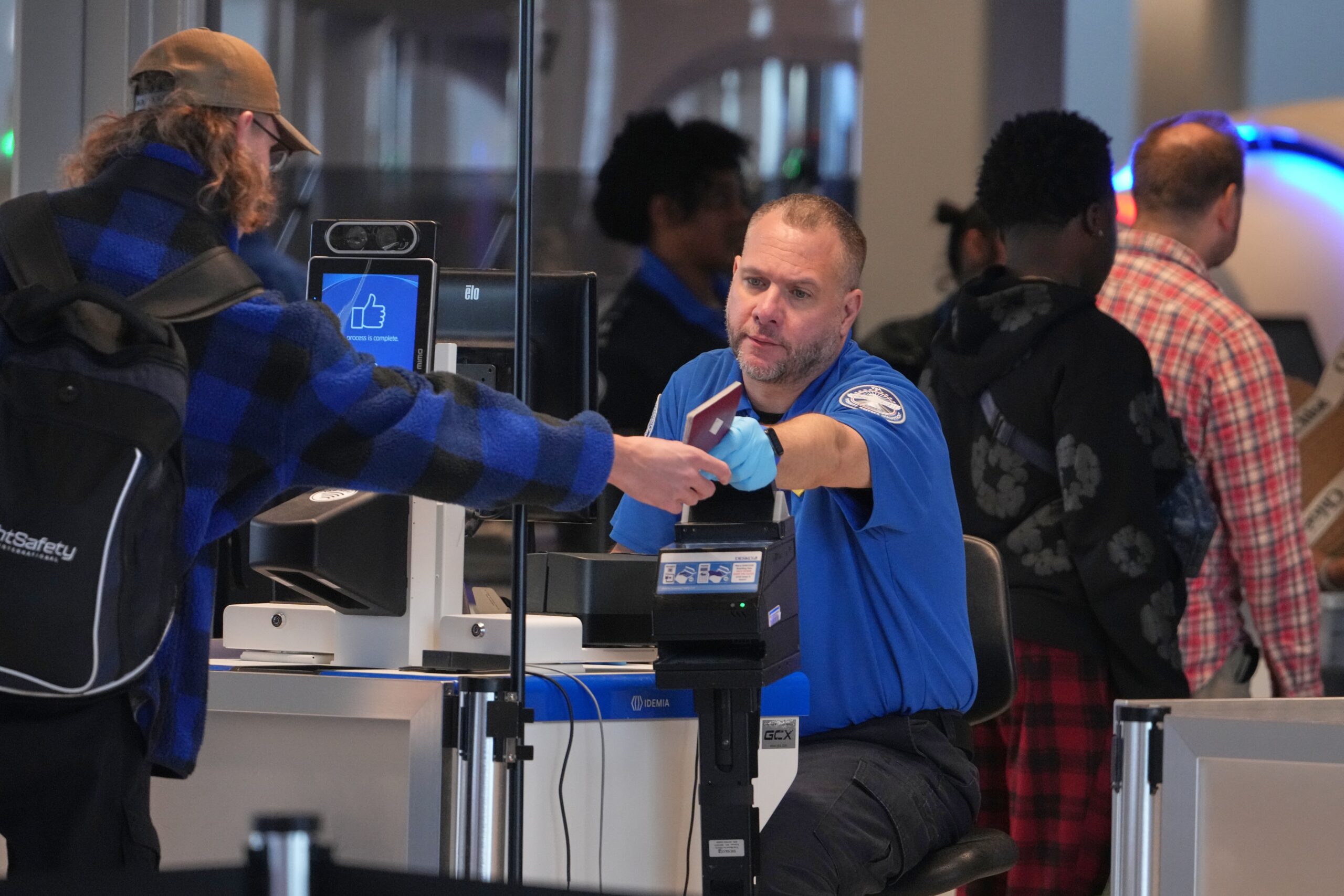

House Republican appropriators are taking aim at TSA’s new $45 fee for air travelers who don’t have a REAL ID or other accepted form of identification, inserting language into their annual Homeland Security spending bill seeking to stop its collection.
The fiscal 2027 legislation, which is poised for an Appropriations Committee markup Tuesday, includes a prohibition on TSA charging or collecting any fee for “a program vetting travelers arriving without acceptable identification for admission through security screenings at airports.”
In an accompanying report released Monday offering details about the bill, the House GOP said there’s “no valid statutory authority for TSA to collect” the new fee, known as ConfirmID, which launched in February.
“Previously, identity verification was a function that TSA performed for free when passengers were unable to present acceptable IDs, which frequently happens after natural disasters or personal property theft,” the report says. “ConfirmID is over an order of magnitude more expensive than the system it replaced on a per passenger basis.”
The bill would require a TSA congressional briefing on the program.
DHS did not immediately respond to a request for comment on its fee collection process. The agency had initially proposed an $18 fee.
Adam Stahl, TSA’s acting deputy administrator, said in a December announcement: “The vast majority of travelers present acceptable identification like REAL IDs and passports, but we must ensure everyone who flies is who they say they are,” adding: “This fee ensures the cost to cover verification of an insufficient ID will come from the traveler, not the taxpayer.” The agency said at the time that more than 94 percent of passengers have REAL ID or other acceptable forms of identification.
Separately, Republican appropriators note in the report that TSA would be required to conduct an agency-wide review to “identify spending reductions and savings achievable through expanded use of public-private partnerships.” In doing so, the agency, among other things, would need to consider “increasing the use of private sector security screening and remote screening.”
That’s far from what the Trump administration was seeking: mandating the Screening Partnership Program, or SPP, at smaller airports. Through the program, private companies staff security checkpoints under TSA oversight.
By the numbers: The House GOP wants to give TSA $11.2 billion total in discretionary spending — a $347 million cut year-over-year. (This amount would be offset by $3.6 billion in revenue from the 9/11 passenger fee and vetting fees, like for PreCheck.)
Additionally, TSA would receive $255.3 million in mandatory spending, which is similar to what it got in fiscal 2026.
The bill would boost the SPP, with an increase of $41 million for the program year-over-year.
At the same time, Republicans aim to reduce spending on screening personnel, compensation and benefits by $32.9 million compared to fiscal 2026.
Screening technology maintenance would experience an increase, meanwhile, of $192 million.
Federal Air Marshals would see a year-over-year reduction of $290.4 million.
In the committee report, when listing vetting fees, the House GOP doesn’t account for any dollars from ConfirmID — illustrating how they want to stop it from being imposed.







Leave a Reply