
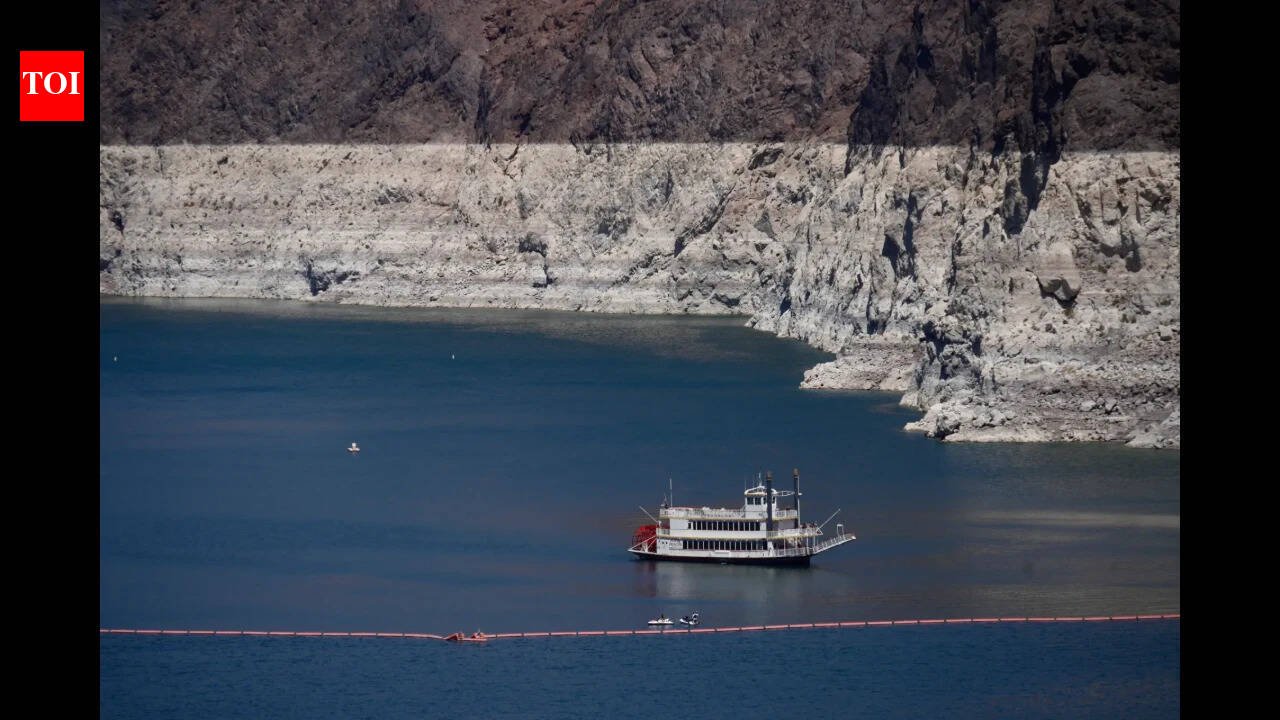
Lake Mead, the largest reservoir in the United States, has reached its lowest recorded level since it was created nearly 90 years ago, according to AP News. The reservoir fell to 1,040.4 feet above sea level, just below its previous record low from July 2022. At the same time, Lake Powell, the country’s second-largest reservoir, remains dangerously depleted, raising concerns about the future of water supplies, hydropower, agriculture, wildlife, and communities across the Southwest.The two reservoirs are the backbone of the Colorado River system. Together, they help manage water for roughly 40 million people across seven U.S. states, Tribal communities, and Mexico. They also store water from wet years so cities and farms can continue receiving supplies during prolonged drought.But after years of low snowpack, extreme heat, drought, overuse, and rising evaporation, that reserve is rapidly shrinking. The question is no longer simply whether the lakes look low. It is what would happen if Lake Powell and Lake Mead fell so far that they could no longer perform their most important functions.A record low across the Colorado River systemLake Mead is held back by Hoover Dam near Las Vegas, along the Arizona-Nevada border. Its recent decline reflects stress across the entire Colorado River Basin, particularly in the Rocky Mountains, where melting snow provides much of the river’s annual flow.The basin experienced its worst snowpack on record during the past winter, adding pressure to a river system already struggling with chronic drought and decades of demand exceeding natural supplies. Both Lake Mead and Lake Powell are now at levels not seen in nearly seven decades, while the combined storage of the two reservoirs has fallen to a historic low, according to CNN.The consequences are already visible. Boat ramps and marinas have had to close, move, or be rebuilt as shorelines retreat. At Lake Powell, visitors face increasingly difficult access to the water, while recreation-based businesses around both reservoirs are losing income.The crisis has also forced federal officials to make difficult choices. The Bureau of Reclamation recently proposed that Arizona, California, and Nevada, the three Lower Basin states, reduce their water use. However, the states have struggled to agree on how the cuts should be distributed over the long term, according to PBS.Hydropower would be affected firstThe first major operational warning would likely come from hydropower production.At Glen Canyon Dam, which holds back Lake Powell, electricity generation depends on the pressure created by the height of the water above the turbines. As the reservoir level falls, that pressure weakens. Lake Powell is about 23% full and has been reported to be only a few dozen feet above the elevation at which Glen Canyon Dam can no longer generate electricity, as per AP News.The dam has an installed generating capacity of approximately 1,320 megawatts. Its electricity is distributed across several Western states and supports municipalities, irrigation districts, rural cooperatives, government agencies, and Tribal communities.A shutdown would not automatically plunge the Southwest into darkness. The regional power grid includes natural gas, coal, nuclear, solar, wind, and other sources. But Glen Canyon Dam offers flexible power that can respond quickly to periods of high demand, such as hot summer afternoons, or when solar and wind generation drops.Replacing that power could lead to higher electricity prices and greater pressure on smaller utilities and irrigation districts. Revenue from federal hydropower also helps support dam maintenance, salinity-control programs, environmental projects, and other Colorado River initiatives. Losing those sales would therefore create financial consequences beyond the power grid.Hoover Dam would face a similar problem as Lake Mead falls. The dam can continue releasing water after its turbines stop operating, but its electricity production declines as the reservoir loses hydraulic pressure. The loss of hydropower at both dams would make an already strained Western energy system more expensive and less flexible.Dead pool would threaten water deliveries“Dead pool” does not mean a reservoir contains no water. It means the water surface has fallen below the lowest outlet that can release stored water downstream through the existing infrastructure.For Lake Powell, the minimum power pool is generally associated with an elevation near 3,490 feet. Hydropower can stop before the reservoir reaches its absolute dead-pool level, but water may still pass through lower outlet structures for a time. If the lake falls too far, however, releases would become increasingly difficult and less reliable.At that point, Lake Powell would no longer function as the Upper Basin’s drought reserve. The reservoir currently allows managers to store water during strong snowmelt years and release it gradually during dry periods. Without that buffer, downstream flows would depend much more directly on the amount of water arriving in a particular season.Some relief might come with a wet winter, but a bad snow year would be felt more quickly by communities and farms. Water timing is as important as total quantity. Crops need water for growing seasons. Cities need steady supplies. Downstream reservoirs need scheduled releases.Lake Mead is even more important for the Lower Basin. Hoover Dam’s intake structures allow water to move toward Arizona, California, and Mexico. If Lake Mead fell to approximately 895 feet, the reservoir would reach the dead-pool threshold for those existing intakes, meaning stored water could no longer pass through Hoover Dam in the normal way.Legal water rights would not solve that physical problem. A state, farm, city, or irrigation district may have a senior claim to Colorado River water, but that entitlement cannot move water through an intake that is no longer submerged.Arizona, California, and Mexico would face different risksArizona would likely experience some of the earliest and deepest reductions. Much of the Central Arizona Project has junior priority within the Lower Basin, and agricultural users have already absorbed significant cuts under existing shortage rules.If the river could no longer supply the Central Arizona Project, farms in central Arizona could face extensive fallowing. Some growers might turn to groundwater, but increased pumping would raise costs and worsen problems such as aquifer depletion, land subsidence, failing wells, and ground fissures.Phoenix and Tucson would not immediately run out of water. Both cities have groundwater, conservation programs, reclaimed water, storage reserves, and other sources. The Phoenix area also receives supplies from the Salt and Verde rivers. Still, a prolonged loss of Colorado River water would likely bring tighter outdoor-use restrictions, higher water costs, stricter development rules, and major investments in recycling and alternative supplies.California’s senior water rights would provide protection during ordinary shortages, particularly for agricultural districts such as those in the Imperial and Coachella valleys. But those rights would not guarantee deliveries if Hoover Dam could no longer release stored water.Southern California has a more varied water portfolio, including supplies from Northern California, local groundwater, reservoirs, conservation, recycling, and the Colorado River Aqueduct. That diversity could help cities manage a temporary disruption. The situation would become far more severe if Colorado River failure occurred alongside drought in the Sierra Nevada.Mexico would face a major treaty and humanitarian challenge. The 1944 Water Treaty generally provides Mexico with 1.5 million acre-feet of Colorado River water each year, although binational agreements allow reductions during shortages. If releases through the Lower Basin system stopped altogether, agriculture in Mexico’s Mexicali Valley and communities in Baja California would need to rely more heavily on groundwater, conservation, reuse, transfers, or emergency supplies.Las Vegas has an unusual advantageSouthern Nevada has invested heavily in infrastructure designed to keep Las Vegas connected to Lake Mead as the lake declines. A deep-water intake and low-lake-level pumping station allow the Southern Nevada Water Authority to draw water from elevations below Hoover Dam’s ordinary intake threshold.That gives Las Vegas more time than many other communities. The city also recycles most indoor water: wastewater from showers, sinks, and toilets is treated and returned to Lake Mead. Outdoor irrigation, by contrast, consumes water through evaporation and plant growth.Even Las Vegas would not have unlimited protection. If the lake continued falling, pumping would become more difficult and expensive. The city’s ability to maintain supplies would depend on conservation and limiting water that is permanently consumed.
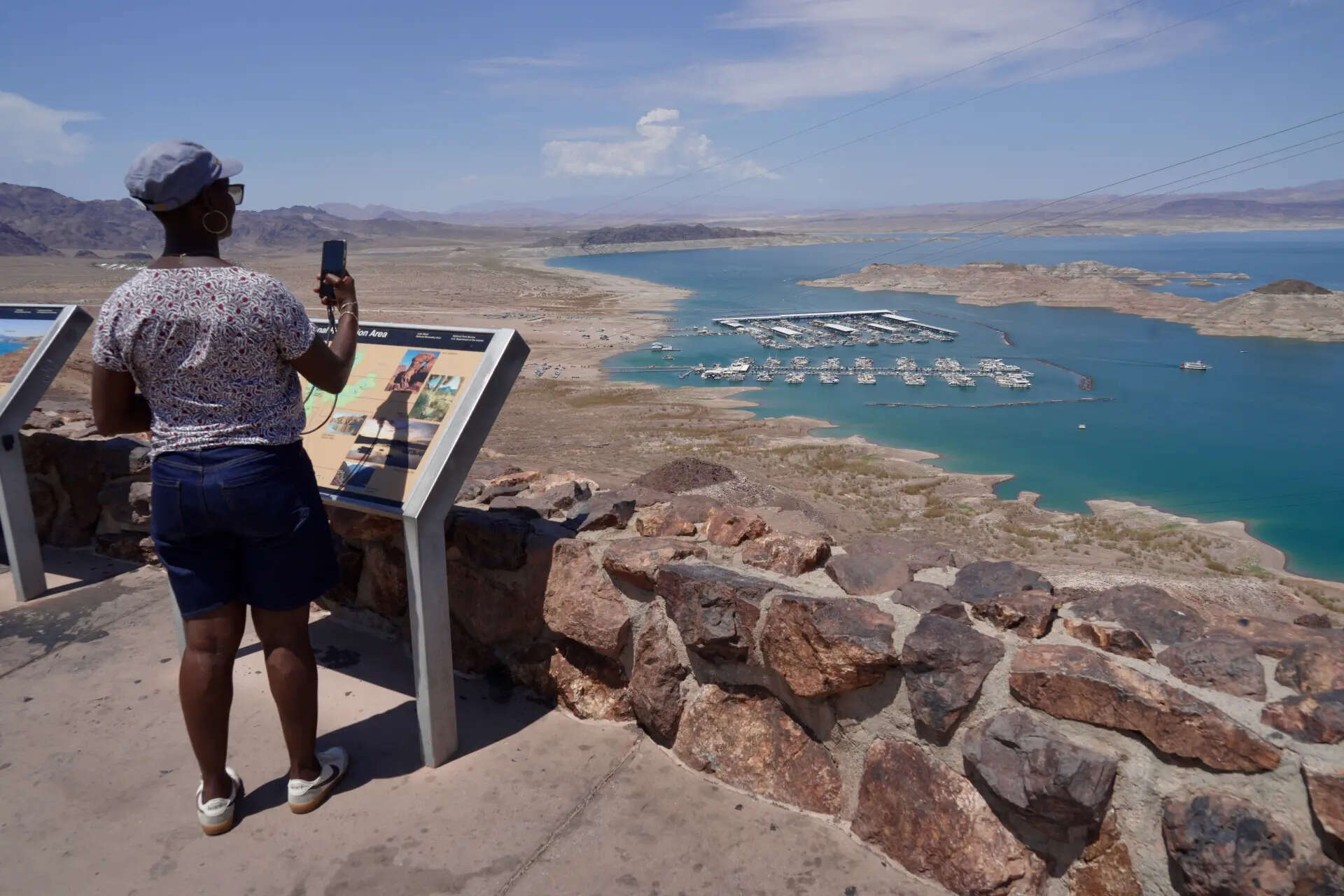
A tourist takes a photo of Lake Mead near Boulder City, Nev., on Friday, Aug. 7, 2026. (AP Photo/Ty ONeil)
Wildlife and tourism are also at riskThe reservoirs’ decline would affect more than people and power systems. Lake Powell releases relatively cold water from deep within the reservoir, helping shape the temperature of the Colorado River through the Grand Canyon. As water levels fall and releases become warmer, invasive fish such as smallmouth bass may find more favorable conditions.That is a concern for native species, including the threatened humpback chub. Federal officials have already made decisions about how to manage cold water releases from Glen Canyon Dam while trying to protect both hydropower operations and native fish habitat.Recreation would suffer well before either reservoir reached dead pool. Boat ramps become unusable as shorelines retreat, and marinas and roads must be repeatedly relocated. Communities near Lake Mead and Lake Powell could lose income from boating, fishing, lodging, equipment rentals, and tourism.A crisis that would unfold in stagesA simultaneous failure of Lake Powell and Lake Mead is not an overnight scenario, nor is it the current federal forecast. Federal managers are taking steps to protect critical elevations, including reducing planned releases from Lake Powell and moving water from upstream reservoirs.Nevertheless, the risks are clear. Glen Canyon Dam could lose hydropower first, followed by Hoover Dam. Lower outlet structures might preserve some water movement for a time, but eventually deliveries to farms, cities, and Mexico would become increasingly unreliable if the reservoirs fell below their usable intake elevations.The Colorado River itself would not disappear. Snowmelt, rainfall, and tributary flows would continue entering the system. What would disappear is the stored reserve that allows the Southwest to survive dry years.Recovering from such a scenario would require more than one wet winter. The reservoirs would need several years of strong runoff, while states, cities, farms, and industries reduced consumption enough to let water remain in storage. Without sustained changes in demand, the Colorado River could continue flowing — but the system built to control, store, and distribute it would no longer function as it does today.(With inputs from AP)






Leave a Reply