
Deep in the heart of Great Smoky Mountains National Park, where mist clings to the ridges and the forest hums with life, stands a quiet log cabin. It is the home of the Walker sisters, six unmarried women who refused to leave their mountain home, even as the world changed around them. Their story is one of resilience, independence and an unbreakable bond with the land they called home, as shared by the National Park Service (NPS). Read on to know more about them here:A family rooted in the SmokiesThe Walker family’s story began in the aftermath of the Civil War. John N. Walker, who had fought for the Union and been imprisoned by the Confederacy, returned home in 1866 and married Margaret Jane King. Through Margaret’s family, John obtained a house and property in Little Greenbrier Cove, later expanding his land by buying out her brothers and sisters.The house was made of logs from tulip-poplars, insulated with mud and rock. Other buildings on the Walker property included a barn, corncrib, smokehouse, pig pen, apple barn and blacksmith shop. A springhouse situated on a nearby flowing creek kept dairy products such as milk and butter cool throughout the year, as well as provided storage room for pickled root vegetables.John was an innovative man. He crafted ladderback chairs, looms, tools and a small cotton gin. He also planted orchards that included more than 20 kinds of apples, as well as peaches, cherries and plums. Chickens, sheep, goats and hogs were all raised on the farm.Together, the Walkers raised eleven children, seven girls and four boys. All eleven children reached maturity, an extremely rare case given the time period and its lack of medical care. The sisters, from oldest to youngest, were Margaret, Polly, Martha, Nancy, Louisa (pronounced Lou-EYE-za), Sarah Caroline and Hettie, as per NPS.
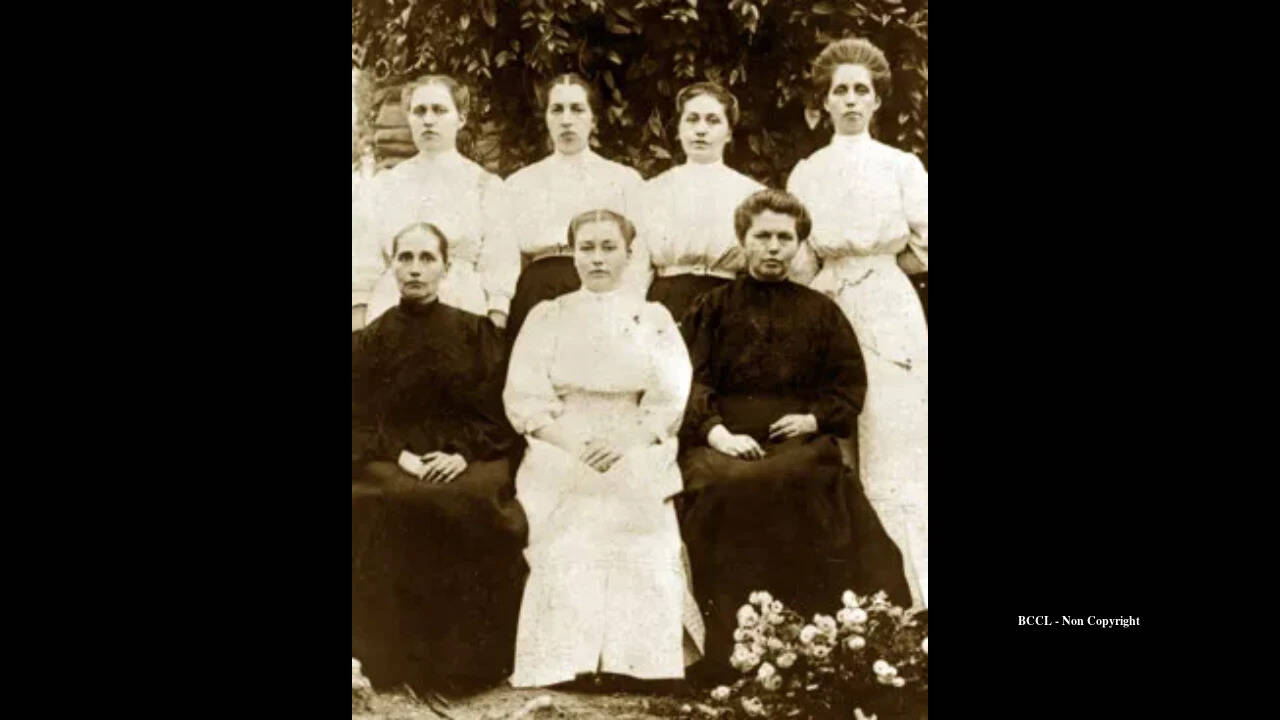
The seven Walker sisters: Front left to right – Margaret, Louisa, and Polly. Back left to right – Hettie, Martha, Nancy, and Caroline. Photo credit: Jim Shelton took this photo in 1909 (via NPS)
Life on the homesteadThe Walker boys left home or married, while only one of the seven sisters, Sarah Caroline, married. The other six unmarried sisters stayed in Little Greenbrier with their father and inherited the farm after his death in 1921. He was 80 years old. One of the sisters, Nancy, died ten years later, and the remaining five sisters began to establish their life on the farm. They fed and clothed themselves, raised livestock and maintained their mountain homestead for over forty more years.A typical meal at the Walker house almost always included pork and corn. Their garden also provided them with many other types of fresh vegetables in the growing season. In the winter, ham, bacon and salt pork was cured in the smokehouse.The sisters were also excellent spinners and weavers. Wool from their sheep was washed, carded and spun using a spinning wheel, sometimes dying the yarn with berries or bark. They then wove the skeins of yarn into fabric. Flax and cotton were also grown at the Walker sisters’ farm to produce their own textiles using the cotton gin that their father had built. The linsey-woolsey blend cloth created was used to sew their own clothing. Following in their mother Margaret’s footsteps, the daughters also kept a herbal garden for mountain remedies, including horseradish, boneset and peppermint for healing teas. Natural plants in the forests were collected, too. The Walker sisters once said, “Our land produces everything we need except sugar, soda, coffee and salt.”
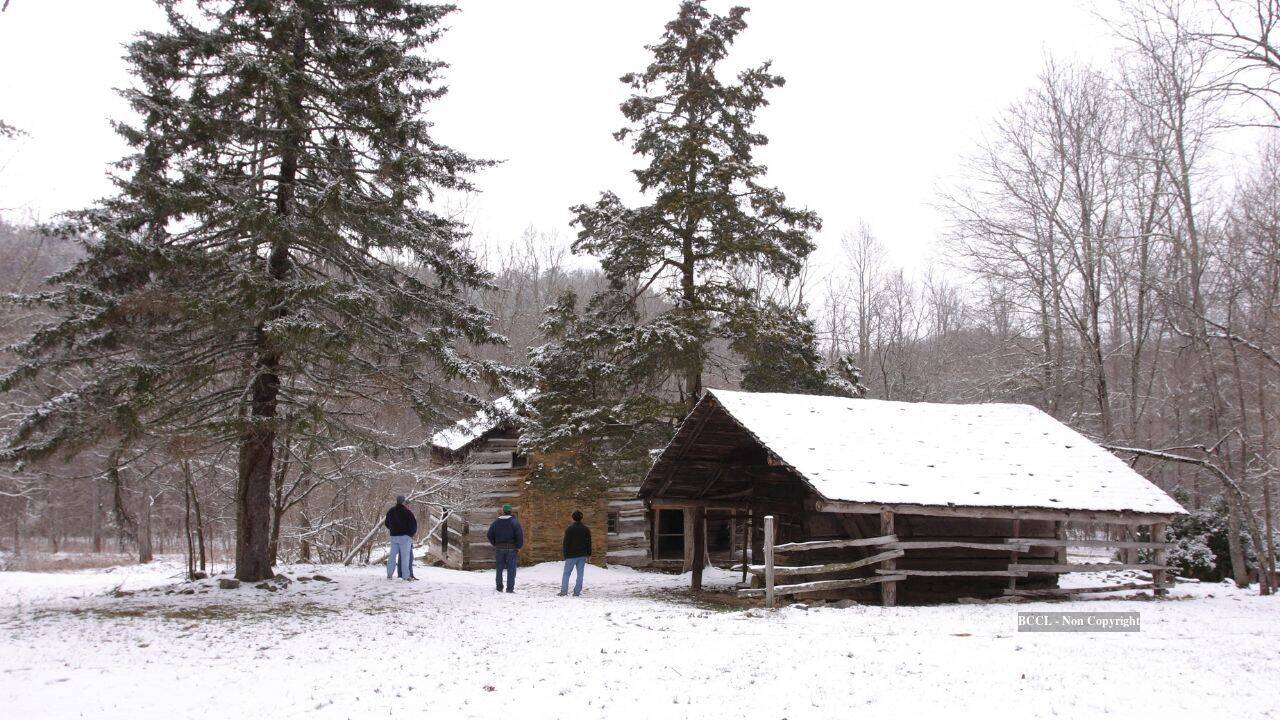
Walker Sisters cabin in Snow (Photo: Canva)
The creation of a national parkIn 1926, Congress approved authorization of the park, allowing North Carolina and Tennessee to start raising money to buy nearly half a million acres, most of which was privately owned. Parcels of land collected from families and timber companies alike were bargained for, haggled over and eventually purchased, including the Walker sisters’ 122-acre homestead.Refusing to leave their mountain home, the sisters held out until 1940, when President Roosevelt officially dedicated Great Smoky Mountains National Park from a stone memorial at Newfound Gap. With the creation of the park, the sisters received $4,750 for their land as well as the opportunity to live out the rest of their lives at their home through a lifetime lease.But living in the national park meant traditional practices such as hunting and fishing, cutting wood and grazing livestock were now prohibited within the park boundaries. A new lifestyle developed for the sisters. Visitors flocked to the park and visited what became known as “Five Sisters Cove”. The Walkers welcomed the curious newcomers and saw them as an opportunity to sell handmade items such as children’s toys, crocheted doilies, fried apple pies and even Louisa’s hand-written poems. The sisters were even featured in the Saturday Evening Post in April 1946, showcasing their mountain lifestyle to the rest of the country.The final yearsThe year before the Post writer visited the homestead, Polly passed away. Hettie died a year later in 1947, and Martha died in 1951. With only two sisters left, Margaret and Louisa wrote a letter to the park superintendent asking if the “visitors welcome” sign — with information about the Walker sisters — could be taken down, explaining that they were getting too old and tired to get work done on the farm and greet visitors, too. At that time Margaret was 82 and Louisa was 70.Margaret Walker died in 1962 at age 92, and Louisa stayed in the house until she died on July 13, 1964. The last sister, Caroline, who had moved away and married, died in 1966.A legacy that enduresThough the Walker sisters are now gone, their legacy lives on through their homestead, the objects they created and lived with, and the neighbours and visitors they interacted with well into the 1950s. By parking at Metcalf Bottoms, you can take the short half mile walk up to the Little Greenbrier schoolhouse, which John Walker and his son helped build. If you’re up for a little more, take the Little Brier Gap Trail a mile up to the Walker sisters’ beloved home. Stand on the porch and imagine what life was like for the five sisters when they trapped food in the forest, tended to their gardens and livestock and openly welcomed visitors before and after the park was established.New visitors will not be greeted by fried apple pies, but instead by a reminiscent, peaceful atmosphere that surrounds the now-vacant homestead of the Walker sisters.







Leave a Reply