
NEW DELHI: The government has proposed a detailed licensing and safety framework for expanding atomic power, including insurance or financial security or a combination of both, for nuclear damage, as it seeks to scale clean energy by allowing private and foreign participation in the nuclear sector under the SHANTI Act.The government released the draft SHANTI Rules, 2026 and SHANTI Regulations, 2026, on Friday for public consultation, providing separate but linked frameworks for licensing and safety authorisation. While the Rules deal with licensing of nuclear and related activities, the Regulations set out detailed safety requirements at different stages of a facility’s life.The Sustainable Harnessing and Advancement of Nuclear Energy for Transforming India (SHANTI) Act, enacted in Dec last year, replaced the Atomic Energy Act of 1962 and Civil Liability for Nuclear Damage Act of 2010, providing a new framework for safety, licensing and liability in the nuclear sector.India has set a target of 100 GW of nuclear capacity by 2047, from 8.8 GW currently. The government has also targeted around 22 GW by 2031-32 as part of its Nuclear Energy Mission.Under the proposed Rules, prospective operators can seek an “in-principle approval” even before selecting a site or technology, allowing them to negotiate with reactor technology vendors and acquire land and other infrastructure. The approval would not amount to a final licence and can be revoked on grounds including public interest, national security, public health and safety, or misrepresentation or suppression of material facts.The rules also allow a single composite licence for building, owning, operating and decommissioning nuclear plants. The licence can cover electricity generation, captive generation, hydrogen production, research and other peaceful applications, with captive nuclear power specifically recognised for energy-intensive industries, data centres, semiconductor manufacturing and AI applications.For reactors based on foreign designs, the Rules require the design to be approved or certified by the regulatory authority in the country of origin and the reactor to be operational either there or in another foreign country. The country of origin must have a self-reliant nuclear reactor design and supply-chain ecosystem and globally trusted regulatory approvals.The rules require the licensee to obtain design approval and safety authorisation from the Atomic Energy Regulatory Board (AERB) for siting, construction, commissioning, operation and decommissioning. The Regulations provide for detailed safety checks, including examination of plant design, accident analysis, safety systems, site characteristics, radiological impact, emergency preparedness, waste management and security.Before a plant gets operating authorisation, it will have to submit commissioning results, safety reports, technical specifications, radiation protection and emergency plans, besides obtaining waste authorisation.The rules require applicants to demonstrate financial, managerial and technical capabilities, including arrangements for assured fuel supplies, spent fuel and radioactive waste management, and to meet nuclear liability and decommissioning obligations.
Share your thoughts in the comments
Be respectful · TOI community guidelines
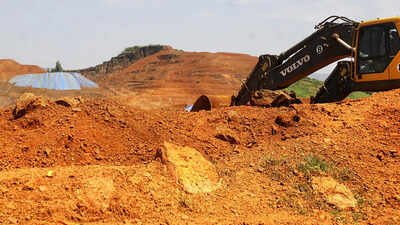
Operators will have to maintain insurance or financial security, or a combination of both, for nuclear damage, with the financial security remaining in place until spent fuel is removed from the relevant storage pool.The rules also provide for a Nuclear Liability Fund, to be funded through a levy on operators. The Centre will review the maximum limits of an operator’s civil liability for nuclear damage every five years through an expert group.Uranium and thorium mining, however, remains restricted, with mining above government-notified thresholds limited to state entities nominated under existing mining rules.






Leave a Reply