
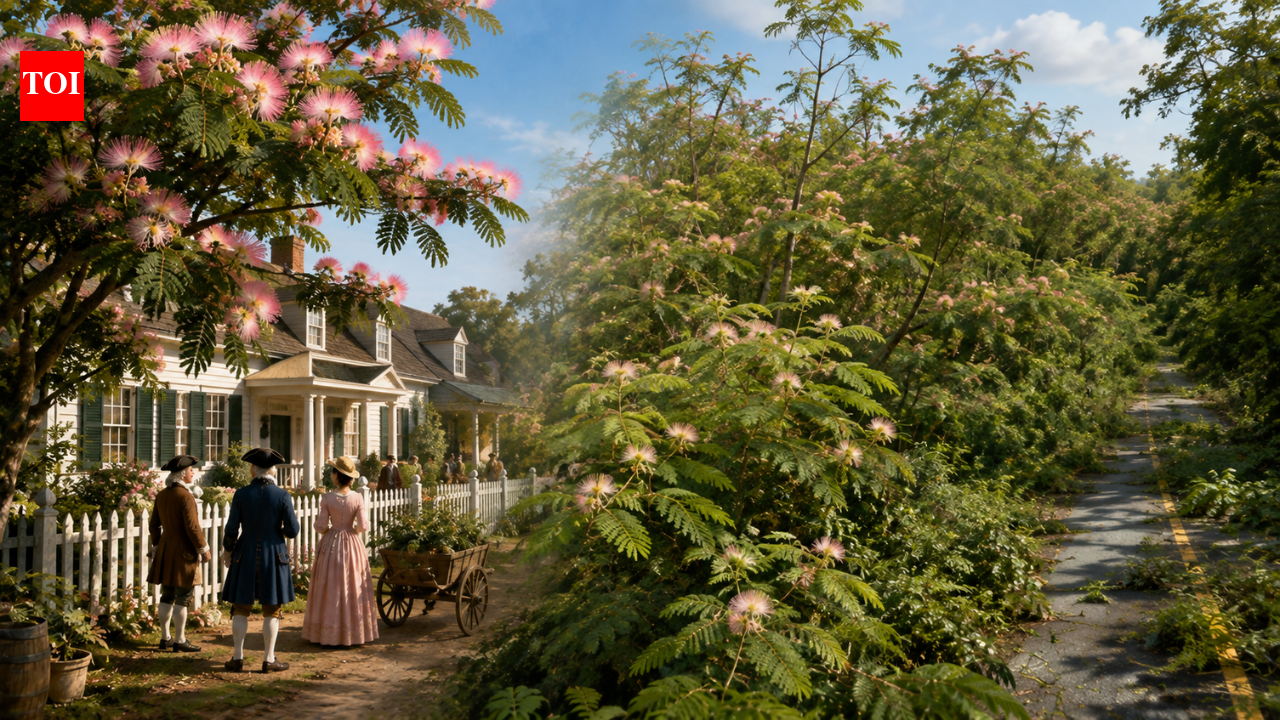
Around 1745, mimosa arrived in the United States as an ornamental tree, prized for its fragrant pink flowers, delicate foliage and unusual habit of folding its leaves at night. What began as a garden favourite, however, did not stay neatly within gardens. Albizia julibrissin escaped cultivation and gradually established itself along roadsides, clearings, flood plains and other disturbed areas across parts of the southern and eastern US. Its ability to grow quickly, produce large numbers of seeds and resprout after being cut has helped it persist and spread, while its seed pods can be moved by wind and water. In areas where mimosa forms dense stands, it can compete with native trees and shrubs and alter habitat along forest edges and waterways. The tree is now considered invasive in parts of the south-east, turning a once-popular ornamental into a persistent landscape management problem.
How mimosa escaped gardens and spread as an invasive tree
Mimosa is native to southern Asia, with its natural range extending from Iran to Japan. Its arrival in the United States in 1745 was tied to its use as an ornamental rather than as a forestry or agricultural crop. The attraction was easy to understand. The tree produces fragrant pink flowers during the warmer months, with each flower cluster resembling a small powder puff. Its foliage is just as distinctive: long stems carry numerous tiny leaflets, creating the feathery appearance associated with the species. The leaves also fold down at night and can close in response to touch, adding to its unusual character.That combination of flowers, fragrance and delicate foliage made mimosa suited to gardens, but its growth habits eventually became a problem outside them. The tree can grow rapidly and reach roughly 20 to 40 feet in height, with a broad crown that may spread 20 to 50 feet. It is also capable of tolerating different soil, moisture and light conditions. Such flexibility matters when a plant escapes cultivation. Instead of remaining restricted to carefully maintained garden beds, mimosa can establish in places where vegetation has been disturbed and where native plants are already competing for space.
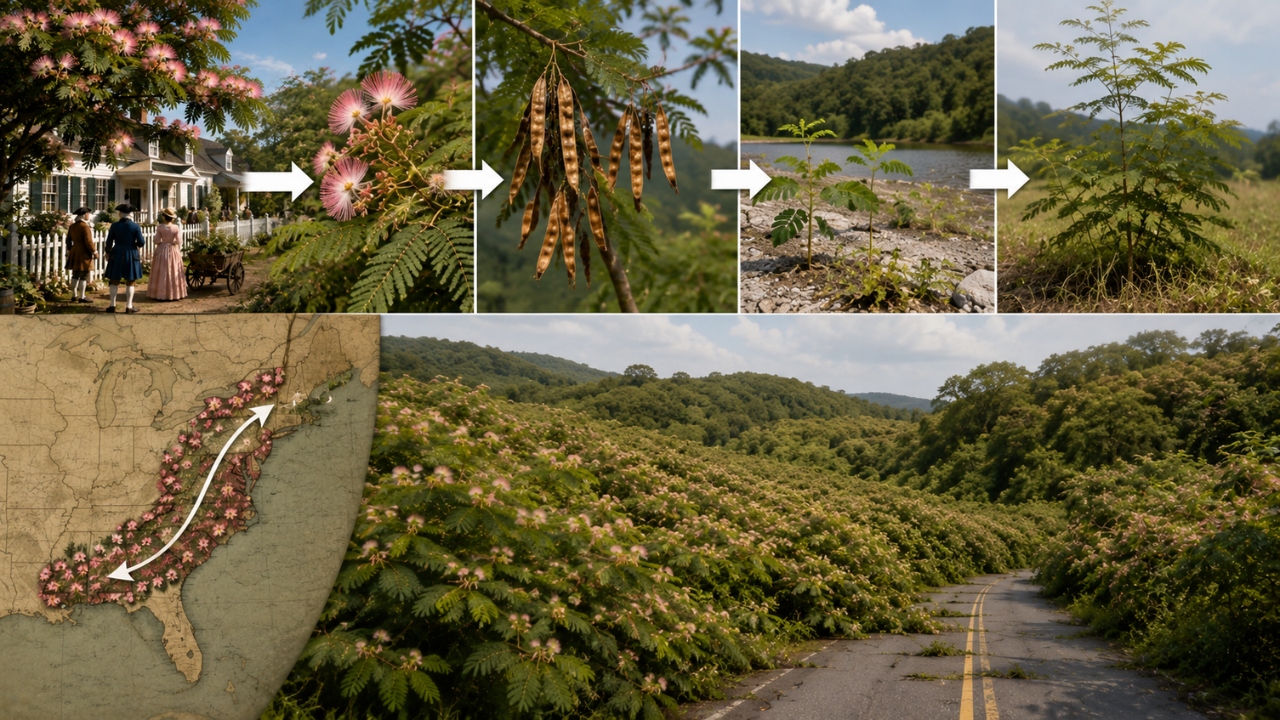
Image AI generated
Mimosa tree seeds and seed pods help the invasive species spread
The tree’s spread is closely linked to its ability to produce and disperse seeds. Mimosa develops long, flat seed pods, with each pod containing several seeds. The pods can remain attached to the tree into winter, while mature seeds are dispersed during the autumn months. Wind and water can carry them away from the parent tree, and animals may also contribute to their movement. This gives mimosa several routes into new areas rather than relying on one method of reproduction.There is another complication once the plant has established itself. Cutting a mimosa does not necessarily mean the tree has been eliminated. The species can resprout after being cut or damaged, while root cuttings can also produce new plants. The Maryland Invasive Species Council has described mimosa as capable of invading riparian areas, old fields and roadsides after escaping from cultivated landscapes. Its seeds can remain dormant for years because of their hard, impermeable coats, making established populations more difficult to remove completely.
Where mimosa is invasive across the eastern and south-western US
Mimosa is now found across parts of the eastern and south-western United States and is invasive in areas of the south-east. Its preferred habitats are not limited to forests. Roadsides, vacant lots, grasslands, clearings and floodplain areas can all provide opportunities for it to establish. In these settings, seedlings may develop into groups of trees rather than remaining as isolated garden specimens.As those trees grow, their canopies can alter conditions for plants beneath them. The Master Gardeners of Northern Virginia note that mimosa can form dense stands at forest edges, where it may displace native trees and shrubs. It can also spread along roadsides and vacant lots and degrade habitat around streams. Seed pods carried by waterways and drainage ditches can help move the plant beyond the original site, extending the problem from one garden or property to a much larger area.
Why mimosa is difficult to control as an invasive tree
Mimosa combines several traits that make control more complicated than simply removing a visible tree. It produces large quantities of seed, can tolerate a range of growing conditions and can regenerate after cutting. As per The National Cooperative Extension, the species is aggressive, weedy and high-maintenance, while its average lifespan is about 30 years. Its branches are weak and brittle, leaving established trees vulnerable to damage from strong winds, snow and ice.Control therefore has to deal with both existing plants and the next generation. Young seedlings can be removed before they become established, while larger trees may require cutting followed by further treatment because of their tendency to resprout. The Maryland Invasive Species Council recommends preventing seed production where possible and describes mechanical removal, girdling and carefully applied herbicide treatments as possible control approaches. There are no known biological control agents for mimosa, according to the same source.Mimosa also brings less obvious problems for people who keep it around homes. The tree sheds leaves, flowers and seed pods, creating regular clean-up work, and its weak wood can make branches susceptible to breakage. North Carolina State University lists the species as invasive, messy, weedy and short-lived, and also records pests and diseases including mimosa webworms, mites, root rot and Fusarium wilt.The story of mimosa is therefore not really about a plant that suddenly became harmful. It is about what happened after a tree valued for its appearance was moved far beyond its original range. In gardens, its pink flowers and unusual foliage made it an attractive ornamental. Outside those controlled settings, the same plant could reproduce, spread and establish in places where it was not wanted. Today, extension services recommend native alternatives such as serviceberry, flowering dogwood and eastern redbud for landscapes where a similarly ornamental small tree is wanted.







Leave a Reply