
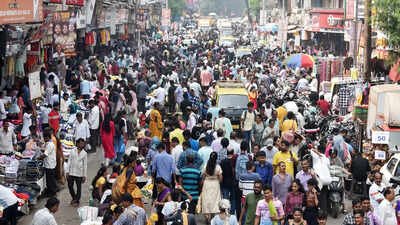
NEW DELHI: With ‘caste’ to be captured in Census 2027 strictly as declared by the respondent, the utility and application of caste data so enumerated may be assessed only at the post-census stage, according to experts.Officials involved in conduct of Census told TOI that while OBC status of an individual will not be recorded during population enumeration, the digital mode of census and availability of modern, AI-based tools will aid statisticians in arriving at the aggregate figure of people belonging to a particular caste. However, there may be anomalies on account of individuals declaring different spellings of the same caste or a religious sect being recorded as caste, either due to ignorance or due lack of adequate awareness of the caste system.According to officials, which spellings may be recognised as acceptable for a particular caste category is a call to be taken by the govt and census authorities.While caste census will enable analysis of a particular caste’s social, economic and educational indicators, it also runs the risk of individuals of a particular caste under-declaring their income and other indices, to project that caste as “backward” and make a case for it to be enlisted as OBC. However, officials said statisticians can detect any misleading or falsified data through cross-referencing, value indicators etc. Where the deviation is found to be outside acceptable limits, the data may be termed as “unreliable” for application in policy making.Explaining the qualitative difference between the socio-economic economic caste census (SECC) done in 2011 and recording of caste as part of Census 2027, an officer said the latter guarantees complete secrecy of an individual’s caste disclosure, since the Census Act bars individual data from being used as “legal evidence, govt benefits or public disclosure”. Secondly, the handicap of compilation and segregation of caste data is surmountable with AI-based solutions.Segregation of non-SC, non-ST individuals into ‘general’ and ‘OBC’ categories and a drop-down menu for recording OBC status were discussed while finalising the questionnaire for population enumeration, but not found feasible as central and state lists of OBCs do not always align.While the central list is prepared based on recommendation of and is maintained by the National Commission for Backward Classes, the state list is the responsibility of the relevant state backward classes commission. “Given that the two lists do not perfectly overlap, the moot question for the census authorities was: which list to go by, Central or state. Even for a given state, the OBC lists maintained by the Centre and by the state are different,” said an officer.Further, SC/ST lists are notified by a Presidential order, where as OBCs may be extended reservation in a state merely on discretion of the relevant state govt,” an official said while adding that the final consensus was to not tread into capturing OBC status of the respondent.A second officer explained that the census, which is spread over a year, requires administrative boundaries as well as SC/ST lists to be frozen through its duration. “Mid-census changes interfere with continuity, confuse enumerators and throw calculations and tables haywire. If the OBCs are captured and the states, particularly those ruled by the opposition parties, decide to extend OBC status for a new community mid-way through the census, there are bound to be complications.
Share your thoughts in the comments
Be respectful · TOI community guidelines
“How does the Centre ensure that this does not happen, given that grant of OBC status is often a decision taken based on political considerations,” it was debated.It was also pointed out during discussions on the questionnaire that OBC is not a ‘caste’ classification but only meant to categorise “classes” which may not fall within the caste system essentially prevalent among Hindus. Even the Constitution recognises only the socially and educationally backward “classes,” in addition to the Schedules Castes and Scheduled Tribes, an officer told TOI.






Leave a Reply