
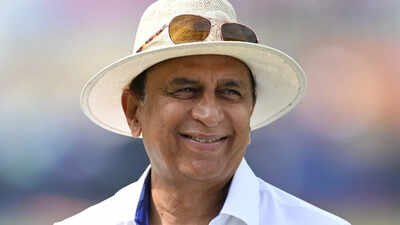
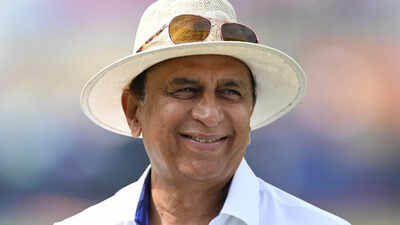
Sunil Gavaskar has rejected the idea of introducing free hits in Test cricket to tackle the growing problem of no-balls, insisting that batters should not be handed an easier route to scoring runs in the longest format.The debate emerged after India were unable to complete a 2-0 sweep against Sri Lanka in the second Test in Colombo. Shubman Gill’s side needed only four wickets on the final day to seal victory, but Sonal Dinusha’s unbeaten century helped Sri Lanka survive and force a draw.India still secured a 1-0 series win and kept their hopes of reaching the World Test Championship final alive. However, the number of no-balls bowled by India’s spinners during the series has raised concerns.Ravindra Jadeja repeatedly overstepped during the two Tests. The senior left-arm spinner has bowled more than 85 no-balls since 2021, while debutant Saransh Jain also delivered several no-balls during the second innings in Colombo.The issue prompted India’s spin bowling coach Sairaj Bahutule to suggest, albeit jokingly, that free hits could be introduced in Test cricket to discourage bowlers from overstepping.Gavaskar, however, believes such a move would punish the wrong side. The former India captain argued that no-balls are one of the few aspects of cricket completely within a player’s control and said the problem needs to be addressed immediately because repeated errors can have a major impact on a Test match.“The no-balls being bowled by the Indian bowlers came in for a fair bit of comment. This has to be looked at urgently because it can change the colour of the game. There are very few aspects of the game that are totally in the players’ control, and a batter taking guard and a bowler not bowling a no-ball are two such aspects. Players, when they come for interviews, talk about doing things within their control. Today, with a tape measure available to mark the run-up, there should be no excuses for overstepping the bowling crease,” Gavaskar wrote in his column for Mid-Day.
Gavaskar rejects free-hit idea
Gavaskar was equally clear in opposing the proposal to give batters a free hit after a no-ball in Test cricket.He pointed out that scoring has already become somewhat easier because of the restrictions on bouncers and the shorter boundaries, and believes introducing another advantage for batters would go too far.“The India team spinning coach jokingly said that giving a free hit after a no-ball might help in curbing the offence. Please, let’s not make scoring runs in Test cricket easier for batters with this penalty. As it is, with the restriction on bouncers to two in an over and the boundaries being brought in, run-making has become a little simpler,” he added.Instead of changing the rules of the game, Gavaskar believes financial penalties could provide a stronger deterrent.His proposal is straightforward: players should be fined whenever they overstep the crease, with the punishment increasing each time the offence is repeated. He also believes the bowling coach should share some responsibility.“Instead, how about a fine which gets doubled for every further transgression, plus half the amount of the fine for the bowling coach, too. The fines collected can be used for the final team dinner before the boys disperse,” wrote Gavaskar.
Gavaskar suggests more team fines
The former India captain also suggested expanding the idea beyond no-balls, with the team itself having a say in deciding whether certain on-field mistakes deserve penalties.He cited instances such as failing to back up a throw as examples of errors that could be included. Gavaskar believes such an approach could turn fines into a light-hearted team activity while also encouraging greater accountability.“There could be other fines too, for example, not backing up for a throw or something else not done on the field, which the whole team can vote on whether to impose or not. This can also be a fun activity and bond the team even more,” he added.India’s inability to finish off Sri Lanka in Colombo ultimately denied them a clean sweep, but Gavaskar’s concern goes beyond the result. With Test matches often decided by fine margins, he believes avoidable no-balls are an issue India must address rather than compensate for by giving batters another scoring opportunity.




Leave a Reply