
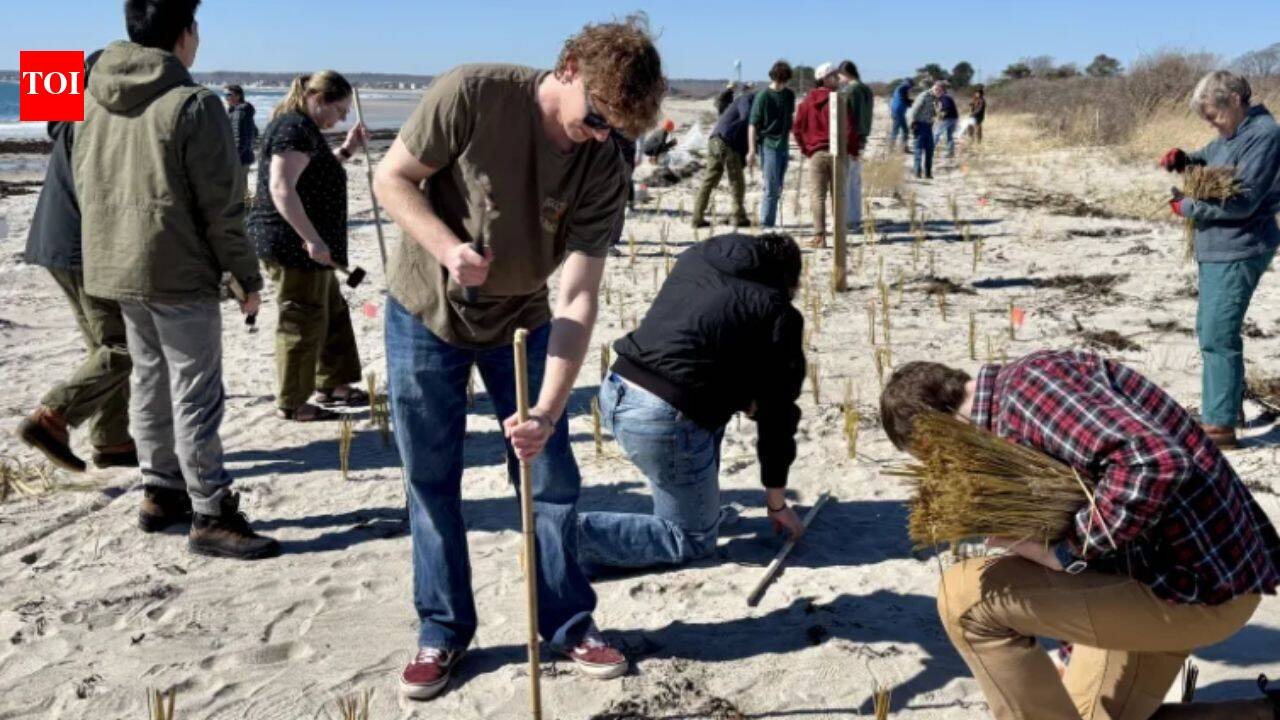
A beach in Biddeford Pool, Maine, is being rebuilt with the help of dune grass. In March 2026, University of New England students and local volunteers planted 20,000 stalks across about 20,000 square feet, continuing a restoration effort that began after severe storms damaged the dunes in 2024.The 2024 storms caused an estimated $90 million in damage across the Maine coast, according to the state, Univerisity of New England reported. The storms also washed away dunes at the Biddeford Pool beach, prompting the conservation trust and UNE to discuss ways to restore the damaged area.The 2026 effort was the second year in a row that UNE students worked with the trust. This time, the trust bought 66% more dune grass than the previous year. The 20,000 stalks are expected to cover about 20,000 square feet of beach.
Students test how dune grass strengthen beach
On March 10, students from UNE Assistant Professor Will Kochtitzky’s Geographic Information System (GIS) course helped plant the grass. The volunteers made holes in the sand and buried the dune-grass stalks.The planting was also designed to support two new studies by UNE. The grass was planted in four separate sections, with stalks spaced either 18 inches apart or 12 inches apart. Kochtitzky’s classes will use drone analysis to study the different sections and determine which spacing works best.The project also added another part to UNE’s monitoring work around Biddeford Pool. Kochtitzky installed an anemometer on the conservation trust’s land. The device measures wind speed and direction near the dunes.“We will see wind speeds in real time, which is important because with the dunes you primarily have a lot of wind erosion,” Kochtitzky said.The wind data will be combined with information from other monitoring equipment in the area. A buoy off the Biddeford Pool coast measures wave height, while a monitoring station in a nearby pond measures water quality.“We’re starting to fully understand almost every variable in the system. We’re trying to put all of this together to better understand how these dunes are changing and evolving,” Kochtitzky said.
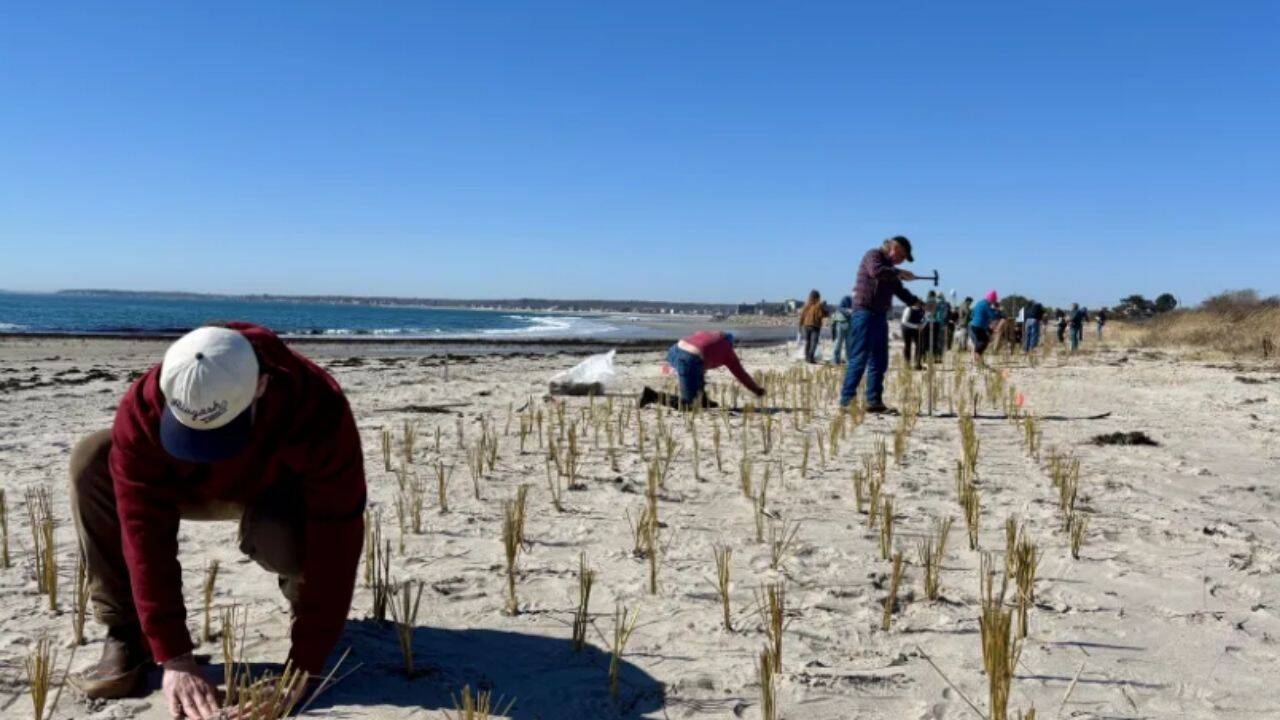
The newly planted grass stretched for about 1,200 feet along the beach.
How dune grass helps trap sand
The dune grass is being used as a natural way to help rebuild the dunes. Once planted, the stalks can grow while sand collects around them.The process was visible at the site this year. Biddeford Pool Conservation Trust President Lucie Fontein pointed towards the older dune grass planted during the previous year. The stalks appeared much shorter because sand had covered them during the winter.For Fontein, the sand covering the grass was a sign that the restoration was working as intended. “The sand is supposed to come in and get trapped and then the grass grows taller and, as a result, it traps more sand. Ultimately, the idea is for the dunes to get taller,” she said.The newly planted grass stretched for about 1,200 feet along the beach. The effort brought students and local residents together to work on the same section of coastline.The project also showed how quickly coastal areas can change after extreme weather. Sophie Cronin, an Environmental Studies student from the class of 2026, said she wanted to take part because the project allowed her to work directly with local residents. She also described the use of a natural solution to strengthen the coast as meaningful.“It’s meaningful,” Cronin said of the experience. “The community has been so supportive of us helping, because I think everyone recognizes that we really have an issue, and we want to try and find the best solutions.”Cronin said the 2024 storms had changed how some students viewed coastal damage. “I think that 2024 was kind of a wake-up call, especially for students who aren’t from Maine, that this is a very real thing and it can really be very jarring how quickly natural ecosystems can change,” she said.
UNE and local residents continue restoration work
For other students, the project was also an opportunity to become more connected with the local community. John Montenegro, an Environmental Science student from the class of 2027, is from Houston. He said working alongside Biddeford residents helped him understand why the coastline mattered to them.“It’s pretty special to see this and be able to chat with them about why they’re passionate about this. To be out here also kind of shows them that it matters to us, too. I think that’s important to any community,” Montenegro said.UNE and the Biddeford Pool Conservation Trust have worked together for several years to study changes in the dunes. Their cooperation became particularly important after the January 2024 storms, when the dunes suffered significant damage.The planting project is now also providing material for further research. By comparing grass planted at different distances and combining drone observations with wind and wave measurements, UNE students will study how the dunes change over time.







Leave a Reply