
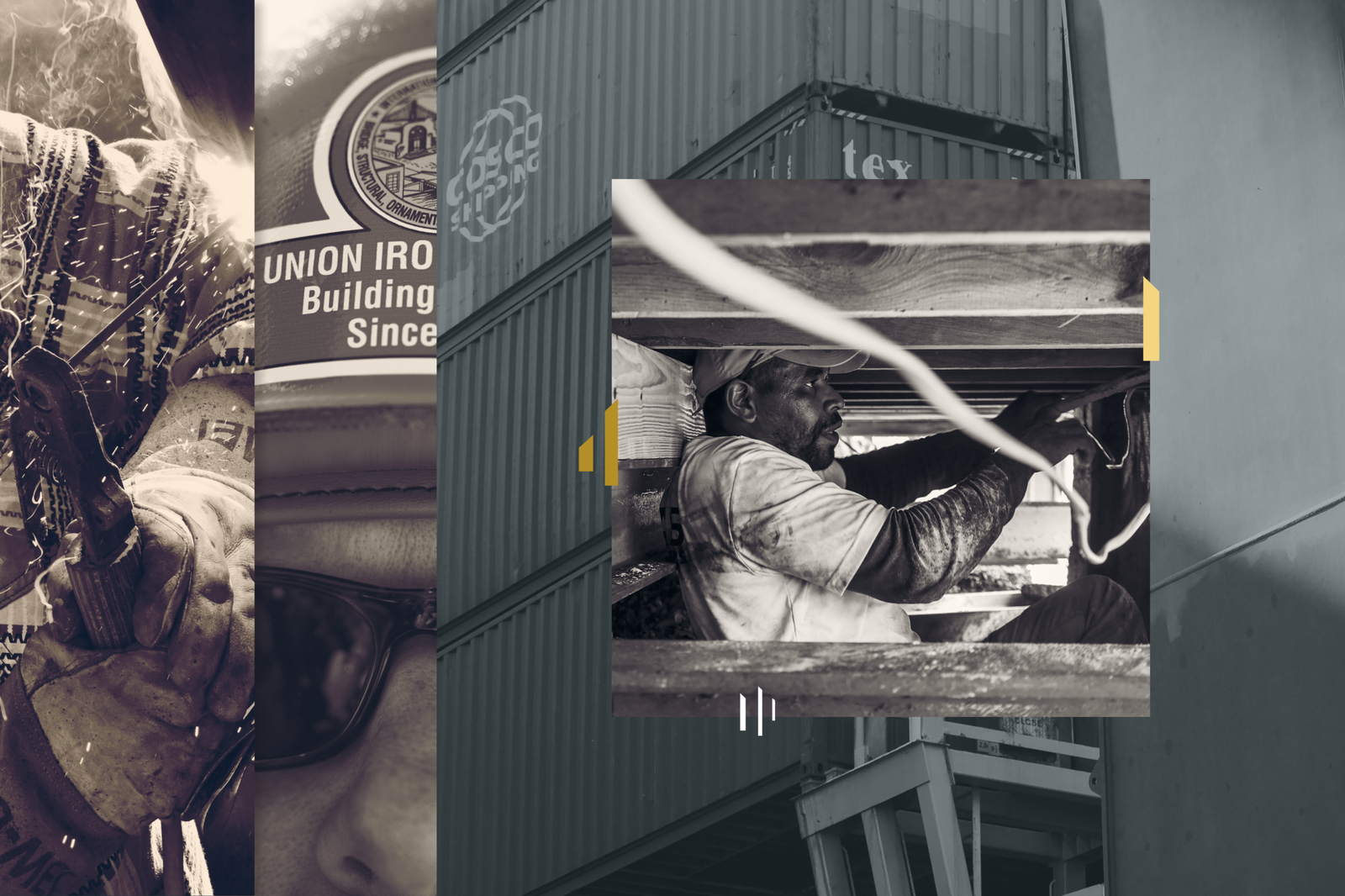

Republicans and Democrats are fighting over working class voters. Americans don’t believe the rhetoric.
Fifty-five percent of Americans think politicians are just trying to win votes when they say they will help the working class, according to new results from The POLITICO Poll. It’s a view held by majorities of people who voted for President Donald Trump, who voted for Kamala Harris and who self-identify as working class.
Only one in four Americans who self-identify as working-class say politicians genuinely want to help them.
That wariness comes as both parties increasingly see working class voters as key to their winning coalitions. But The POLITICO Poll results show both parties face serious challenges to doing so.
Neither party does particularly well with Americans who identify as working class: 38 percent of them say Democrats best represent them, while 32 percent say Republicans. Americans, broadly, are almost identically split, with a 37 percent plurality saying Democrats best represent the interests of the working class, while 30 percent say Republicans.
Democrats wrestling with how to win back voters who have drifted toward the GOP — as their coalition has grown increasingly dominated by college-educated Americans — are locked in an intraparty battle over which wing of the party, progressives or moderates, best speaks to these voters.
“We’ve struggled with the working class for quite a while and it’s been a combination of being out of touch with working class values on a lot of culture issues and being seen as either not helpful or not helpful enough on economic issues,” said Jim Kessler, executive vice president for policy at the centrist Democratic think tank Third Way.
Sen. Bernie Sanders (I-Vt.), widely considered the leader of the progressive movement, told Playbook’s Will Steakin that progressive Democrats “are speaking to the needs of working families.”
“It is not just traditional Democrats or independents,” he said. “There are a lot of working-class Republicans who understand that there’s something wrong when we are the only major nation on Earth not to guarantee health care to all people.”
Republicans, meanwhile, are trying to hold onto the gains Trump made in 2024 with working class voters — including Black and Latino voters frustrated with the Biden-era economy — at a time when cost of living remains voters’ top concern.
“With the [Iran] war, with gas prices, with cost of food, the working class is not happy with the president, and many who are independents and even some Republicans have said that he’s forgotten about them,” said former Ohio Republican Rep. Jim Renacci.
Who is working class?
Complicating both parties’ efforts to win over these voters is that Americans do not agree on what makes someone working class. Neither do lawmakers and party officials.
When asked whether the term “working class” describes them, a 59 percent majority of Americans broadly say it does, while just 31 percent say it does not, according to the survey conducted by London-based polling firm Public First. But when forced to choose from a list of labels — including wealthy, middle class, lower middle class, working class and poor — just 16 percent of adults say they identify as “working class.”
Americans are also divided over what characteristics define the working class.
Some politicians, including progressive New York City Mayor Zohran Mamdani and Andy Schor, the centrist Democratic mayor of Lansing, Michigan, have argued the definition of working class is expansive — encompassing anyone who needs to work to pay their bills.
“If you’re not making enough money that you don’t have to work, then you’re working class,” said Schor in an interview. “The American Dream is to be able to work hard and get ahead, and people are not getting ahead like they used to, and they’ll look at the folks that they vote for and think, ‘Who can help me to get ahead?’”
The POLITICO Poll illustrates the difficult path for the GOP to solidify its gains with working class Americans as economic concerns continue to be top of mind: More than a third of this group say they are not currently employed. A 35 percent plurality also say Trump, not former President Joe Biden, is fully responsible for the economy and many oppose the war in Iran, which most say has made things more expensive for them.
Half of self-identified working class Americans say Trump has spent too much time focusing on international affairs instead of on domestic issues.
“I think [Republican candidates] just got to tell the truth,” Renacci, the Ohio Republican, said. “You just have to start realizing that those middle class voters are struggling and they’re just looking for somebody who’s going to understand their issues and problems.”
The race for 2026
November will offer a major test of whether each party’s working class pitch is working, carrying implications that extend into 2028.
Candidates in both parties are racing to flex their working class bonafides this cycle, leaning on their biographies to signal ties to these voters. Trump pushed that playbook to extremes in 2024, when he briefly worked the fryer and drive-through window at McDonald’s as part of a campaign swing through Pennsylvania.
Republicans have continued that approach, with candidates and administration officials emphasizing their blue-collar roots on the campaign trail. Vice President JD Vance recently returned to his hometown of Middletown, Ohio, where he spoke at the steel plant where his grandfather worked.
In battleground Georgia, Rep. Mike Collins — the state’s GOP Senate nominee — often touts his background as a trucker. And GOP Sen. Susan Collins has broken with Trump on tariff policy, saying his trade fight with Canada hurts working families and small businesses in Maine, where she’s locked in a competitive battle for reelection.
These efforts come against the backdrop of increasing concerns about the economy, fueled by the ongoing Iran war.
Democrats, meanwhile, are divided over which flank of the party can best appeal to working class voters, a fissure that burst into public view during primary season, when a slate of progressives prevailed in high-profile contests.
“The working class are giving Democrats another look and we better not blow it,” said Kessler of Third Way. “Donald Trump got reelected based on the notion he was going to fight for you, working class men and women, and his first year and a half has been anything but that.”
Some Democrats have made their working class background central to their pitch: Sam Forstag, a union leader and former smokejumper, is running in an open district in western Montana that Trump won by double digits in 2024. Bob Brooks, a firefighter union chief, is challenging GOP Rep. Ryan Mackenzie in Pennsylvania.
But some progressives are still running into limits: In Michigan, one of Democrats’ must-hold seats in November, the state’s divisive Senate primary illustrated that debate in real-time. Progressive Abdul El-Sayed, who won the Democratic nomination, performed best in the state’s wealthiest and most highly educated areas, while moderate Rep. Haley Stevens did better in places with lower average incomes and where fewer votes have college degrees.
Jessie Blaeser contributed to this report.






Leave a Reply