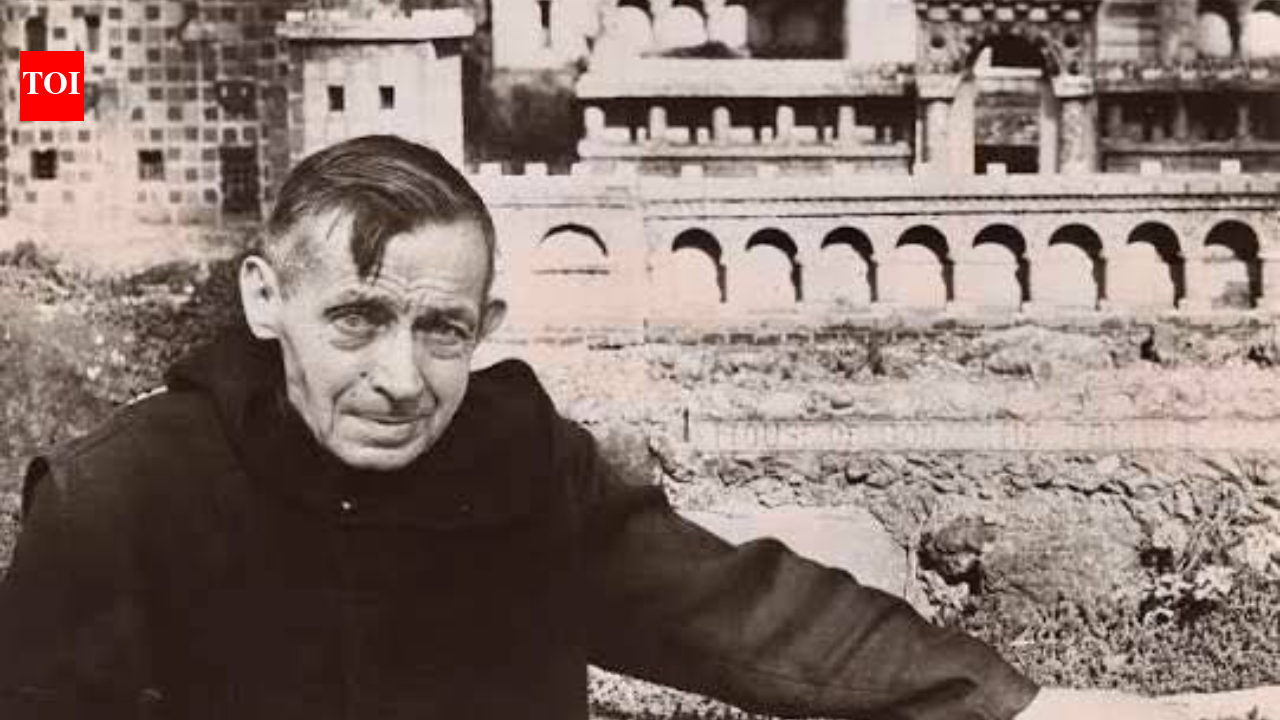
In 1912, a Bavarian-born Benedictine monk at St. Bernard Abbey in Cullman, Alabama, began building miniature cement copies of some of the world’s best-known religious sites, using postcards, pieces of marble and donated costume jewellery as his main guides. Brother Joseph Zoettl spent the next 46 years turning a four-acre hillside quarry into the Ave Maria Grotto. He completed his 125th and final model in 1958 at the age of 80, according to historical records held by the Library of Congress and the official Ave Maria Grotto archives. Although Zoettl had visited only six of the places he recreated, he produced detailed models of landmarks including St. Peter’s Basilica in Rome, the Leaning Tower of Pisa, ancient sites in Jerusalem and the Alamo. The four-acre park remains a major folk-art attraction in northern Alabama and welcomes thousands of visitors each year on the active monastery grounds.
From boiler room operator to visionary outsider artist
Born in Landshut, Bavaria, in 1878, Zoettl moved to the United States in 1892 at the age of 14 to join the newly established Benedictine community at St. Bernard Abbey, according to biographical records from the shrine. Zoettl suffered injuries early in life that left him with a physical disability. He was given the job of operating the abbey’s coal-fired power station and water pump house, a demanding role that could keep him working for up to 17 hours a day. During his short breaks, he began making small stone grottos from discarded masonry and furnace slag. His early miniature creations were placed along the abbey’s recreation paths and also sold in the monastery souvenir shop. As his work became larger and more detailed, abbey leaders set aside a former stone quarry on the campus in 1932 for a permanent display. They asked Zoettl to build a central 27-foot stone cave dedicated to the Virgin Mary.
Architectural creation through recycled materials and postcards
With almost no formal training in architecture or sculpture, Zoettl built his models using ordinary Portland cement mixed with donated scrap materials. Visitors and supporters sent materials from around the world, including cold-cream jars, broken teacups, stained-glass pieces, seashells, marbles and old chandelier crystals, according to Roadside Architecture and regional historical reviews. Since he could not afford to travel internationally, Zoettl depended on black-and-white photographs, souvenir postcards and biblical descriptions to create his models. This approach gave the buildings unusual proportions, with their size adjusted to fit the natural stone ledges of the quarry. Among his 125 completed structures are detailed models of the Basilica of Our Lady of Lourdes, the Great Wall of China, the Hanging Gardens of Babylon and Mission San Juan Capistrano in California. Zoettl completed his final work, a model of the Basilica in Lourdes, France, in 1958. He died three years later, in October 1961, at the age of 83, and was buried in the nearby abbey cemetery.
Preservation and heritage status in Alabama
The Ave Maria Grotto was added to the National Register of Historic Places in 1984. The listing recognised its cultural importance as a major example of American outsider art and visionary environment construction. The monastic community and specialist preservation workers oversee the maintenance of the four-acre site. Over the years, Alabama’s humid climate has exposed the delicate concrete and glass structures to weather damage, requiring careful restoration. Staff conservators continue to apply protective sealants and repair individual masonry pieces, helping preserve Zoettl’s life’s work in its original stone quarry setting on the St. Bernard Abbey grounds.





Leave a Reply