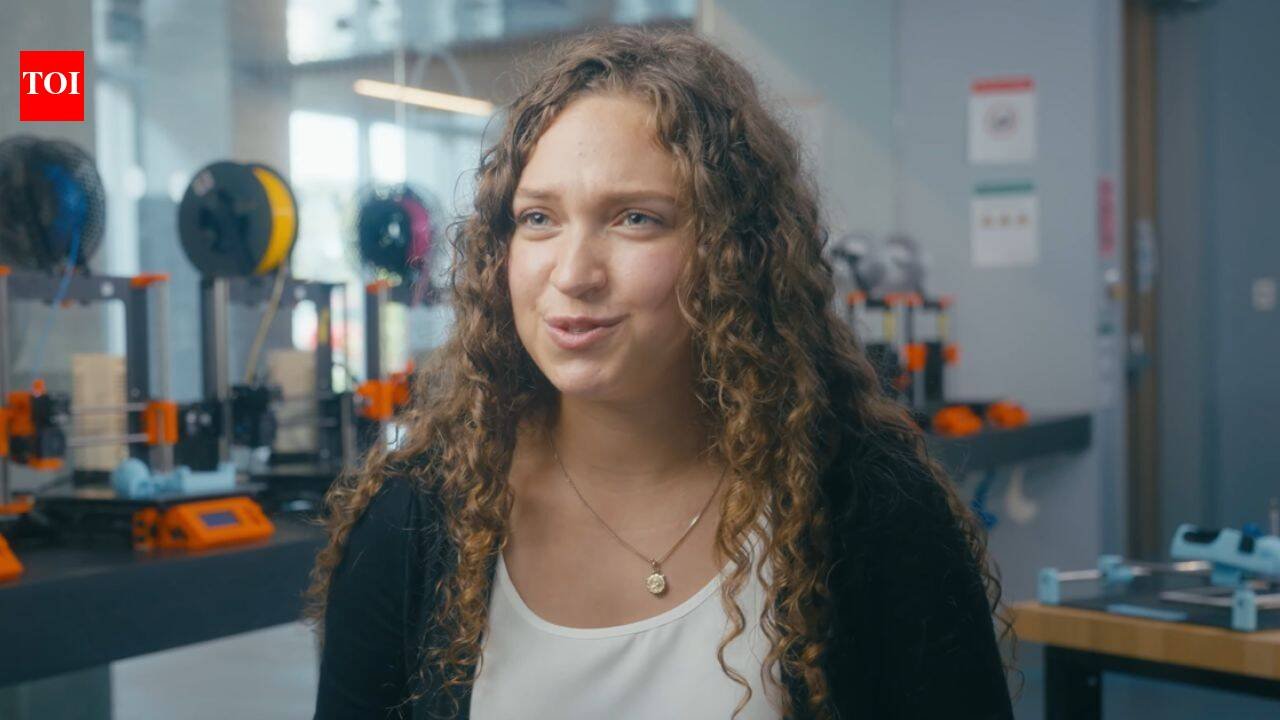
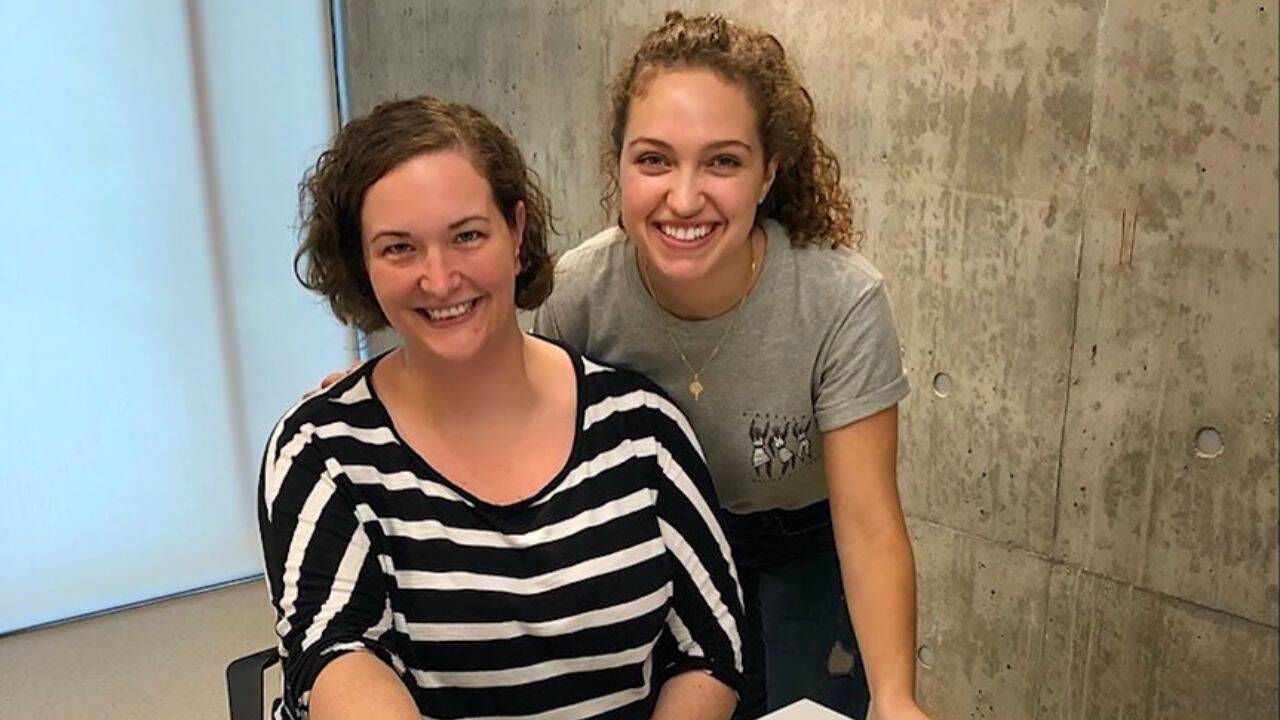
An estimated 18 million people of all ages live with cerebral palsy across the globe. Within the United States, this number ranges from 764,000 to 1 million, with about 1 in every 345 children diagnosed, according to the Cerebral Palsy Guide. Most such kids are unable to entertain themselves with the toys and activities that others their age do. But one Canadian student’s invention has helped children with cerebral palsy venture into the art of painting.Straws, pipe cleaners, and sponges would seem of no use to an engineering student other than their one true purpose. But for Lianna Genovese, they sparked an idea that went beyond her room into hospitals, schools and homes in dozens of countries. The inspiration came when she met Elissa, introduced through the James Dyson Award and McMaster University as a woman with cerebral palsy who had lost the ability to use a brush and subsequently, her ability to paint as she once did. Genovese was only 18, a first-year student and studying biomedical and mechanical engineering at McMaster University in Canada. They met through a classroom project where Genovese and her classmates were working to help Elissa.
The will to change lives
“I wanted to give Elissa back her passion,” recalled Genovese.
While other students focused on an ergonomic computer mouse or other daily-use items, Genovese’s group members looked for a way to help the avid artist paint again. “I wanted to give Elissa back her passion,” recalled Genovese. Upon learning of Elissa’s story, she began thinking of ways to leverage the movements that the woman was still able to perform to guide a brush across a surface. In a statement made by the university in 2021, Genovese explained that hearing about the story ignited her desire to restore part of Elissa’s capacity for expression.This is when she formed a principle that formed the base of the final project: using larger movements of the arm and shoulder to compensate for the limitations of fine hand movements. According to the James Dyson Award and McMaster University, the first prototypes were assembled with straws, pipe cleaners, and a sponge. She collaborated with Elissa who participated in testing and provided feedback on what she could or could not do with the equipment.Based on these experiences, new versions began to emerge. The project continued to be refined with the involvement of individuals with differing medical conditions, along with neurologists and occupational therapists. By 2021, Lianna had already spoken to or tested with more than 150 patients and healthcare professionals in Canada, according to McMaster University.Two years later, the university reported that the development had already received contributions from more than 525 occupational therapists, neurologists, and individuals with limited hand mobility.
3D printer-inspired system that guides hand movements
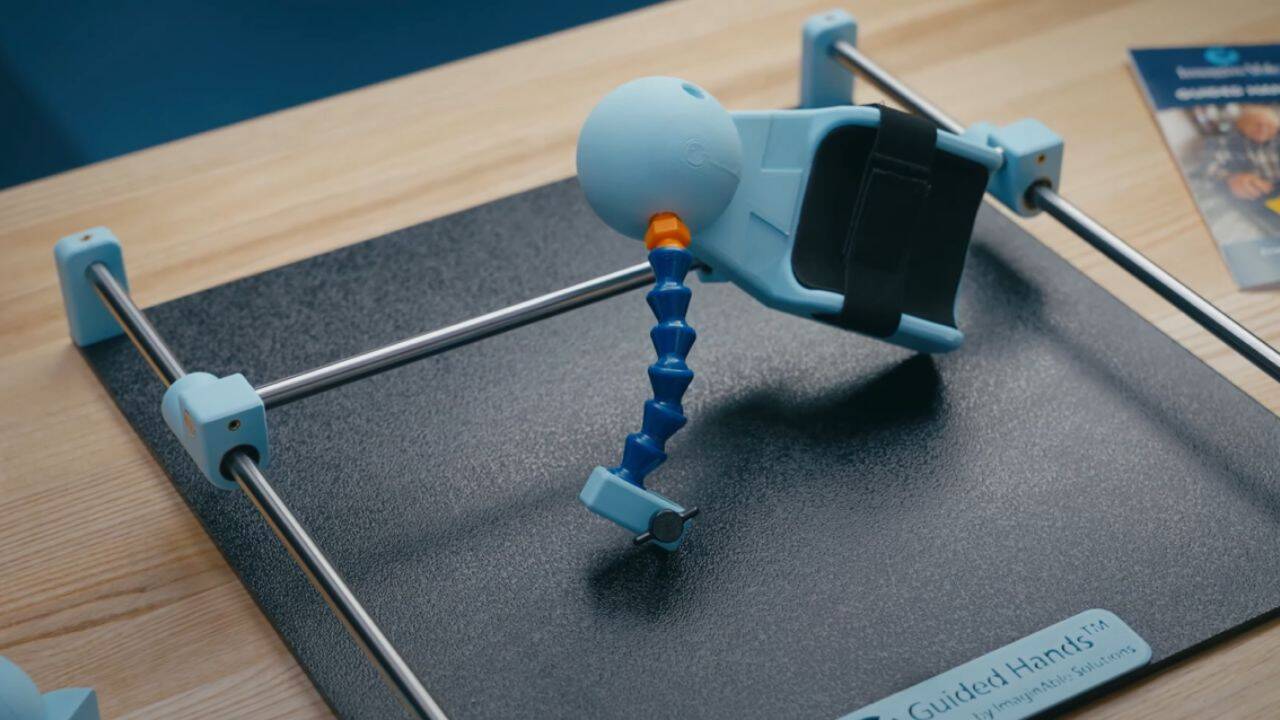
Different objects can be attached at the end, such as a pen, marker, brush, or a stylus for touch screens.
The most advanced version of Guided Hands adopted a logic reminiscent of the movement of a 3D printer. The device has a structure made up of linear axes and bearings that allows for guided hand movement. With this, the user can perform horizontal and vertical movements and also change the direction of the motion. The person rests their hand on an adapted piece and moves the whole setup mainly using the larger motor skills of the shoulder and arm. Different objects can be attached at the end, such as a pen, marker, brush, or a stylus for touch screens.It does not paint or write on its own and rather functions as a structure that supports and guides the movement performed by the individual themselves. This ensures that the user’s participation is vital.
Beyond an experiment
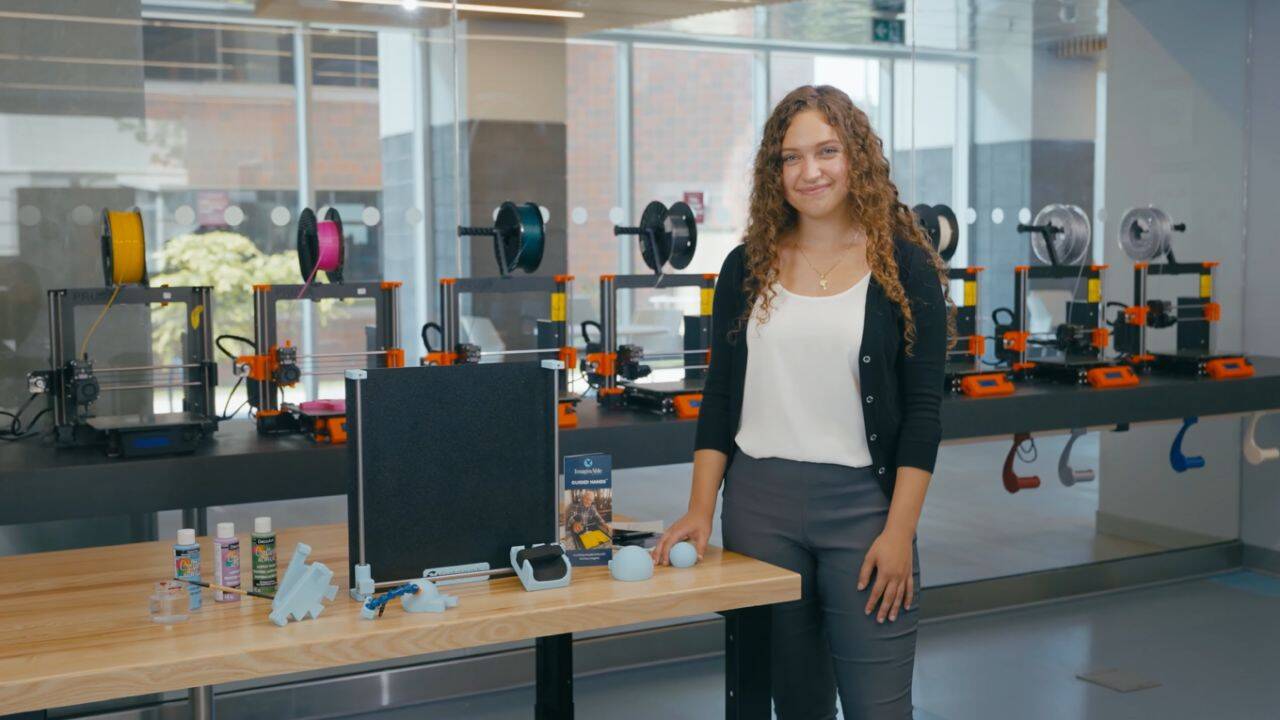
In 2023, Genovese was also included in the Forbes 30 Under 30 Local Toronto list.
Among the tests conducted during the development, one meeting changed Genovese’s thoughts on the device. She met Bella, a girl with cerebral palsy and observed her using Guided Hands to write, colour, draw and play on an iPad. According to the engineer, watching the girl’s reaction made her realise that this college project could have much broader applications beyond the classroom.The experience helped transform an academic activity into a venture. She founded ImaginAble Solutions in 2019, while she was still a third-year student, to develop and commercialise assistive technologies. In an initial phase, the very structure used to develop the product operated in the basement of the young entrepreneur’s home, according to a report published by McMaster.In August 2021, Genovese won the Canadian stage of the James Dyson Award, an international design and engineering competition aimed at students and recent graduates. She secured the national prize of US$3,500 to further develop the invention and also qualified the device for the international phase of the competition.At that time, the expectation was to bring the equipment to market by the end of 2021. However, commercial development continued through testing and programs with hospitals and rehabilitation centres. McMaster later reported that the product officially entered the market when Lianna graduated in 2022.What started as inexpensive materials assembled to test a movement is now being manufactured in the Hamilton region of Ontario and distributed internationally.Moreover, in 2023, Genovese was also included in the Forbes 30 Under 30 Local Toronto list. In 2024, she received the Muhammad Ali Humanitarian Award for her work on inclusion and quality of life for people with disabilities.







Leave a Reply