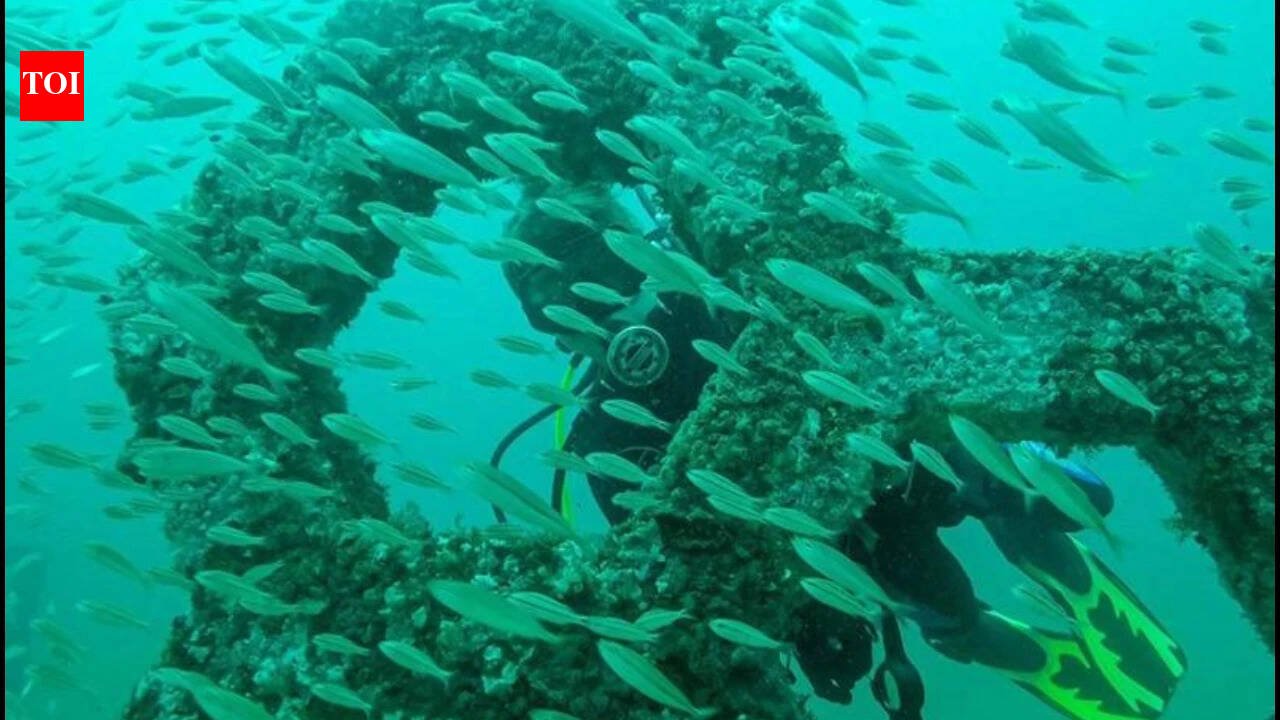
Imagine you are diving under the Gulf of Mexico and come upon what looks like a museum, only instead of galleries and polished floors, there is an unreal world of sculptures, tropical fish and drifting sea life. Florida’s Underwater Museum of Art has turned the ocean floor into a gallery at 58 feet below the surface, where art is slowly becoming part of nature. Located about 0.93 miles off the shore of Grayton Beach State Park in Walton County, the Underwater Museum of Art (UMA) is the first permanent underwater sculpture garden in the United States. But it is more than an unusual destination for divers. Its sculptures have been designed specifically to be artificial reefs, creating habitat on an area dominated by barren sand. Scroll down to read the details.
Art Meets the Gulf
According to its official website, the museum was a collaboration between the Cultural Arts Alliance of Walton County and the South Walton Artificial Reef Association in 2018. The idea was simple, but ambitious: merge artistic expression with marine conservation. Artists from around the country and the world are invited to submit sculptures for consideration each year. Selected works are engineered, transported and carefully positioned on the sea bed. They are built to endure a harsh environment and to support marine life, not conventional museum pieces. Artists and organizers must meet certain requirements for materials, structural integrity and ecological safety, including requirements that allow sea turtles to escape safely if they become trapped. The result is an ever-changing underwater gallery.
A museum that turns into a reef
The sculptures are not just objects that are submerged in water. They become living structures in time. Here, artificial reefs offer surfaces and shelter for fish, invertebrates and other marine organisms. The structures can offer cover and breeding habitat for small creatures, and the baitfish attract larger predators. Juvenile fish can also take shelter as they grow. That ecological role is especially vital in Walton County, where much of the Gulf’s coastal seafloor is open sand flats.Since the museum opened, more than 100 species of marine and plant life have been recorded around the sculptures. Dolphins and sea turtles, along with a range of fish and invertebrates, are also found. For scientists, the site offers more than a beautiful underwater landscape. It offers an opportunity to monitor the development of artificial reef systems and their potential impacts on marine environments.
A gallery of odd and wonderful art
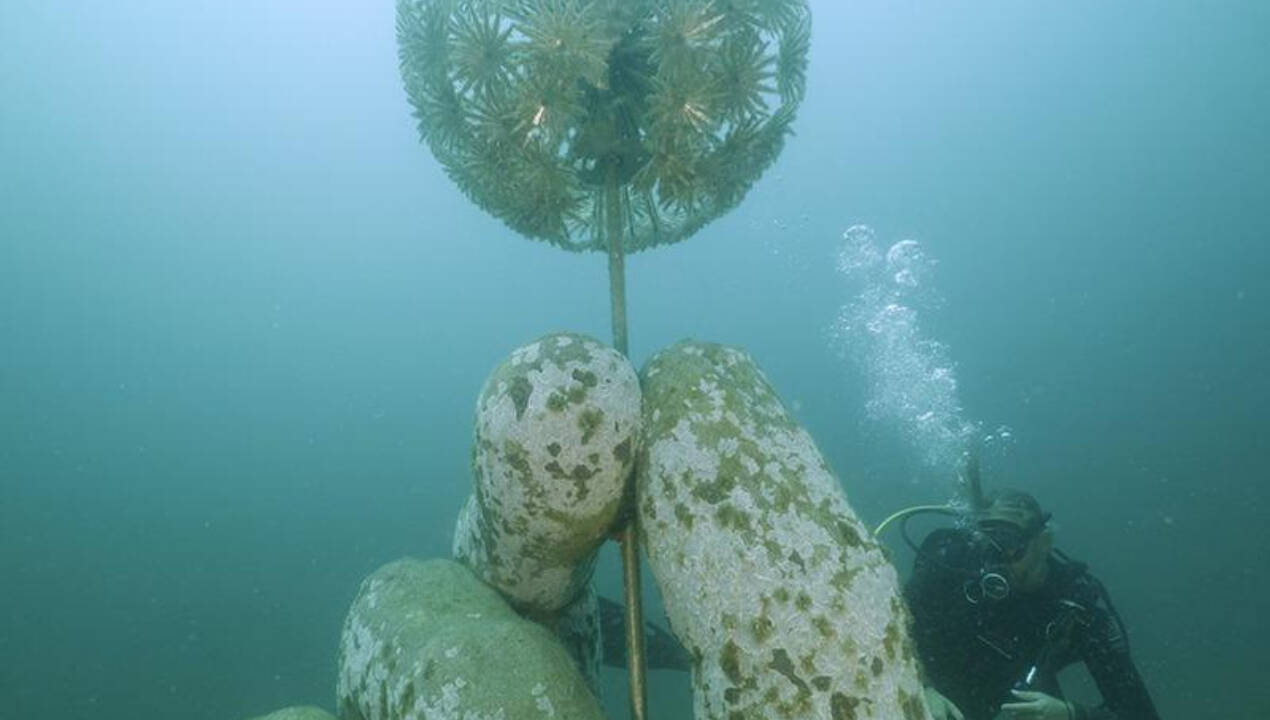
Since the museum opened, more than 100 species of marine and plant life have been recorded around the sculptures. Dolphins and sea turtles, along with a range of fish and invertebrates, are also found.
The sculptures vary from playful to monumental. One of them is “Poseidon’s Throne”, which is at once a symbolic seat of power and habitat for marine organisms. “A Common Chord” takes the form of a giant guitar, and celebrates the relationship between humans and nature. Other installations are “Three Wishes,” a genie lamp that divers can play with by blowing air into small openings, and “I Found It,” a giant diamond ring lying on the Gulf floor. A giant octopus, a skull, a seashell and a pirate shipwreck augment the otherworldly atmosphere. The works together form a landscape that is part art exhibition and part sunken fantasy and part thriving ecosystem.
A laboratory of life below the sea
UMA has drawn in divers and art lovers, as well as marine scientists, ecologists, wildlife professionals and students. Researchers can observe artificial structures transform into working habitats as the sculptures slowly get colonized by marine organisms. It is therefore both an ecotourism attraction and an ongoing experiment in the conservation of the marine environment. The project has also garnered international attention, being featured by major media outlets and recognized as a notable travel destination.
Exploring the underwater museum
The museum is free for scuba divers but you need proper diving experience to get there. Visitors must be qualified divers and comfortable with open sea conditions. Dive excursions range from the coast near Grayton Beach State Park to the submerged site, where visitors can explore the sculptures and the marine life that has made them home. What started as a curious collaboration between artists and conservationists in 2018 has morphed into something much more interesting: a museum that changes every year. Its sculptures may have been carved by humans but down under the Gulf, nature is also dabbling in art.Images Courtesy: Underwater Museum of Art







Leave a Reply